#creator-monetization
#creator-monetization
[ follow ]

fromwww.theguardian.com
4 weeks agoElon Musk's X cuts payments to users who post clickbait
Nikita Bier stated that aggregators had their payouts reduced by 60% and that total will be reduced by a further 20%. He emphasized that flooding the timeline with 100 stolen reposts and clickbait every day crowded out real creators and hurt new author growth.
Social media marketing
Social media marketing
fromTNW | Meta
1 month agoMeta has launched Creator Fast Track
Meta launched Creator Fast Track, guaranteeing established creators $1,000-$3,000 monthly for three months to post Reels on Facebook, addressing the platform's struggle to attract top creators from competing platforms.
Social media marketing
fromTechCrunch
1 month agoFacebook launches a new monetization program to attract popular creators from TikTok, YouTube | TechCrunch
Facebook launched Creator Fast Track to attract established creators from other platforms with guaranteed monthly pay and increased content reach for three months.
Social media marketing
fromEngadget
1 month agoMeta's latest creator push comes with $3,000 bonuses for posting on Facebook
Meta launches Creator Fast Track program offering monthly bonuses up to $3,000 for three months to attract established creators from competing platforms to Facebook's Content Monetization program.
Social media marketing
fromwww.socialmediatoday.com
1 month agoInstagram tests links in post captions for paying users
Instagram is testing the ability for Meta Verified subscribers to add links to post captions, a long-requested feature previously resisted by the platform, to boost subscriber growth and generate revenue for AI development.
Media industry
fromEntrepreneur
2 months agoYouTube Makes More Ad Revenue Than NBCU, Disney, Paramount and WBD Put Together: 'New King of All Media'
YouTube generated $40.4 billion in ad revenue in 2025, surpassing the combined $37.8 billion from Disney, NBCUniversal, Paramount Skydance, and Warner Bros. Discovery, making it the world's largest media company by ad revenue.
Social media marketing
fromTechCrunch
2 months agoX is testing a new ad format that connects posts with products | TechCrunch
X is testing a new ad format that displays product recommendations directly beneath relevant posts, with Starlink as the initial test case, aiming to create ads that feel like organic recommendations rather than traditional advertisements.
Social media marketing
fromTechCrunch
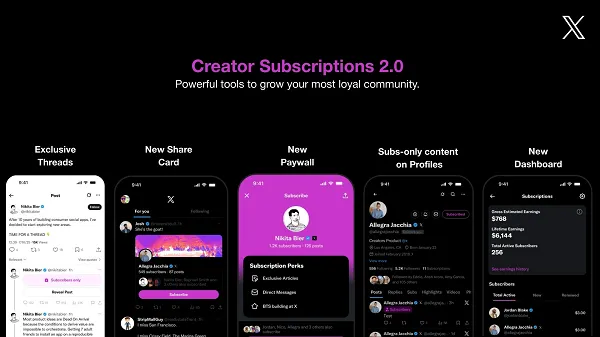
2 months agoX revamps Creator Subscriptions with new features, like exclusive threads and shareable cards | TechCrunch
X launches Creator Subscriptions updates including exclusive threads, improved paywall, new dashboard, and shareable cards to compete in the creator economy.
fromwww.theguardian.com
2 months agoX to ban users from earning revenue if they post unlabelled AI-generated war videos
During times of war, it is critical that people have access to authentic information on the ground. With today's AI technologies, it is trivial to create content that can mislead people. Starting now, users who post AI-generated videos of an armed conflict without adding a disclosure that it was made with AI will be suspended from creator revenue sharing for 90 days.
Social media marketing
Social media marketing
fromLindsey Gamble
2 months agoPinterest and Amazon Launch Integration Allowing Creators to Link Amazon Storefronts - Lindsey Gamble
Pinterest and Amazon integrated their platforms to allow creators to link Amazon Storefronts directly to Pinterest profiles, enabling easier product promotion and affiliate revenue generation.
Growth hacking
fromSocial Media Today
2 months agoThe Influencer Marketing Factory Releases 2026 Creator Economy Report Highlighting Revenue Growth, AI Adoption, and Platform Shifts | Social Media Today
The creator economy is expanding rapidly with AI lowering entry barriers, projected to reach 1.1B creators by 2032, while a viable middle class of monetizing creators emerges with diversified revenue streams.





fromTechRepublic
2 months agoApple Podcasts Gets Major Video Overhaul to Take on YouTube, Spotify
Apple announced Monday that it's rolling out a major overhaul to Apple Podcasts this spring, introducing native video support that lets listeners seamlessly switch between audio and video without juggling separate show feeds. Until now, if a podcaster wanted to offer both audio and video versions of their show on Apple Podcasts, they needed two separate listings, one for audio, one for video. The new system ditches that approach entirely. Using Apple's own HTTP Live Streaming (HLS) technology, creators can now offer a single show feed that includes both formats.
Apple
fromTechCrunch
3 months agoYouTubers aren't relying on ad revenue anymore - here's how some are diversifying | TechCrunch
However, many YouTubers have reduced their reliance on ad revenue and brand deals. There are several reasons for this shift. First, ad revenue can be unpredictable. With YouTube continually updating its policies, some creators find it challenging to secure ads for their videos, which can negatively impact their earnings. They've also realized that income from these streams can vanish unexpectedly.
Venture
fromDigiday
3 months agoThe Rundown: What YouTube creators should expect to change in 2026
On Jan. 21, YouTube CEO Neal Mohan released a lengthy blog post about what creators can expect in 2026, outlining upcoming changes poised to drastically affect creator experiences on the platform. The changes show just how much YouTube is willing to flex to keep itself ahead of the game - whether that's competing with big streamers like Netflix and platforms like TikTok, cracking down on AI slop, or expanding upon the way creators can get paid.
Social media marketing

Social media marketing
fromeng.ambcrypto.com
3 months agoSocialFi 2.0: Will Twitter Coins finally kill decentralized social media?
Centralized platforms like X are adopting SocialFi-style creator monetization without crypto, improving payout formulas, weighting content quality, and targeting fake engagement.





fromRAIN News
4 months agoSpotify broadens its partner program, widening requirements
Spotify Partner Program, launched a year ago ( is widening its participation requirements, intending to bring in more podcasters. Three new criteria now define which podcasts are eligible: One thousand listeners over the last 30 days Two thousand Spotify hours consumed over the last 30 days Three published episodes All three are required. While the new criteria make up the headline news from Spotify, other meaningful updates are in the announcement:
Music
fromCointelegraph
4 months agoHow YouTube's stablecoin payouts could change creator monetization
Previously, creators could receive earnings through traditional bank transfers or PayPal balances in fiat currency. Now, eligible US creators can opt in to receive those same earnings in PYUSD instead of a direct dollar payout. Importantly, this is optional: Creators must actively choose the stablecoin option, and they can continue using standard payout methods if they prefer. The rollout is limited to the United States, and YouTube has not announced a timeline for expanding the option to creators in other countries.
Cryptocurrency
fromHarvard Business Review
4 months agoA New Era for the Digital Resale Market
A quiet but significant shift is underway in digital commerce. For decades, companies that create digital products-whether tickets, game items, or software-have missed out on a massive revenue stream: They only make money when they sell a product for the first time or when they charge a recurring subscription. If a customer later resells the product, the company gets nothing; or if a product becomes more valuable over time, that additional value is captured by resellers and not the company that built it.
E-Commerce

fromTheWrap
5 months agoCreatorverse: How Brands Will Drive the Future of Shortform Shows
At first glance, "Girl Room" looks like another surprise social media success story. Though the account launched a little over three weeks ago, it organically has over 90,000 followers across TikTok and Instagram with its most watched video hitting over 5 million views. In reality, "Girl Room" is the product of something far more impressive than a social fluke: it's proof that a shortform concept can be a franchise.
Television
fromThe Drum
5 months agoPinterest enables product tagging and brand partnerships for creators
Pinterest is opening the floodgates for creators to monetize their content for the first time, permitting both the tagging of Ideas Pins with shoppable products and brand partnerships with sponsored content. The income streams are open to anyone with a business account, removing friction between the point of inspiration and a purchase decision by linking directly to in-stock items on the retailer's website.
Online marketing
Podcast
fromTechCrunch
6 months agoSpotify now has half a million video podcasts, which nearly 400M users have watched | TechCrunch
Spotify's video podcast catalog and consumption have grown rapidly, driven by creator upload tools, engagement features, new monetization (SPP), and a Netflix distribution partnership.

fromThe Verge
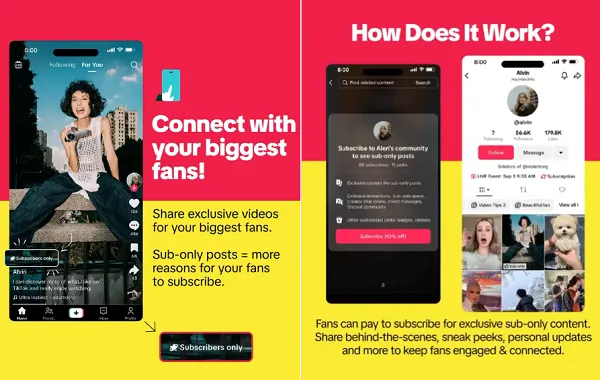
6 months agoTikTok can use AI to turn your long video into short ones
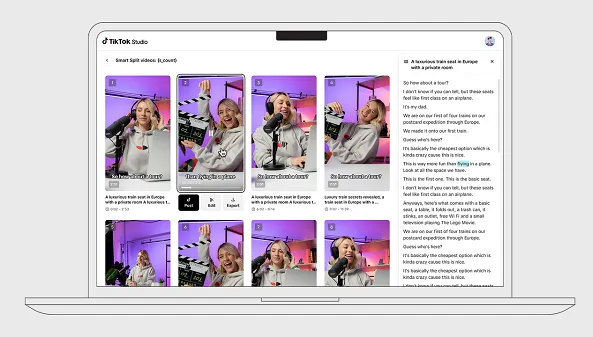
While it works with videos that are longer than a minute, TikTok suggests it's useful for long podcast recordings or videos captured throughout an entire day by a wearable camera. You select what parts of the video you want turned into shorter clips and Smart Split will handle the rest including choosing the length, generating captions, and even reframing content vertically.
Social media marketing
fromAdExchanger
6 months agoThe DIY Agency; YouTube's Dynamic Change | AdExchanger
smaller businesses that aren't working with full-service agencies, reports. Rose insists that WPP's creative and strategic talent will always "be at the heart" of its success, per Reuters, but as technology evolves, more tools need to be put directly in the hands of advertisers. Now, users of WPP Open Pro can generate channel-specific ads almost instantly and push them into WPP's Open Media Studio to activate.
Marketing tech


Social media marketing
fromLindsey Gamble
7 months agoHow YouTube's Dynamic Brand Segments Feature Will Impact Creator Marketing on YouTube - Lindsey Gamble
Dynamic Brand Segments let creators insert swap-able sponsored segments into existing videos, enabling ongoing monetization, flexible brand campaigns, and more relevant viewer experiences.
fromMiami Herald
7 months agoSephora Launches Innovative New Affiliate Platform for Creators
According to a release shared on the Sephora Newsroom, My Sephora Storefront allows influencers in the United States to build shoppable digital storefronts and share curated product recommendations with their followers. The platform, which seamlessly integrates with both Sephora.com and the Sephora app, was built in partnership with leading tech company Motom. Motom specializes in creator commerce affiliate programs. Sephora created My Sephora Storefront as part of their creator strategy efforts as well as to "reinforce" their leadership in the creator commerce space.
E-Commerce
fromDigiday
8 months agoCreators are leveraging CTV channels as added value for sponsorship deals
In recent months, CTV channel operators from Samsung TV Plus to Tubi have significantly expanded their creator offerings, standing up dedicated FAST and AVOD channels to serve creators' videos. In addition to splitting ad revenue from the channels with the operators, creators are looking to profit from their CTV partnerships in more creative ways. Four creators and creator talent managers that had recently signed CTV licensing deals told Digiday that they were planning to leverage their expansion onto TV to charge higher rates for sponsored content.
Media industry
fromBusiness Matters
8 months agoFanspicy's AR Makeup & Face Filters: Dior, Chanel & More
The future of live streaming is not just about video-it's about immersion, creativity, and style. In 2025, audiences expect creators to look polished and professional during every broadcast, even without hours of preparation. That's why Fanspicy is transforming the creator experience with AR makeup live streaming, bringing branded beauty looks from Dior, Chanel, and other luxury names directly into live sessions. With cutting-edge augmented reality, the Fanspicy app gives creators the power to look runway-ready in seconds while keeping fans engaged with stunning visuals.
Digital life


[ Load more ]