#sports-marketing
#sports-marketing
[ follow ]
#creator-economy #publicis-groupe #brand-partnerships #influencer-marketing #acquisition #sponsorship
fromwww.businessinsider.com
1 day agoNike stumbled with the people it counts on most: runners
The red sign with big black letters read 'Runners welcome. Walkers tolerated.' It sparked a wave of displeasure among some in the running community, a group Nike has been working to strengthen its relationship with.
Boston


fromBoston.com
1 month agoCeltics' Derrick White shares beer with Jimmy Fallon, talks dental work on 'The Tonight Show'
It's insane. Never thought I'd have a beer. Never thought I would drink a beer, honestly. Now I have one. White's brew stands as one of the featured libations in Sam Adams' new 'Our City. Our Beer' lineup - with Boston Red Sox ace Garrett Crochet, former New England Patriots wideout Julian Edelman, and Boston Bruins legend Zdeno Chara also getting their own beers as part of the brewery's announcement.
Boston Celtics
fromRAIN News
1 month agoRAIN Notes: March 17
Audacy continues its focus on sports as a productive venue for advertisers. Following up its study titled Audio and Podcasts: Best Venues for Consumer Engagement in Sports, the company now announces a webinar event on March 23 at 2pm ET. As with the previous release, 'avidity' will be discussed as the most important currency in sports marketing.
Podcast
#dodger-stadium

LA Dodgers
fromLos Angeles Times
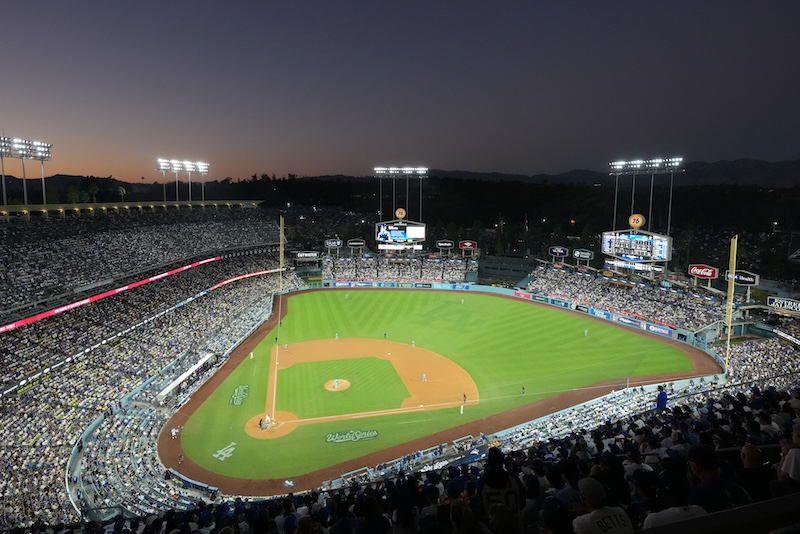
1 month agoDodgers reportedly agree to deal with Uniqlo for naming rights to Dodger Stadium field
Uniqlo secured naming rights to Dodger Stadium's field, the first corporate sponsorship in the stadium's 64-year history, while the stadium's name remains permanently unchanged.

Major League Baseball
fromTasting Table
1 month agoThis Classic Brand Was The First-Ever Official Hot Dog Of Major League Baseball - Tasting Table
Nathan's Famous became Major League Baseball's official hot dog in 2017, though individual stadiums maintain separate brand partnerships and pricing varies significantly across venues.


LA Dodgers
fromDodgers Nation
1 month agoDodgers fans react to Fernando Tatis Jr. seeking Ohtani's endorsement
Fernando Tatis Jr. made a 'call me' gesture with an Oi Ocha tea bottle at a 2026 World Baseball Classic press conference, while teammates Juan Soto and Vladimir Guerrero Jr. removed their bottles due to conflicting brand deals.
#world-cup-2026
Marketing
fromFortune
1 month agoThe 2026 World Cup will bring a uniquely American sports tradition to the beautiful game: Mid-match ad breaks | Fortune
The 2026 World Cup will introduce scheduled three-minute hydration breaks with commercial advertising, adopting American sports broadcasting practices and significantly increasing ad inventory during matches.

Marketing
fromFortune
1 month agoThe 2026 World Cup will bring a uniquely American sports tradition to the beautiful game: Mid-match ad breaks | Fortune
The 2026 World Cup will introduce scheduled three-minute hydration breaks with commercial advertising, adopting American sports broadcasting practices and significantly increasing ad inventory during matches.
fromThe Drum
1 month agoOwn it or miss it: how tech is harnessing sports moments in marketing
Sport has become a powerful tool for global brand engagement, enabling companies to build deeper connections with audiences in an increasingly fragmented media landscape. Real-time data and immersive fan experiences allow brands to create personalized interactions that resonate across diverse markets and demographics.
Marketing

Washington DC
fromRMNB
1 month agoWashington Capitals release new Cherry Blossom jersey featuring team's Capitol Dome logo
The Washington Capitals released a cherry blossom specialty jersey designed by local artist Taylor Kampa Olson, featuring a Capitol Dome logo with pink and blue accents, with autographed jerseys and merchandise being auctioned to benefit MSE Foundation.
fromwww.amny.com
1 month agoChronicling the 90s: How NHL jerseys became mainstream | amNewYork
At that point, [the Islanders] viewed themselves as kind of a failed franchise that had not won a Stanley Cup in a decade and was coming down from this period of great success, said Nick Hirshon, the author of We Want Fish Sticks, which chronicles the Islanders' controversial rebranding, and a journalism professor at William Paterson University. And now the Rangers just won the Stanley Cup in that market, the Devils were on the up, and up, so maybe the Islanders could not afford a brand new arena or new players, but they could make some money by unveiling a new jersey.
National Hockey League
Miami Marlins
fromESPN.com
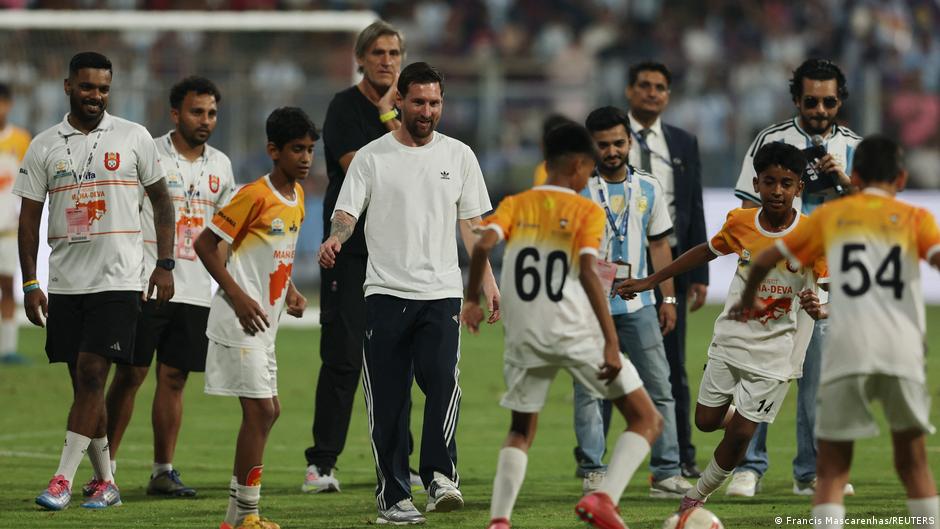
1 month agoVancouver Whitecaps, MLS settle suit in missed Lionel Messi game
British Columbia Supreme Court approved a $450,000 CAD settlement in a class-action lawsuit against MLS and Vancouver Whitecaps for misleading ticket promotion regarding player availability for an Inter Miami match.
Mobile UX
fromYanko Design - Modern Industrial Design News
1 month agoMotorola Just Put 24K Gold on Phones for the World Cup - Yanko Design
Motorola launches limited-edition FIFA World Cup 26 phones featuring football-inspired designs, textured surfaces mimicking soccer ball patterns, and 24K gold accents on the Razr Fold and Edge 70 Fusion models.
fromFootball365
1 month agoSurprise challenger takes on Nike and Adidas as football's top stars make the switch
New Balance is one of the world's fastest-growing sports brands. It has already taken a chunk out of Nike's trainers market worldwide with reported growth 19% in 2025 with revenue of over $9bn, according to figures in CNBC. It is now targeting the world of football and the brand that once adorned the shirts of then Premier League champions Liverpool is increasingly popular with some of the game's best players.
Soccer (FIFA)
fromFast Company
1 month agoThis hotline is letting fans congratulate the U.S. women's hockey team after its gold medal win
This hotline is essentially a giant, collective 'thank you' from fans everywhere. We want to remind them that they are seen, they are celebrated, and they have the full support of a country that is incredibly proud of them.
Women in technology
fromwww.fourfourtwo.com
1 month agoSnoop Dogg accused of smoking weed in Swansea City tunnel by opposition manager
Swansea's owners have explained the influx of celebrity investors by saying it is part of their vision to raise the club's profile so they can generate more revenue, allowing them to invest more in the squad while staying within profit and sustainability rules.
Soccer (FIFA)
Soccer (FIFA)
fromThe Drum
2 months agoAdidas unveils its first ever Snapchat game, a keepie-uppie Snap Ad
Adidas launched an exclusive Snapchat game offering touchscreen keepie-uppies, competitive high scores, unlockable skills/geofilters, and physical Snapcode activation in UK and several European markets.

fromBusiness Insider
2 months agoNike is using the Winter Olympics to relaunch this outdoor brand you've probably never heard of
Nike unveiled the Team USA collection on January 28, and it's been having a moment on social media as athletes don the gear at the games. Between January 30 and the February 6 opening ceremony in Milan, conversations on X mentioning ACG and the Olympics increased by 273%, data analytics firm PeakMetrics told Business Insider. Google searches for "Nike ACG" also spiked during the first week of February, then hit a new peak this week with the Olympic Games underway, according to Google Trends.
Marketing
fromFood & Beverage Magazine
2 months agoSprite Drops Limited-Edition Cans Celebrating NBA Teams and Unrivaled Women's Basketball Stars - Food & Beverage Magazine
If you thought Sprite was just sitting on the sidelines, think again. The iconic beverage brand is making a major statement in the basketball world with a brand-new collection of limited-edition cans that celebrate both NBA teams and the rising stars of Unrivaled women's basketball. This isn't just another marketing play: it's a full-court press that honors local fandom, basketball culture, and the athletes pushing the game forward.
National Basketball Association
Artificial intelligence
fromThegistsports
2 months agoAI prominence in Super Bowl ads ignites conversation about its role in women's sports | The GIST
AI both risks reinforcing gender bias in sports media and empowers women athletes and leagues through content creation, personalization, and workflow efficiencies.
fromInc
2 months agoHow Cowboy Boot Brand Tecovas Plans to Score Millions of Fans With Its Super Bowl Ad
While Super Bowl LX pits the Pacific Northwest against New England as the Seahawks and the Patriots take the field, another region of the U.S. will get its 30 seconds of fame. Tecovas -the cowboy boot brand that surpassed $300 million in sales last year-is debuting its first-ever Super Bowl ad to try to expand its audience in its 10th year of business.
Marketing
fromThe Drum
2 months agoHow has personalization improved digital sports marketing?
Personalization is a tried-and-tested way to boost engagement while gathering valuable information about existing audiences - and is proving to be a key driver for the sports industry, says Rawnet's Harry Daniel. For brands looking to score with digital marketing, personalization is a winning long-term business strategy. Personalizing the user experience (UX) via websites and apps keeps fans engaged and enhances brand loyalty. It can help brands to grow, by extending their reach to new users and unleashing untouched opportunities for victory.
Online marketing
fromSempreMilan
2 months agoJuventus' marketing director suggests Inter and Milan are no the only competitors: "Fighting the same mission"
We've managed to increase this value by 40% in recent years in terms of visibility returned to partners. But the most interesting aspect is that at the Creator Lab everything becomes an IP, designed from the outset to be associated with a brand.
AC Milan

fromThe Drum
2 months agoAn overflow of content won't solve the enshittification of sports marketing
Yet rights holders are also meant to protect the value of their products-a value that's currently being chipped away by an endless stream of clips, highlights and post-game interviews. All this churn comes at the expense of creativity, social media talent - and, fundamentally, consumer engagement. The result is the enshittification of sports marketing. Let me explain. So much for creativity
Social media marketing
Food & drink
fromFood & Beverage Magazine
2 months agoJim Beam and Kenan Thompson Help Football Fans 'Refresh Their Season' with Exclusive Lemonade Kits - Food & Beverage Magazine
Jim Beam launched the 2026 "Refresh Your Season" campaign with Kenan Thompson, offering limited Jim Beam & Lemonade Kits tied to football postseason moments.
fromPsychology Today
3 months agoIs Sports Fandom Play?
In this playoff season, I try to shut my eyes to products featured in commercial time-outs. You've seen them? The cryptic medicines to treat unspecified ailments? The pickup trucks and beer brands that signal ruggedness and romantic success. Or more tempting, the gooey-delectable double-cheese-pepperoni pizzas with yet more cheese stuffed in the crust. But one other caught my ear for novel English usage. Namely, the new infinitive "to fan."
Marketing
fromDigiday
3 months agoCheez-It bets on 'Prince Cheddward' mascot in an overcrowded sports marketing arena
After a three-year hiatus, Cheez-It has officially brought its mascot Prince Cheddward out of retirement in time for this year's Citrus Bowl. As sports marketing gets more crowded, Cheez-Ithopes its revived brand mascot will drum up enough fan nostalgia to drive more sales. "He's a fan-favorite asset who helps us stand out without needing to 'out-spend' or 'out-shout' anyone," said Cara Tragseiler, senior brand director for Cheez-It. It's increasingly necessary for brands to find new ways to break through the noise.
Marketing
fromESPN.com
3 months ago'Is it a real functional toaster?': Behind the scramble to engineer the Pop-Tarts Bowl trophy
Shortly after Iowa State's win in the 2024 Pop-Tarts Bowl, Cyclones receiver Jaylin Noel, in a celebratory mood, went to grab the game's trophy to lug it home. But this trophy is different from any other and, as such, required Josh Price, an engineer who helped build the thing, to deliver some safety instructions. Noel wasn't interested. "He was like, 'It's a freakin' toaster, man,' and ran out of the room," Price said.
National Football League
Marketing
fromwww.nhl.com
4 months agoScott Kegley Set To Elevate Digital Strategy and Power Engagement For The Golden Knights | Vegas Golden Knights
Scott Kegley joins Vegas Golden Knights as Chief Digital Officer to lead digital, social, creative, innovation, and influencer efforts and elevate VGK's brand across sports.
fromFast Company
4 months agoHow do you turn a baseball infield into a tennis court? It's as complicated as it sounds
Tennis is experiencing a resurgence, with almost 26 million people playing in the U.S. alone. That number has been on an upward trajectory five years in a row. While the sport's renewed cultural relevance can be attributed to multiple factors, brands across fashion, entertainment, and even sports leagues like Major League Baseball are capitalizing on the trend through unconventional opportunities.
Major League Baseball
fromenglish.elpais.com
4 months agoUS opens door to the 2026 World Cup, the biggest event in soccer
The United States aims to make the finals of the 2026 World Cup, which it is co-hosting with Canada and Mexico, the biggest sporting spectacle on the planet. The draw to determine the 12 groups for the 48 national teamsthe largest number of participants in historywas worthy of Hollywood. Nessun Dorma, the famous aria from the opera Turandot, performed by Andrea Bocelli, opened a gala that also featured performances by Robbie Williams, Nicole Scherzinger, and Lauryn Hill, one of the greatest rappers of all time.
Soccer (FIFA)
fromThe Drum
4 months agoSport marketing's 'full-circle' moment: creator and licensing deals changing the game
The sports world has come full circle. After years of brands drifting too far from performance and too into 'wellness,' brands are rediscovering the power of professional athletes while also embracing a broader truth: sport is about winning and it's about how it makes us feel. The industry's evolution toward 'sport for all' has surfaced the profound connection between movement, euphoria, and mental wellbeing. Today, the formula is clear: high performance plus euphoria equals true inspiration.
Marketing
fromMarketing Dive
5 months agoHow Unilever is pushing sports marketing beyond broadcast convention
For marketers adrift in a sea of media fragmentation, sports have remained a dependable - if pricey - anchor, representing one of the few remaining pillars of monoculture. Look no further than the Super Bowl, which continues to draw record ratings and diverse audiences on linear TV despite the acceleration of cord-cutting. That said, sports are as dynamic and fast-changing as other content types, and deep-pocketed companies like Unilever are adjusting their marketing strategies to recognize growing digital- and social-first consumption habits.
Marketing
fromMarketing Dive
5 months agoOwning the moment: How brands can win the 2026 World Cup with real-time, data-driven activation
Soccer has officially entered the cultural mainstream and is now a core pillar of sports fandom in the U.S., powered by diverse, young and digitally native fans. The United States now boasts twice as many soccer fans as major European markets, and 87% of them are already anticipating the 2026 tournament. This is more than just a sports moment; it's an epicenter of culture and opportunity.
Soccer (FIFA)
Marketing
fromDigiday
5 months agoBrands tap outside-the-box personalities to stand out as influencer marketing gets more competitive
Brands are partnering with unexpected influencers, like mattress companies and athletes, to diversify ambassadors and broaden consumer reach through creative affiliate strategies.
Higher education
fromAol
5 months agoIs NIL Having a Negative or Positive Effect on the Landscape of College Sports?
College athlete NIL deals shifted college athletics economics, allowing athletes widespread earning, brand-building, and business skill development while challenging amateurism, recruiting, and team balance.
Marketing tech
fromGeekWire
5 months agoTech Moves: iSpot and MoxiWorks name new executives; F5 and Trupanion make board changes
Multiple Pacific Northwest organizations announced senior marketing and leadership appointments and strategic shifts across advertising, sports marketing, and technology companies.
fromTechCrunch
5 months agoCan steroids combat population collapse? The Enhanced Games wants to find out. | TechCrunch
The Enhanced Games, a new sporting competition explicitly designed to allow performance-enhancing drugs, looks like a publicity stunt for the techno-macho era: Olympic athletes on steroids competing for million-dollar bounties in Las Vegas. But co-founder Aron D'Souza has a 90% gross margin telehealth business in mind, and a pitch to governments struggling with aging populations. Launching in May 2026 with Peter Thiel's backing, the Games promise $1 million bounties for breaking world records.
Medicine
Marketing
fromThe Drum
6 months agoSport marketing's 'full-circle' moment: creator and licensing deals changing the game
Sports marketing is shifting toward athlete-driven content, high-performance storytelling and investments in athlete-owned media IP, with licensing, sponsorship and influencer deals growing.
[ Load more ]