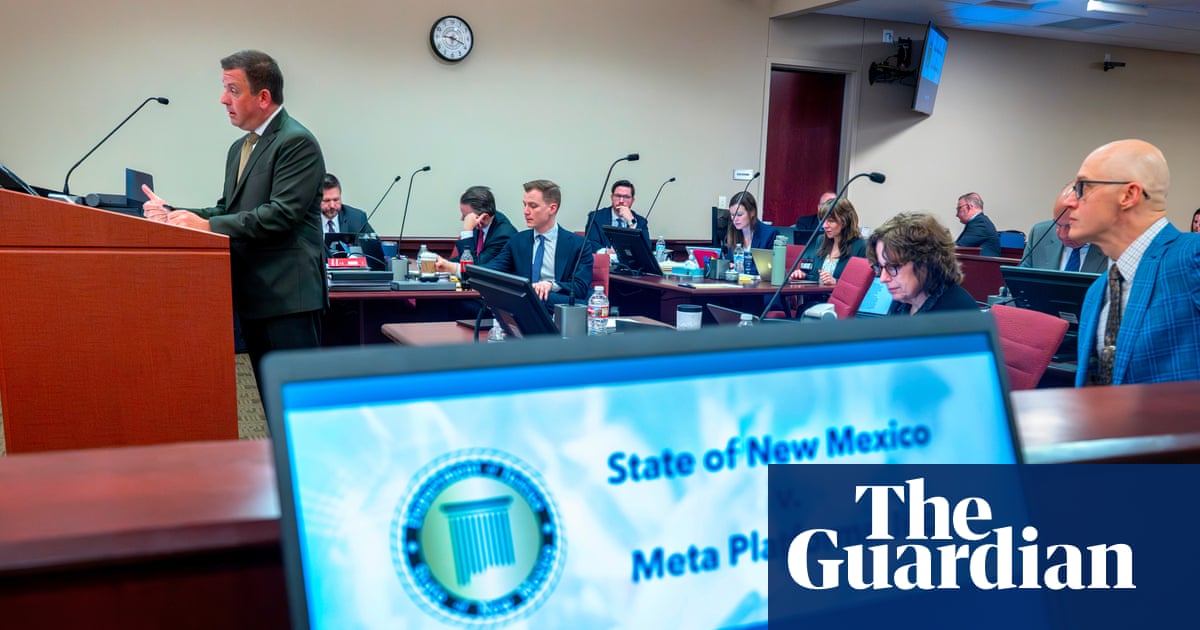
Three of the world's biggest tech companies face a landmark trial in Los Angeles starting this week over claims that their platforms - Meta's Instagram, ByteDance's TikTok and Google's YouTube - deliberately addict and harm children. Jury selection starts this week in the Los Angeles County Superior Court. It's the first time the companies will argue their case before a jury, and the outcome could have profound effects on their businesses and how they will handle children using their platforms.
First, the use of a Gmail address on the poster raises red flags, as official communication from KURA uses email addresses ending in .go.ke, such as [email protected] . Additionally, the number of advertised positions is exceptionally high, and also the poster omits qualification requirements. It provides no reference to an official source for further details, further undermining its credibility. There is also no evidence of the job advert on KURA's verified X (formerly Twitter) and Facebook page, where such announcements are usually published.
She spliced the footage together, coupling a hypothetical question from Alter's talk-"Without organization, how can anyone expect to overthrow the most bloodthirsty, profit-driven mad organization in the history of the world: that of the U.S. government?"-with a moment during the break in which he identified himself as a faculty member at Texas State University. Then, she posted the doctored clip to X, and it caught fire.
"When crisis messages on social network sites are managed correctly with straightforward directness rather than coming across as insincere, thanks to the democratic nature of social networking a company's stance can be appreciated. Everyone has said that the great saviour of brands in a bit of a pickle is social networking, in order to get across your message. It is true that you can use it to communicate with people but it's about how you communicate and the structure of communications."
Madison Beer may only be 26, but she is something of a veteran in the pop industry. She got her start at 13, after Justin Bieber tweeted a link to a YouTube video of her covering Etta James's At Last, and has spent the intervening decade-plus toiling away in mainstream pop, amassing a huge gen Z fanbase in the process including more than 60 million followers between Instagram and TikTok.
A child is born. Before they even landed Earthside, in the language of Instagram, a scan of them as a foetus in utero was uploaded to a waiting audience. The room in which they will sleep the pale pastel paintwork, the carefully curated nursery furniture is all there, ready, waiting: an advertorial empty of its model. Then comes the photo of the baby being born, held aloft to their audience while still covered in vernix, eyes not yet open, their mother smiling, hair perfect.
Heineken pulls the curtain on its secretive social media war room for the Champions League to reveal how it is actually a test for how it can distil global creative locally to 120 different markets. While football fans were lamenting the dire quality of English football last night (25 February) following Arsenal's shock defeat to French underdogs Monaco, Heineken marketers were busy trying to avoid a similar slip up in the digital arena.
Social media platforms like TikTok and Instagram promise quick DIY wins, but they often set unrealistic expectations that turn hobby projects into costly disasters. This piece uncovers four key ways social media undermines DIY success, drawing from expert warnings and viral pitfalls.
Now, thanks to the advent of accessible text-to-video generators, which can cough up footage from a simple text prompt, the situation on Facebookand other Meta platforms is turning from dire to disastrous. A quick perusal of the r/FacebookAIslop subreddit reveals the macabre underbelly of the AI slop world, once again highlighting how social media feeds have turned from posts created by our friends and family into an endless parade of mind-numbing drek.
Recently I was completing a global project for a major fashion brand, which focused on the use of social media by young influencers between 16 and 24. I was short a few interviews, so in a crunch, put my own three Gen Z children in front of the camera. What I heard disturbed me, both as an agency CSO, and even more, as a parent.
Long before social media feeds or targeted ads, my mother used to say that life tends to show you the thing you're looking for. Or the thing you're afraid of. Or the thing you keep insisting you don't want. If you were trying to get pregnant, suddenly everyone around you was pregnant. If you wanted out of your relationship, magazines on the grocery store rack were filled with tips on "spicing up your marriage." If you were single, you noticed couples everywhere.
Netflix redesigns are common. Just a few months ago, the company made its biggest app revamp in years on streaming boxes and smart TVs. In 2023, the service launched a redesigned version of its iPhone and iPad app to make everything feel snappier, improving profile switching and changing how users previewed titles, which made Netflix even better on smartphones compared to other streaming platforms.
In recent days, along with a steady stream of insults, Musk even floated a hypothetical takeover of Europe's largest low-cost airline. Naturally, Ryanair's social channels have piled on. The airline's X account branded Musk an idiot, teased him during an X outage, and announced a "Great Idiots Seat Sale" while promising a press conference later on Wednesday to address Musk's latest comments.
The average American checks their phone over 140 times a day, clocking an average of 4.5 hours of daily use, with 57% of people admitting they're "addicted" to their phone. Tech companies, influencers, and other content creators compete for all that attention, which has incentivized the rise of misinformation. Considering this challenging information landscape, strong critical reading skills are as relevant and necessary as they've ever been.
If a president's most valuable currency is time, Trump operates as if he has an almost limitless supply, ever willing to share no matter the day, the hour or the circumstance. He's rewritten the role of the presidency in a divided country, commanding constant attention with little regard for consequences. For all his talk about strength, his approach leans more toward virality than virility with social media as his primary accelerant.
Three of the four things that gave Trump a foothold, in my opinion, were failures in this century (the fourth is the legacy of slavery and the organized political violence that replaced it). The other three, though, are the War on Terror, the financial crisis, and social media. (COVID was the final catalyst, I think; having moved during the height of COVID, I can't express how much worse the US dealt with it than much of the EU.)