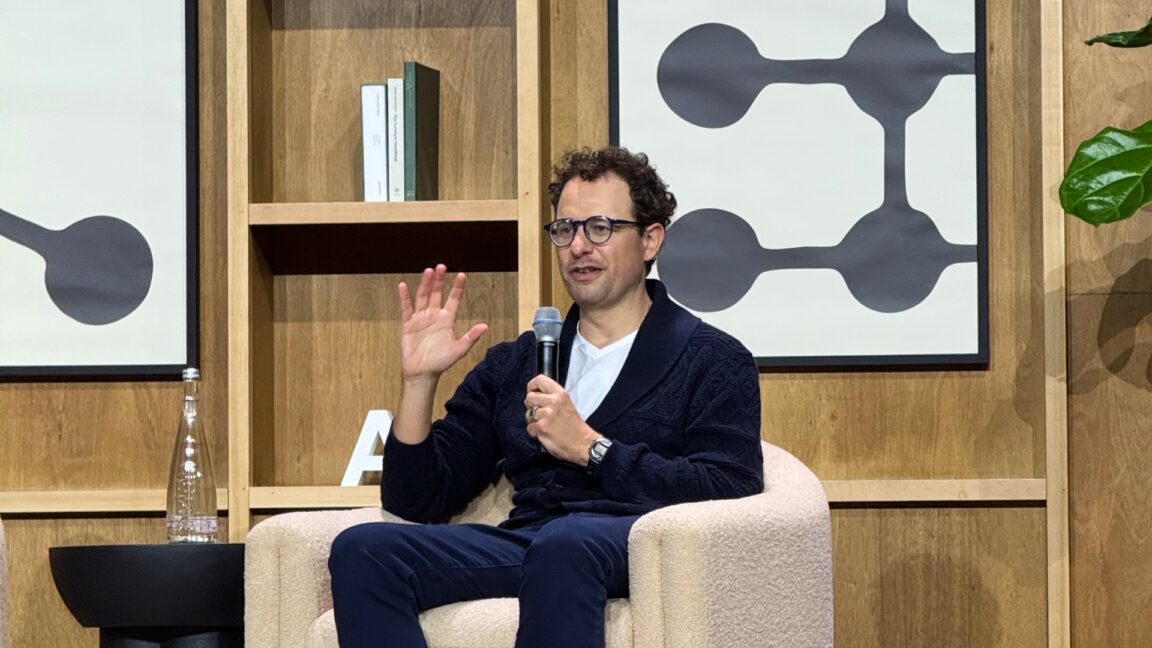
Wondering what your career looks like in our increasingly uncertain, AI-powered future? According to Palantir CEO Alex Karp, it's going to involve less of the comfortable office work to which most people aspire, a more old fashioned gruntwork with your hands. Speaking at the World Economic Forum yesterday, Karp insisted that the future of work is vocational - not just for those already in manufacturing and the skilled trades, but for the majority of humanity. In the age of AI, Karp told attendees at a forum, a strong formal education in any of the humanities will soon spell certain doom.
As we enter 2026, we mark this anniversary by bringing together three leaders navigating the most complex intersection of technology, geopolitics, and organizational change we have ever witnessed. André Pienaar, Dr. David Bray, and Ken Banta joined us to discuss what boards and CEOs must understand to remain competitive in an era defined by cascading disruptions and incomplete information. The conversation focused on the critical questions every board should be asking this year.
The COVID-19 pandemic has emptied the world's offices, sending most of us to work from home for the foreseeable future and facilitating a mass migration to the digital workplace. But will it also jumpstart the arrival of our non-human colleagues? AMELIA ("AI + ME = AMELIA") from IPsoft can read 300 pages in 30 seconds, comprehend multiple languages (including logic and context), and is installed in more than 500 banks, insurance companies, and retail giants.
"I always wanted this job -- I worked towards it," he said. "If you want to climb the ladder, you've got to try things that are outside your comfort zone, which I certainly have. That means I've made mistakes along the way."
Cupertino Library's Teen Advisory Board (TAB) is holding a tech symposium on the future of AI on Jan. 24. Presenters include SellScale co‑founder Aakash Adasera; Aditya Sharma, a Google Pixel AI engineer; Animesh Singh Alang, a UCSC AI researcher and founder of Rizzy; Prof. Navrati Saxena, a globally recognized expert in AI, 5G, IoT and next‑gen communications; and Lesya Hendrix, developer of autonomous systems for Earth and lunar construction, with experience in Tesla, Nuro, Scania and frontier tech.
Depressingly, Kennedy seems to be excited about AI and wants to work with the tech to make new stuff. She also told the outlet that she's been planning this exit for a few years now and hand-picked her successors, Clone Wars creator Dave Filoni and veteran ILM manager Lynwen Brennan. And while she'll still be around producing future Star Wars movies, including Ryan Gosling's Starfighter and the upcoming Mandalorian and Grogu flick, it's clear from this interview that Kennedy was tired of Disney not wanting to take more risks on projects like Andor.
You can't completely discredit Musk's take, though. Yes, forgoing retirement on the belief that AI and tech will just figure it out in a few decades is a massive gamble. But the past few years have reminded us that tech can quickly flip the script on conventional wisdom. Five years ago, a career as a computer programmer felt secure. Now ... not so much.
As part of Wikipedia's 25th anniversary, parent company Wikimedia a slew of partnerships with AI-focused companies like Amazon, Meta, Perplexity, Microsoft and others. The deals are meant to alleviate some of the cost associated with AI chatbots accessing Wikipedia content in enormous volumes by giving the tech companies streamlined access. As noted by , the timeline on these deals is a little squirrely.
Presence CRM integrates contact data, communication history, website activity and third-party information to monitor changes such as property ownership records, employment updates and other indicators that may signal a future real estate transaction. The system is designed to generate suggested outreach and prioritize contacts based on those signals, the company said. Luxury Presence said Presence CRM will be included across its platform offerings and is scheduled to begin rolling out in early 2026.
While the artificial intelligence-fueled tech rally sputtered when tariff concerns grew, it seems to have resumed. Companies that can diversify to address the many demands the industry faces ultimately are poised to profit. Supermicro is one of those companies. The San Jose-based tech firm specializes in high-performance and high-efficiency servers, but it also provides software solutions as well as storage systems for data centers and enterprises focused on cloud computing, AI, 5G, and edge computing.
The cuts to Reality Labs - which has roughly 15,000 employees - could be announced as soon as Tuesday. The layoffs would be a fraction of Meta's total workforce of 78,000, but are set to disproportionately affect those in the metaverse unit who work on virtual reality headsets and a VR-based social network, said the people, who asked not to be named since they were not authorized to discuss confidential decisions. The cuts could end up affecting more than 10 percent of the division, one of the people said.
As the government closes the book on another year of tech upheaval, it's worth remembering that trends rarely unfold in straight lines. Some evolve slowly until they explode, others quietly creep into operations until one day everyone wonders how they ever lived without them. In 2026, we're likely to see three such developments in federal technology. One seems obvious until it isn't. One finally gets measured the way leaders say they want it.
After AppLovin Corp.'s ( NASDAQ: APP) share price tumbled more than 35% early last year due to a pending class action lawsuit and to short seller reports, the software company's better-than-expected quarterly reports helped the stock recover. Shares hit a new high of $745.61 a piece in September and took another run at that high in late December. AppLovin stock easily outperformed the S&P 500 and the Nasdaq last year.
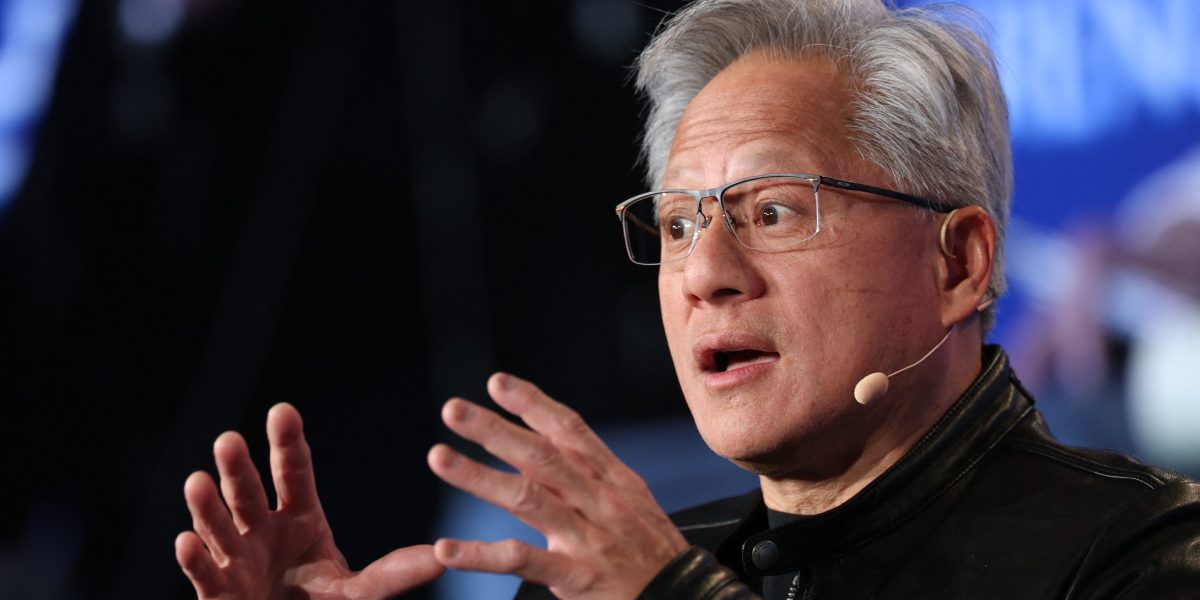
Nvidia CEO Jensen Huang delivered an expectedly lengthy presentation at CES, taking a victory lap for the company's AI-driven successes, setting the stage for 2026, and yes, hanging out with some robots. The Rubin computing architecture, which has been developed to meet the increasing computation demands that AI adoption creates, is set to begin replacing Blackwell architecture in the second half of this year.
Shadow Child is a Portsmouth fan who has fond memories of the FA Cup that go back much further than when Pompey won it in 2008. "That was huge, and so was when we lost narrowly in the final two years later," he told BBC Sport. "But my favourite FA Cup memory was actually 1992, when we had a run to the semi-finals and lost to eventual winners Liverpool in a replay.
Software used to feel separate from us. It sat behind the glass, efficient and obedient. Then it fell into our hands. It became a thing we pinched, swiped, and tapped, each gesture rewiring how we think, feel, and connect. For an entire generation, the connection to software has turned the user experience into human experience. Now, another shift is coming. Software is becoming intelligent. Instead of fixed interactions, we'll build systems that learn, adapt, and respond.
If you're like most Americans, you've already set all manner of goals and resolutions for the New Year. And likewise, if you're like most Americans, you'll have entirely abandoned them by February 1. Studies have found that 23% of people quit their New Year's resolutions within a week, and almost half drop them by the end of January. Only 9% of Americans actually complete anything from their list in a given year.
Available to consumers this summer, Ballie will be able to engage in natural, conversational interactions to help users manage home environments, including adjusting lighting, greeting people at the door, personalizing schedules, setting reminders, and more,
"Our customers don't live in front of a laptop day in and day out; they live in the dirt," Hootman said. "The ability to get the insights and take the action that they need while they're doing the work is very important to them."
With AI transforming so many jobs, EY's Joe Depa says adaptability will be the "new job security" in 2026. "The ability to adapt and change is going to be the most important component," said Depa, who oversees innovation at the Big Four consulting firm. The executive, who leads EY's AI, data, and innovation strategies, told Business Insider that training and upskilling will be the factors that differentiate talent and organizations in the workforce.