Andrew Strominger initially distrusted ChatGPT due to superficial but unsound responses, yet agreed to test an advanced internal model after invitation from Alex Lupsasca, a former student who joined OpenAI. They posed a well-defined, stubborn theoretical physics problem that had resisted collaborative attempts. The internal ChatGPT rapidly reasoned through and ultimately solved the problem entirely, surprising the physicists. Four physicists collaborated with the model as a powerful fifth participant. The success demonstrated the model's capacity for deep technical reasoning and produced a meaningful advance in theoretical physics.
"Like many scientists, theoretical physicist Andrew Strominger was unimpressed with early attempts at probing ChatGPT, receiving clever-sounding answers that didn't stand up to scrutiny. So he was skeptical when a talented former graduate student paused a promising academic career to take a job with OpenAI. Strominger told him physics needed him more than Silicon Valley."
"Still, Strominger, the Gwill E. York Professor of Physics, was intrigued enough by AI that he agreed when the former student, Alex Lupsasca '11, Ph.D. '17, invited him to visit OpenAI last month to pose a thorny problem to the firm's powerful in-house version of ChatGPT. Strominger came away with much more than he expected - and the field of theoretical physics appears to have gained a little something too. "Incredible," Strominger put it, acknowledging that AI quickly reasoned through a problem he wasn't sure he could solve himself without unlimited time."
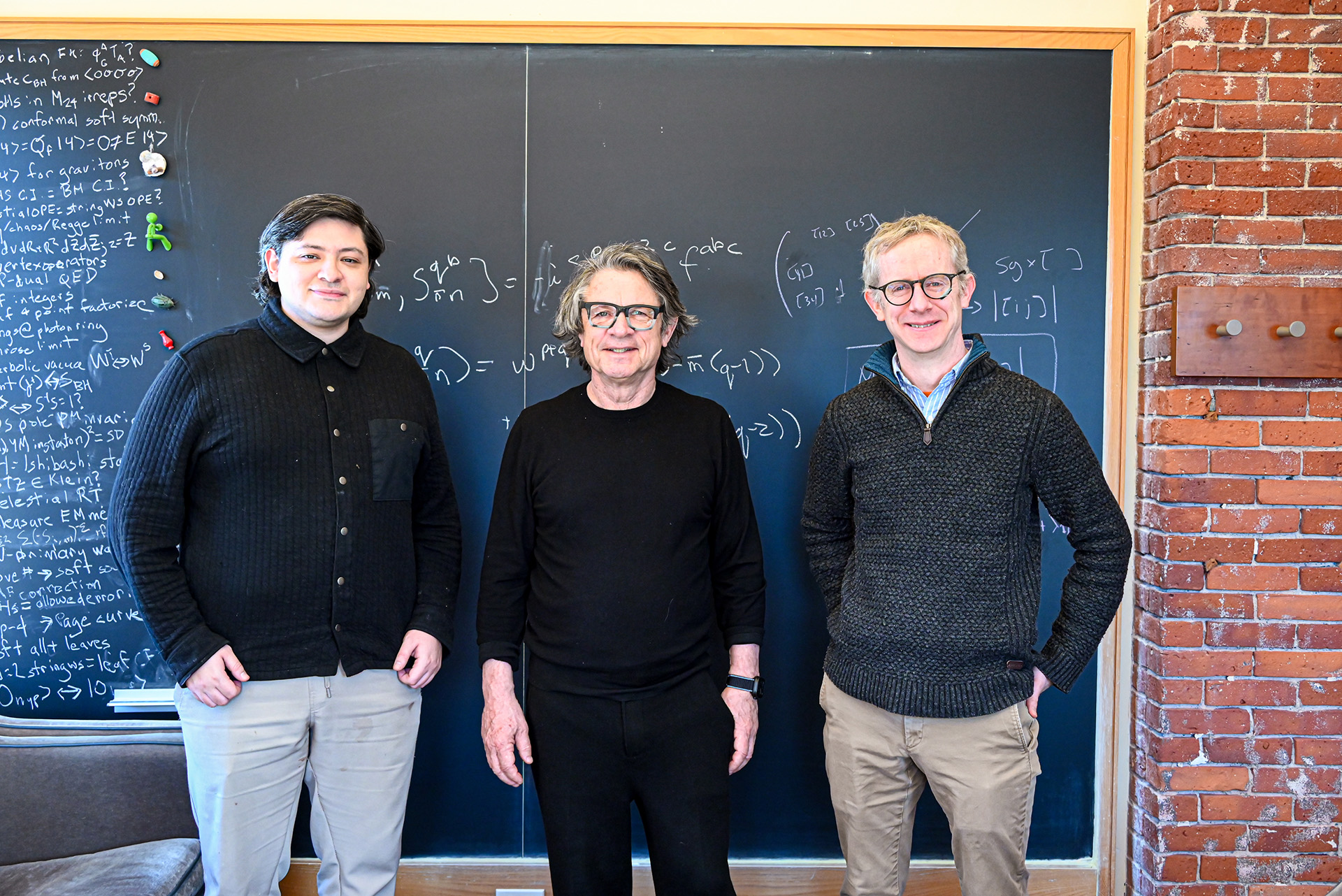
"Even Lupsasca, who has served as a research scientist at OpenAI since last fall, imagined the problem would probably trip up the AI, giving them an opportunity to provide feedback and help improve the large language model's reasoning around complex theoretical physics. Instead, the internal ChatGPT - what Strominger dubbed "Super Chat" - eventually solved the thorny problem in its entirety. Four physicists - Strominger, Lupsasca, Cambridge University's David Skinner, and the Institute for Advanced Study's Alfredo Guevara (who had worked with Strominger as a junior fellow in the Society of Fellows from 2020-2024) - worked with ChatGPT as a powerful fifth collaborator."
Read at Harvard Gazette
Unable to calculate read time
Collection
[
|
...
]