
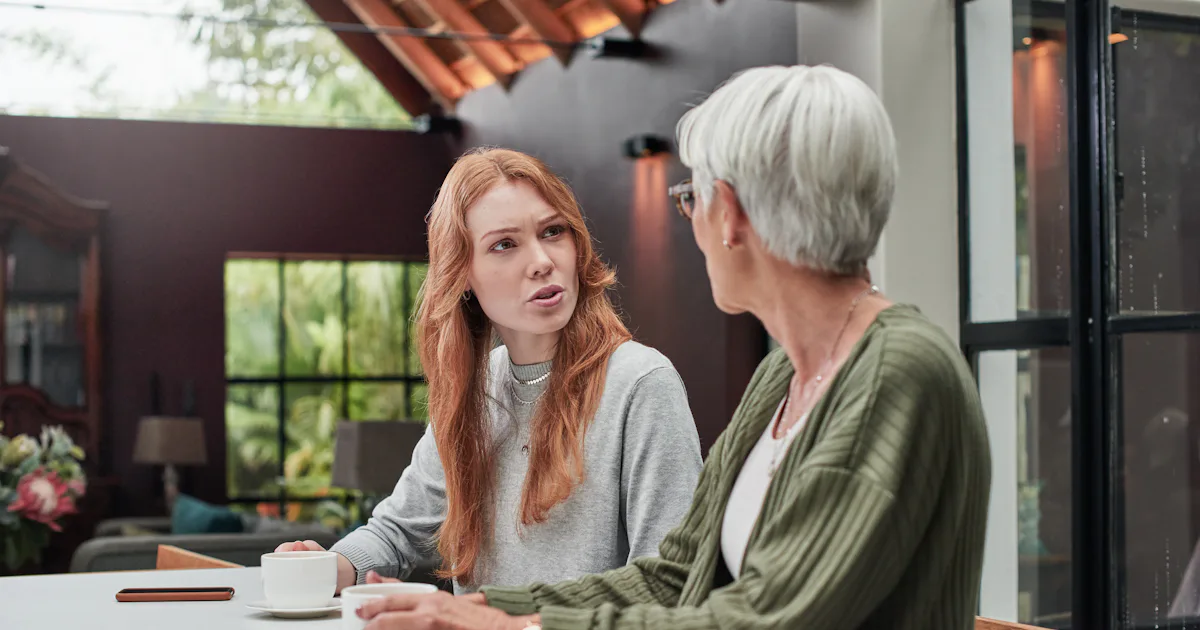
When I arrived at Liberty Tiny Village on a warmer than usual day in November, I thought I knew exactly what to expect. The resort-style, 55-and-older tiny home community in Aubrey, Texas, markets itself as an upscale community for retirees or soon-to-be retirees ready to shed decades of belongings in exchange for a smaller, freer way of living. But that's only part of the story. That afternoon, I sat with two neighbors, widows Debbie Giamalva a retired intensive care nurse, and Sherry Miller, a retired English teacher.
Happy Birthday: Set your sights on financial goals that will put your mind at ease and your budget in place for the year. A healthy attitude and a year filled with physical activity or pursuing something you feel passionate about will lead to personal contentment. Invest in quality of life, health and emotional well-being, and personal growth, positive attitude and self-improvement will follow. Love, money and opportunity are yours to behold. Your numbers are 4, 12, 25, 27, 33, 38, 42.
Robbins follows these six steps in the morning in order to "supercharge" her energy all day: get up when the alarm rings (no snoozing or lying in bed!), make the bed and tidy your space, give yourself a high-five in the mirror, drink water before anything, take in the morning light, and move your body. I decided to try Robbins' morning routine for seven days, and here's how it went.
Flying combat missions on little to no rest meant slower reaction times, clouded judgment, and mistakes that could cost lives. The military needed a solution, and they needed it fast. What they developed was a technique so effective that it reportedly worked for 96% of pilots after just six weeks of practice. No pills, no special equipment, just a systematic approach to shutting down your racing mind and tense body in 120 seconds or less.
If you're like most people, you'd probably pick the first guy. But here's what you can't see: The Tesla driver is drowning in debt, works 80-hour weeks at a job he hates, and hasn't had a genuine conversation with his kids in months. Meanwhile, the cyclist runs his own business, spends afternoons with his family, and sleeps peacefully every night.
Remember that viral TikTok showing someone's $500 skincare routine? I watched it three times, mentally calculating how many months of rent that collection represented. Then I looked at my own bathroom shelf, packed with Korean beauty products that cost me less than a nice dinner out, and realized something: My skin had never looked better, and I'd spent a fraction of what my luxury-brand-devoted friends had.
He has, as one advertising lackey puts it, gotten rich selling people air that's fresher' than the stinky stuff outside. If a recent proliferation of real-life courses, books and online search interest is anything to go by, the act of getting that air into one's lungs is also now commodified. Online and in-person breathwork sessions now abound, some charging hundreds of dollars to teach participants a skill most have already acquired as a prerequisite for life: how to breathe.
So, what is the "best" sleeping position to get you there? It's a tricky (if not impossible) question to answer, since everyone's body, health, and preferences are different. But according to Jennifer Martin, PhD, spokesperson for the American Academy of Sleep Medicine and professor at the Herbert Wertheim College of Medicine at Florida International University, what's best for you hinges mostly on two factors: what position allows you to breathe easily, and what position is the most physically comfortable for your body.
According to Thomas C. Corley's research, 76% of millionaires exercised for at least 30 minutes a day, four days a week. Yeah, exercise. Not exactly the secret formula you were expecting, right? Why movement matters more than you think I used to think successful people were too busy for the gym. Turns out, I had it backwards. They're successful partly because they make time for it.
Last year, I found myself dragging through my days like I was moving through molasses. Four cups of coffee barely made a dent, and by 3 PM, I'd be fighting to keep my eyes open during meetings. I blamed it on everything - stress from deadlines, maybe not sleeping well enough, or just getting older. But when my doctor ran some routine blood work and mentioned my magnesium levels were surprisingly low, I had one of those lightbulb moments.
If you are exhausted and yearn to rest, like nearly everyone I know, you may be interested in what's arguably the most radical wellness trend of 2026 - an ancient practice called "dark retreat." This powerful experience, touted by celebrities as the latest way to achieve self-realisation and peace, involves no drugs (unlike, say, ayahuasca), no intense physical work, and no strict diet - just staying in absolute darkness in a comfortable room for 24 hours a day, for several days.
In Allianz Life's Q4 2025 Quarterly Market Perceptions Study, 51% of respondents said they had stopped or reduced retirement savings in the previous six months because of economic conditions. Nearly as many (47%) said they had withdrawn money from retirement accounts during that period. Payroll Integrations' 2025 Employee Financial Wellness Report uncovered similar behavior, with 38% of respondents saying they had tapped retirement savings. About one-third plan to do so again within the next year to cover emergency or everyday expenses.
In the interview, Tweedy dropped a line that's been echoing in my head, "Do not postpone happiness." This is so deceptively simple yet psychologically sharp, and it rings true to how I try to live my life. Most of us don't mean to delay joy. We tell ourselves we're being responsible: After this deadline...after the kids are older...After I lose the weight...After I finally feel less anxious...then I'll really live.
From the private spa suite at the Vista Blue Spa on the top floor of the Monterey Plaza Hotel & Spa, you and your loved one can enjoy panoramic views out over Monterey Bay. The suite is equipped with large soaking tubs and a rain shower, and they can set you up with extras like a charcuterie board, Champagne, and fruit. Choose from a variety of different baths including coconut milk, Himalayan salt with lavender, or the custom-blended chamomile, lavender, lemongrass, bergamot, and Epsom salt.
Younger people definitely laugh (even lightheartedly!) at the things older people tend to do, like napping, playing bingo, or eating dinner early. But recently, the BuzzFeed Community wrote in to share the "old person" habits they've adopted that actually make life way better - and it got such a great response that even more people shared habits of their own! So, from young and old alike, here are some "old person" habits that you might consider adopting for yourself:
I've always approached taking melatonin supplements with skepticism. They seem to help every once in a while, but your brain is already making melatonin. Beyond that, I am not a fan of the sickly-sweet tablets, gummies, and other forms of melatonin I've come across. No one wants a bad taste in their mouth when they're supposed to be drifting off to sleep.
You know those people who seem to radiate energy and look like they could run a marathon at a moment's notice? The ones who somehow maintain incredible fitness without posting gym selfies or talking about their deadlift PR? I used to think they had some secret genetic advantage. Turns out, after years of observing and experimenting myself, their secret isn't found in a gym membership or expensive equipment. It's woven into the fabric of their daily lives through simple, sustainable habits.
January might be coming to a close, but the focus on wellness doesn't have to die with it. If anything, it's a good time to check in with those 2026 goals and see what you want to prioritise for the rest of the year. To that end, we've gathered some of the best deals we've seen in the past few weeks that will help you tick off every good intention you set this month.
It's more than likely that the NAD+ supplement craze has already crossed your path. The Biebers have infused it. Joe Rogan has podcasted about it. Gwyneth Paltrow swears by it and, of course, sells her own Youth-Boost NAD+ Peptide Rich Cream. NAD+ is the latest biohacker's darling. It's in longevity clinics and the wellness aisle, in your dietary supplements and your topical skin care.
Sex toys were pretty basic back then. Most were phallic in shape-even if they weren't necessarily meant to be used internally-made of mystery materials, and required actual batteries. The first sex toy I reviewed was a bullet vibrator that not only needed batteries, but its remote control was connected to the toy by a cord that was probably no more than 10 inches in length. Stockpiling AA and AAA batteries to keep my vibrators working was just as annoying as it sounds.
Entrepreneurs often live life at full speed. Between meetings, emails, client calls, and deadlines, it can be difficult to maintain regular eating habits or manage stress. Skipping meals, relying on caffeine, or snacking on whatever is convenient can become the norm, but these patterns can take a toll on health over time. Learning how to balance nutrition, stress, and appetite is crucial for maintaining energy, focus, and overall well‑being.
Choosing the right hair routine starts with understanding what your hair truly needs. A complete hair treatment set is designed to nourish the scalp, strengthen follicles, and restore vitality from root to tip. At Ayumi, you can explore professional hair loss treatment products, where Ayurvedic wisdom meets modern clinical science to deliver visible results. Ayumi's philosophy is rooted in balance. Their formulas combine powerful botanicals such as Amla, Bhringraj, Neem, and Fenugreek with proven nutrients like Biotin and Vitamin B5.
For much of the past century, doctors had a near-monopoly on medical knowledge. That is changing fast. There is a whole parallel system rising up, powered by consumer health. Anywhere there is a gap - in getting care, answers or reassurance - commercial players are jumping in. Health tech start-ups, apps, diagnostics, online clinics, influencers - they are all competing for authority, and figuring out how to monetise it.
We've long misunderstood hope in the workplace. We've treated it as wishful thinking-a nice-to-have feeling that emerges when things are going well. But research from psychologist C.R. Snyder reveals something far more powerful: Hope is a cognitive process with three essential components: goals (what we want to achieve), pathways (our ability to identify routes to those goals), and agency (our belief that we can pursue those paths). This isn't passive optimism; it's an active strategy for navigating uncertainty and driving meaningful change.