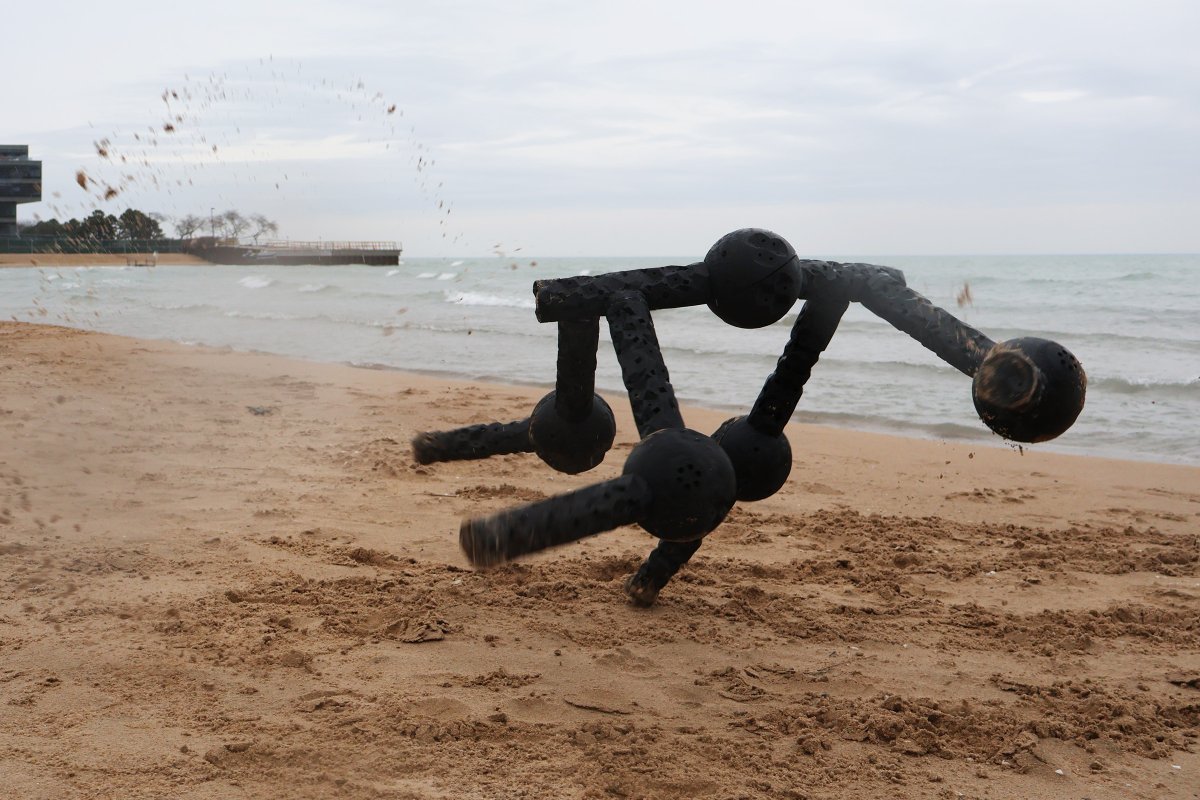
Education has never been static, but digital learning has made that movement visible. What once looked like a straight line from curriculum to classroom now feels more like a living system: stretching, folding, responding, and reshaping itself around learners, teachers, technology, and policy. Digital learning is no longer a "format." It's a motion subtle at times, seismic at others, shifting shape as expectations evolve. And here's the quiet truth many are discovering: the biggest changes aren't about more technology. They're about different technologies.
So much to be excited about. But what I think L&D leaders should be most excited about is the fact that we now have more flexibility than ever in how learning is designed and delivered. The question is no longer what technology we should use, but rather what kind of experience do learners actually need? That shift in mindset opens the door to far more meaningful, context-aware learning-whether through digital programs, blended formats, or more immersive experiences.
Long before he became a self-made billionaire, best-selling author, and one of the world's most recognizable motivational speakers, Robbins was a janitor making just $40 a week with no plans to go to college and little clarity about his future. By his early 20s, he was scrambling for opportunity-studying successful people obsessively, seeking mentors, and testing ideas in real time. By 24, he had made his first million as a motivator.
The cracks are starting to show with this England team and with the narrative we've been fed for three years after another defeat. Their identity of always taking the aggressive option, of relentlessly putting pressure on their opponents, isn't holding up to scrutiny. So far in this series they haven't had the strength needed to achieve it, and they haven't had the skills either.
But in today's rapidly shifting environment-where change moves faster than ever-you don't have the luxury of slowly assessing your team and making gradual adjustments. The pace of technology and AI, hybrid work, low employee engagement, evolving strategies, and shifting workforce dynamics demand that you assess your team quickly and confidently. Gone are the days of "observe and wait." You're expected to deliver results fast.
If you want to work in AI, you need to show that you can actually do the work. Launch real projects using public datasets, deploy a demo, post your work on GitHub, or write about it on a blog. Participate in hackathons - they're a fantastic way to demonstrate initiative and teamwork in a short time. We organize hackathons ourselves and are often impressed by what participants produce. It's concrete proof of what you can do.
But 11-year-old Ena didn't want to listen. When the goalkeeper at her youth club Duisburg couldn't play, she made the surprising announcement that she wanted to step in as cover. "I think I saved almost everything, including the decisive penalty," she recalls. Her coach then knew she had a new goalkeeper, and her dad probably groaned, but his objections had to take a back seat.
I actually started out thinking I wanted to be a graphic designer. I was really into anime as a kid, and when I got my hands on a (very outdated and pirated) copy of Photoshop 6 at around age 11, I was hooked. In high school, I also taught myself how to code, which opened the door to doing small freelance jobs here and there while I was still in school.
We've all heard it before: "You are the way you are because of your genes." And yes, biology does shape us. But it's not the entire story and definitely not the final one. Our genes don't hand us a fixed script. They just give us a rough draft, an opening scene, a few characters, and some possibilities. Then life shows up, changes the plot, adds new chapters, and helps us write something completely different.
Traveling alone in foreign countries offers unique experiences, but also challenges. It's an opportunity for personal growth, skill development, and moments of introspection.
"We all remember Lego. We were growing up together with those kits." This adaptability allows soldiers to quickly modify and repurpose the same robots for various missions.
Getting a May wardrobe right is tricky; summer makes a big entrance but disappears without warning, complicating choices with unpredictable weather and varied plans.