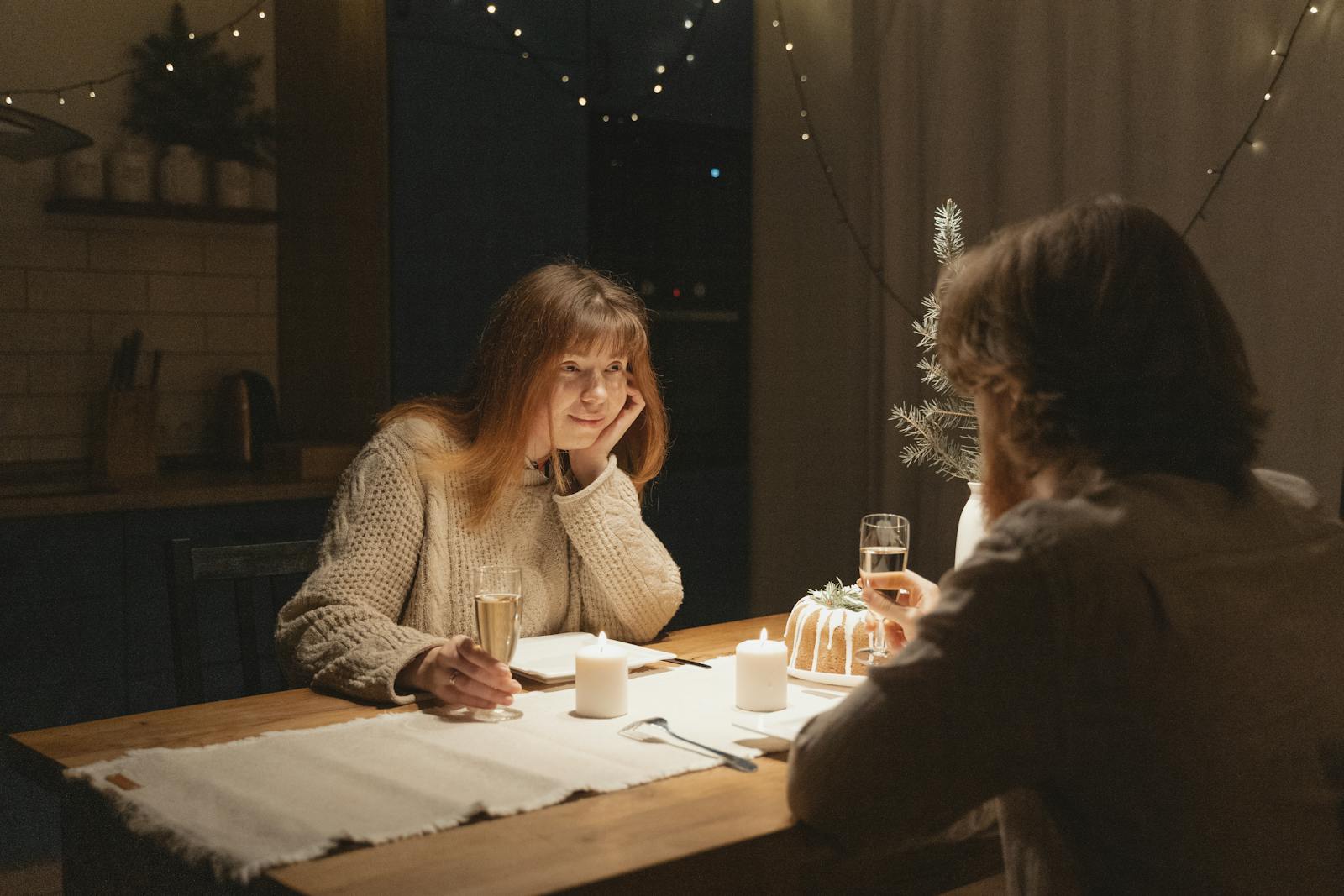
Glimpse them chatting in a restaurant or posing on Instagram, and you might think they have it all. The pair live in London but often travel, drawing the eyes of other guests, their skin glowing, their limbs artfully at ease. She writes affirmations on hotel stationery; he claims to taste notes of bark and tobacco in his chianti. As Sean Gilbert's dark, observant debut opens in Istanbul, this apparently perfect couple bicker and sweat, for secrets lurk behind their facade and one of them might be murder.
In my head you live another life Where you f*ck all my friends And wish someone else could've been your wife I love you, I love you I'm sorry, I'm sorry For letting it get the best of me again I'm too emotional, I guess When I look at that body I'm not trus
Tomás had lived in the city for about 20 years, but he grew up in Venezuela, where family life could be intense, political opinions were spoken openly, and knowing when to speak and when to stay quiet was often a matter of survival rather than preference. Daniela grew up in a very different family. Her parents talked constantly-about politics, values, and what they believed was happening in the world.
"Well, they could get separate beds. They could put a wall up. They could sleep on the convertible couch," Corcoran told The Wall Street Journal in an interview published on Monday.
I'm a 23-year-old graduate student. My significant other is 28; we met in school and have been together for two and a half years. We make excellent life partners, have supported each other through good times and bad, and feel aligned on the key issues. We both come from poor backgrounds and have at times struggled with money. After a rough career pivot, where my significant other almost hit rock bottom, they landed an extremely lucrative and stable job in finance. They're now making more than 15 times what I make! (Yes, literally.)
As a little girl in Slovenia, I had the same dreams as any child: to immigrate to America on a bogus "genius visa," to model acrylic sweaters in a catalogue, and to meet a rich man almost twice my age and enter into a financially advantageous marriage with as little physical contact as possible. I'd have my Barbie doll flirt with a small boulder, asking the boulder, "So, you're separated?" People would warn me, "Dreams don't always come true," to which I'd reply,
People think that marriage changes nothing, but it changes everything. Decisions made now have a lasting impact on the family for years to come, and what could have been decisions that were easily reversible before marriage are much more difficult after marriage. Staying employed becomes much more important, future planning becomes more about how we can afford to get pregnant soon than how we can afford to take a vacation or have a nice dinner, and lots of compromises must be made for the greater good.
When you think of an escort, you might think of a single woman. In a lot of cases, this is true. The sex work industry is still surrounded by stigma, and many people can't handle being in a relationship with someone whose job is to entertain men. As a wife who works in escorting, however, I look forward to my husband pouring me a glass of Sancerre after work while I count my bills.
My wife is an amazing, caring, kind person. She is a deeply committed mother to our three children, as well as being an incredibly generous, pleasant and warm person. When people meet her, they like her. She has that effect. Of course, there is a 'but', otherwise, why would I be writing to you? The 'but' is that she is very untidy and this is causing us big problems.
I really feel like the cultural norm around proposals is fundamentally silly and outdated. I wish more people would consider that women can propose too! It doesn't have to come from the male partner in heterosexual relationships. I asked my now-husband to marry me, and it was the best choice I've ever made. I think it's really interesting that this wasn't even mentioned in your advice-which goes to show how embedded this heteronormative idea about who gets to propose really is.
The day I married my husband was cool and quiet, and filled with the kind of calm that feels sacred. I wore my favorite color, indigo-purple, and my soon-to-be husband, Allan, looked dapper in cobalt blue. Our best friend, who served as our witness at Brooklyn City Hall, wore the perfect shade of green to complete the moment. As our names were called to step into the chapel, I could feel my heart racing, and my breath was shallow with anticipation.
"I married somebody who is the opposite of me. He is so organized," Lawrence said during an appearance on Tuesday's episode of the "Smartless" podcast. "He's an anchor. Everything is ordered, like on the sink. Like I have to, you know, like keep the closet doors closed, and I have like my little jobs that I work really hard to do," she said.
I don't. And that's exactly why I stopped. Rewind the clock 15 years. When an event planner gave us a truly ridiculous quote for a small wedding, my partner and I booked a flight to Las Vegas the very next day. We were married before noon at the Little Chapel of Flowers. No drama. No chair covers. Just vows and relief. It was a very good day.
As a marriage clinician and family life mentor, I have sat with couples whose eyes once sparkled with romance but now brim with regret. Not because they didn't love each other, but because they never asked the questions that love was supposed to answer. Many marriages don't collapse suddenly. They bleed slowly. They suffer not from hatred, but from silence.
I'm a 52-year-old woman, and 20 years ago, I had what I guess is now called a situationship with a guy named "George." For several years, we slept together a few times a month. It was amazing, incredible sex. He was clear that he didn't want to be my boyfriend, but also clear that he liked me. We had fun together, and I never hated myself after. Well, mostly. But I probably should have stopped seeing him sooner than I did.