#aros
#aros
[ follow ]
#biodiversity #conservation #indigenous-rights #deforestation #residential-architecture #climate-change #design

Non-profit organizations
fromNonprofit Quarterly | Civic News. Empowering Nonprofits. Advancing Justice.
16 hours agoEarth Day Is for the Planet. What About the People Protecting It? | Nonprofit Quarterly | Civic News. Empowering Nonprofits. Advancing Justice.
Conservationists face moral injury from witnessing environmental harm without adequate support, highlighting the psychological toll of their commitment to protecting the planet.
Social justice
fromwww.theguardian.com
1 week agoWe took clothes, a blanket and a dog': the people displaced by a dam 50 years ago, but still fighting for justice
The Itaipu hydroelectric dam construction displaced the Ava-Guarani people, disrupting their territory and culture, with ongoing struggles for justice and recognition.

Environment
fromwww.theguardian.com
2 weeks agoIf they pollute our rivers, what will become of us?': the town divided between hope and fear in Brazil's Amazon oil rush
Oiapoque, Brazil, is poised for development through oil production, raising concerns about environmental impacts and Indigenous rights amid a global energy transition.

Madrid food
fromBOOOOOOOM!
1 month ago"When the Desert Breathes Again" by Photographer Gonzalo Palaveccino
Photographer Gonzalo Palavecino documents La Tirana, Chile's largest religious festival, focusing on behind-the-scenes elements like food stands, abandoned objects, and improvised structures that reveal the sacred blending with everyday chaos and commerce.
fromYanko Design - Modern Industrial Design News
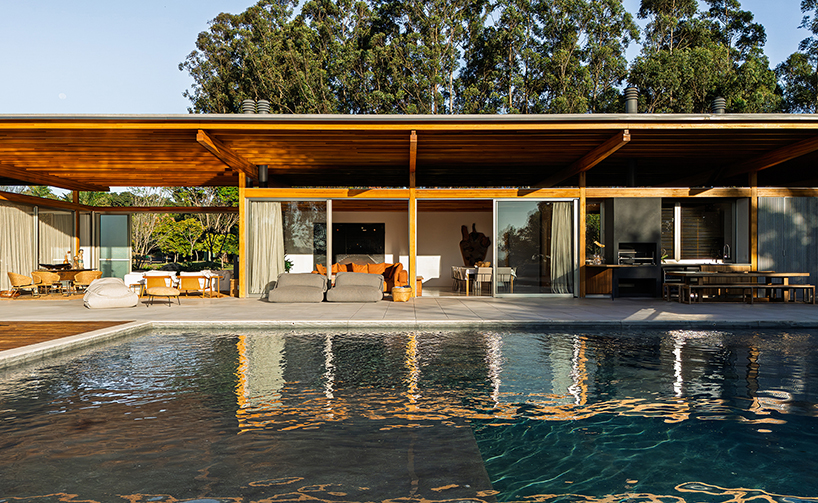
4 weeks agoThe Brazilian House That Turns a Hillside Into a Feature - Yanko Design
The design follows a longitudinal layout, which makes complete sense once you understand what the architects were trying to accomplish. By stretching the house along the slope rather than fighting it, the building naturally orients itself toward the mountain views in the valley below.
Design
History
fromArs Technica
1 month agoCenturies before the Inca, Peru's wealthy imported parrots from afar
The Ychsma kingdom maintained a sophisticated long-distance trade network spanning hundreds of kilometers across the Andes to import live parrots from the Amazon rainforest centuries before the Inca Empire.
fromThe Art Newspaper - International art news and events
1 month agoTomas Saraceno and Indigenous communities build art complex in Argentine salt flats
We don't eat batteries. They take away the water; they take away life. This pronouncement, in Spanish, appears in a photograph that the artist Tomás Saraceno sent via WhatsApp last month from Salinas Grandes, a high-altitude salt flat in northern Argentina. There, in one of the world's largest lithium reserves, the artist is working alongside 11 Indigenous communities to build El Santuario del Agua (The Water Sanctuary), a monumental work about the global energy transition.
SOMA, SF
fromdesignboom | architecture & design magazine
1 month agocircular timber pavilion anchors wildlife and wetland restoration park in mexico
The pavilion is recognized as the first building in Mexico constructed using cross-laminated timber (CLT). This system replaces conventional concrete and steel structures with mass timber, reducing the carbon footprint of the construction process. CLT panels are composed of layered wood elements arranged in alternating directions, creating structural stability while enabling prefabrication and efficient assembly.
Environment
Renovation
fromColossal
1 month agoIn Paraguay, Architecture Doesn't Come at the Expense of Nature at 'Un Bosque en La Casa'
A contemporary home in Paraguay integrates existing trees as design guides rather than obstacles, creating a harmonious blend of modern architecture and natural forest environment.
World news
fromwww.theguardian.com
2 months agoThey survived conquistadors and settlers. Now the Arhuaco are facing an even greater threat
Arhuaco face escalating violence as paramilitaries, guerrillas, and traffickers seize Sierra Nevada territory to control drug routes, coca regions, and illicit mineral extraction.
fromwww.theguardian.com
1 month agoRiding the wave: can surf tourism save Peru's ancient reed-boat fishing culture?
Archaeologists estimate that fishers in Peru have been using the reed boats for approximately 3,500 years. Elaborate ceramics dating back to the sophisticated Moche culture (AD100-800) and the later Chimu civilisation (900-1470), depict figures astride the craft, which was called a tup in the now-extinct Mochica language. They are believed to be among the first crafts to be used for riding waves, possibly predating Polynesian proto-surfing in Hawaii.
Food & drink
fromwww.theguardian.com
1 month agoIt creates a sense of belonging': Brazil bets on hiking trails for conservation
The idea that hiking trails are a tool for conservation is based on a simple premise: people protect what they know. That requires making conservation areas accessible. There's no point telling people you only protect what you know, if you don't give them the tools to know. The trail is this tool. People who hike, people who camp, these people often become defenders of the environment.
Travel
fromThe Art Newspaper - International art news and events
2 months ago'These are dirty funds': Indigenous Brazilian leader slams Science Museum for oil sponsorship ahead of climate show
BP's sponsorship of the museum has long drawn ire, in part because the oil company pursues an "all out for oil and gas" strategy, including plans to exploit deep drilling at the recently discovered Burmerangue site off the coast of Brazil. The project has been criticised by campaigners and oil and gas unions due to its threat to ocean ecosystems, elevated carbon dioxide levels, and lack of revenue flowing back into the Brazilian economy.
Environment
fromwww.theguardian.com
2 months agoPostcard-pretty and filled with pollution: how Brazil's fishers are reviving Rio de Janeiro's famous bay
Raw sewage and solid waste flow into the bay from surrounding cities, home to more than 8 million people. Cargo ships and oil platforms chug in and out of commercial ports, while dozens of abandoned vessels lie rotting in the water. But at the head of the bay, between the cities of Itaborai and Mage, the environment feels different. The air is purer, the waters are empty but for small fishing canoes, and flocks of birds soar overhead.
Environment
Arts
fromThe Art Newspaper - International art news and events
2 months agoMore than 600 works by Afro-Brazilian artists returned to Brazil
A voluntary repatriation returned 666 Afro-Brazilian works from Detroit to Muncab in Salvador, marking Brazil's largest cultural repatriation and a symbolic act of reparation.
fromwww.theguardian.com
1 month agoThe river won': how campaigners in Brazilian Amazon stopped privatisation of waterway
The river won, the forest won, the memory of our ancestors won, said the campaigners in Santarem when it was clear their actions had forced the Brazilian government into a U-turn on plans to privatise one of the world's most beautiful waterways and expand its role as a soy canal.
Environment
Environment
fromwww.theguardian.com
2 months agoPure apocalypse': a photographer's journey through the Pantanal wildfires
A documentary photographer documents catastrophic Pantanal and Amazon fires, chronicling environmental destruction, wildlife loss, and ongoing return visits to record the aftermath.
fromwww.theguardian.com
2 months agoSome of world's oldest trees hit by climate-fuelled wildfires in Patagonia
The hot, dry and windy conditions that enabled the fires to blaze across huge areas in January were made about three times more likely by global heating, researchers from the World Weather Attribution (WWA) consortium found. Parts of Chile and Argentina are experiencing significantly drier summers as a result of human-caused carbon emissions, with rainfall now 25% lower in early summer in Chile and 20% lower in the affected region of Patagonia.
Environment
Environment
fromdesignboom | architecture & design magazine
2 months agoelevated linear park reclaims canal runing along brazilian city center
Doca Linear Park restores Belém’s waterfront by converting a 1.2 km buried canal into a continuous linear park integrating water, green infrastructure, and flood-resilient design.
[ Load more ]