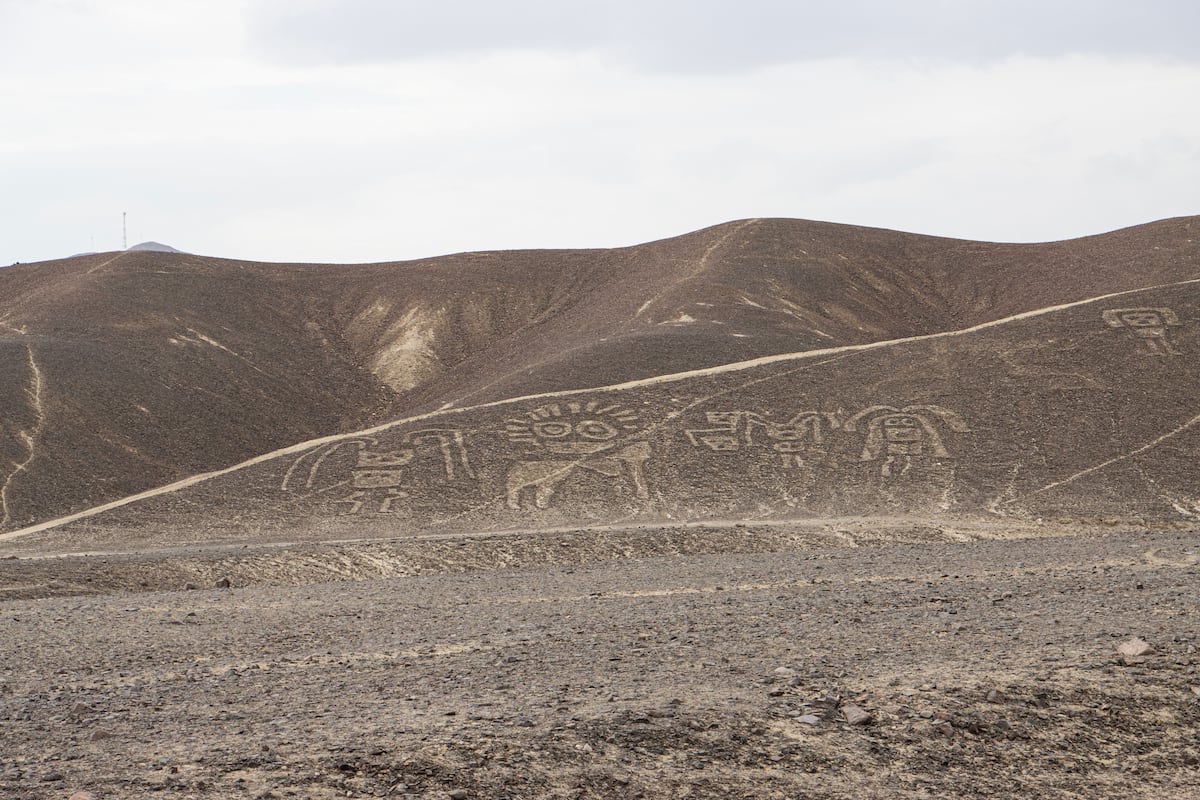
"The aqueduct built by the Nazca culture, known as the Santa Maria de Taruga Aqueduct, features wells and tunnels that connect to ancient geoglyphs, emphasizing the importance of water and fertility in their rituals."
"The spider symbolizes the regeneration of life, while the hummingbird is crucial for pollination, both reflecting the Nazca culture's deep connection to nature and its cycles."
"The toad, often misidentified as The Hand, is a significant symbol for the local farmers, indicating the promise of rain, demonstrating the continuity of ancestral knowledge in agricultural practices."
Antonio Aguilar, a 77-year-old man, cleans wells in the Santa Maria de Taruga Aqueduct, built by the Nazca culture 1,500 years ago. This aqueduct connects to geoglyphs depicting animals linked to water and fertility rituals. Archaeologist Johny Isla explains that these symbols, like the spider and hummingbird, represent life and regeneration. The toad drawing signifies the arrival of rain, showcasing the enduring wisdom of the Nazca people, which remains significant in the context of modern climate phenomena like El Nino.
Read at english.elpais.com
Unable to calculate read time
Collection
[
|
...
]