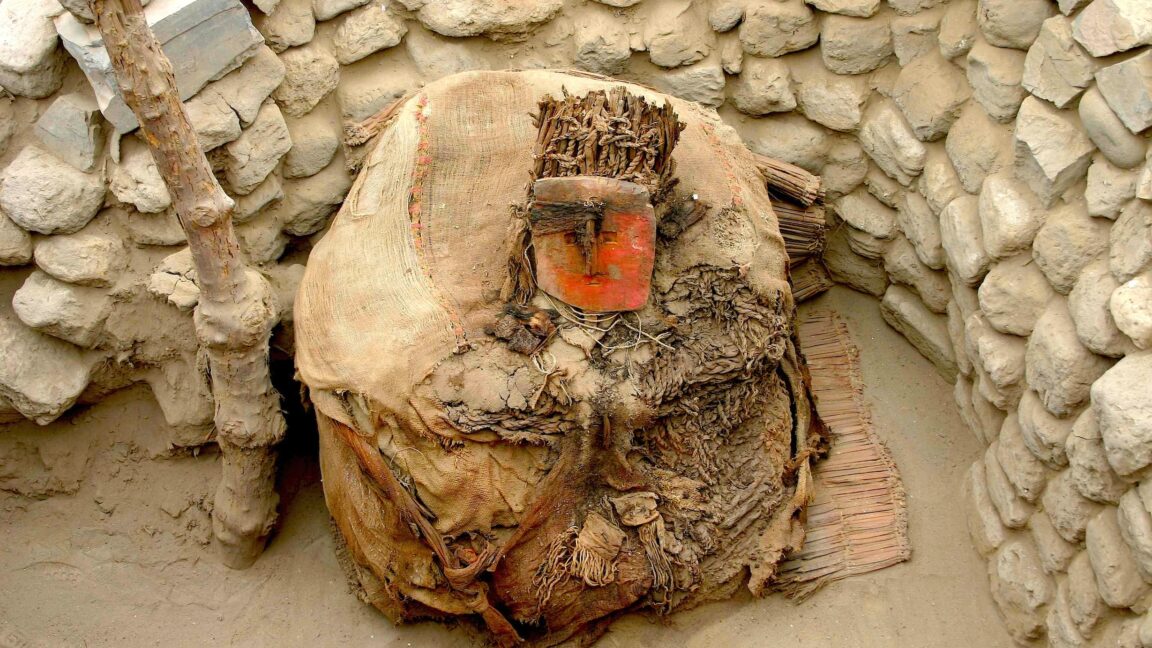
"DNA and chemical isotopes reveal that the parrots the feathers came from (still bright blue, yellow, and green after all these centuries) were born in the wild on the far side of the Andes but kept in captivity somewhere on the Peruvian coast. To pull off importing live parrots from hundreds of miles away across the steep, towering Andes, the Ychsma (who the Inca annexed around 1470) must have had a far-reaching trade network that spanned at least half a continent."
"The results suggest the parrots were born in the wild but spent at least a year in captivity eating local maize. That means they must have been captured hundreds of kilometers away, because parrots don't tend to flock to the desert on their own."
The Ychsma kingdom, which preceded the Inca Empire on Peru's central coast, operated an extensive trade network capable of importing live parrots from the Amazon rainforest across the Andes Mountains. Researchers analyzed feathers from a noble's headdress dating to 1100-1400 CE using DNA and chemical isotope analysis. The evidence reveals that parrots were captured in the wild hundreds of kilometers away, then transported to the Peruvian coast where they were kept in captivity and fed local maize for at least a year. This discovery demonstrates that sophisticated long-distance trade systems existed in the region centuries before the Inca established their famous road network.
#pre-inca-trade-networks #ychsma-kingdom #long-distance-commerce #archaeological-analysis #feather-dna-evidence
Read at Ars Technica
Unable to calculate read time
Collection
[
|
...
]