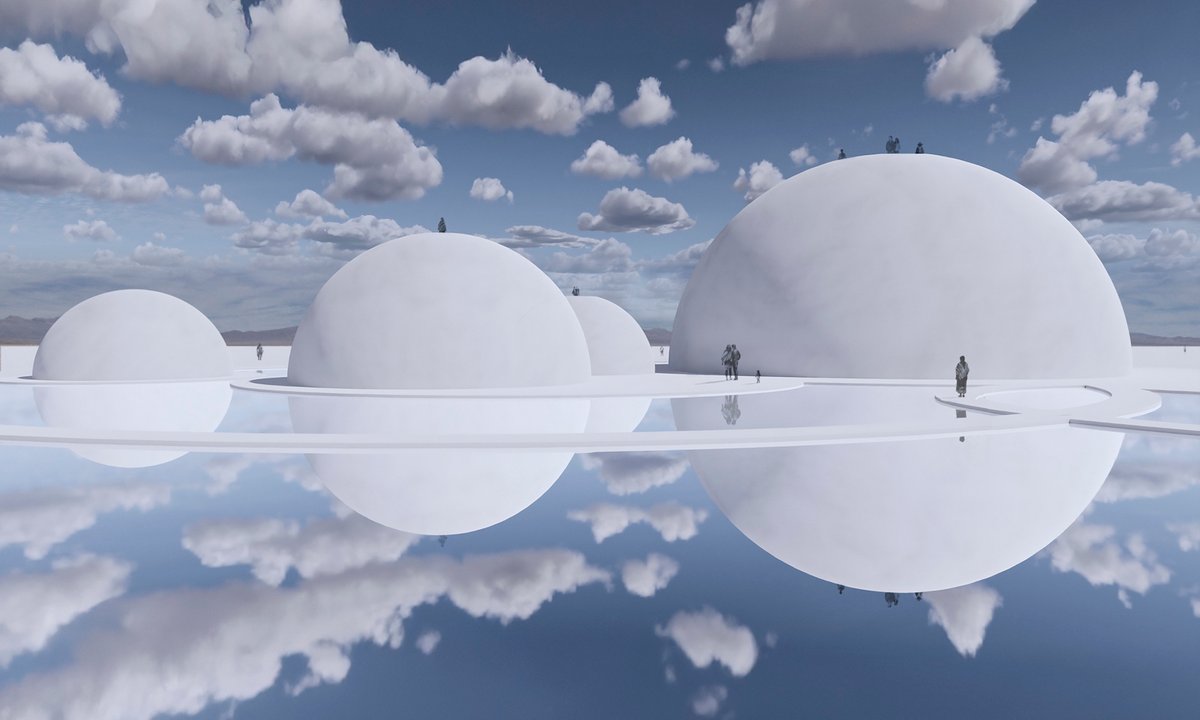
"We don't eat batteries. They take away the water; they take away life. This pronouncement, in Spanish, appears in a photograph that the artist Tomás Saraceno sent via WhatsApp last month from Salinas Grandes, a high-altitude salt flat in northern Argentina. There, in one of the world's largest lithium reserves, the artist is working alongside 11 Indigenous communities to build El Santuario del Agua (The Water Sanctuary), a monumental work about the global energy transition."
"To produce a single ton of lithium carbonate for use in smartphone batteries, more than two million litres of fresh groundwater are evaporated. The region is arid, receiving only about 300mm of rain per year. Located in the provinces of Jujuy and Salta, Salinas Grandes sits 11,300ft above sea level. Water rises from underground aquifers, evaporates under the sun and crystallises into salt, creating, after rainfall, a vast mirror-like surface in which the sky appears reflected."
"The project consists of five semicircular structures built principally of salt in varying sizes, ranging from 7ft to 99ft in diameter and up to 50ft high. Their forms will be completed when reflected on the ground, 'when the water returns its hidden half', Saraceno says. The five structures, inspired by apachetas (stone mounds traditionally placed as offerings to Pachamama, the Andean earth deity) take their names from Andean cosmology: Inti, Killa, Ch'aska, Hawcha and Tiqsimuyu."
Tomás Saraceno is constructing El Santuario del Agua in Salinas Grandes, a high-altitude salt flat in northern Argentina containing one of the world's largest lithium reserves. The project involves 11 Indigenous communities and consists of five semicircular structures built primarily from salt, ranging from 7 to 99 feet in diameter. Named after Andean cosmological concepts and inspired by traditional apachetas stone offerings, these structures will be completed by their reflections in water. The work critiques lithium extraction's environmental cost: producing one ton of lithium carbonate requires over two million liters of fresh groundwater evaporation in this arid region receiving only 300mm annual rainfall. The sanctuary opens in October, featuring elevated viewing platforms accessible by carved stairs.
#environmental-art #lithium-extraction #indigenous-communities #water-conservation #energy-transition
Read at The Art Newspaper - International art news and events
Unable to calculate read time
Collection
[
|
...
]