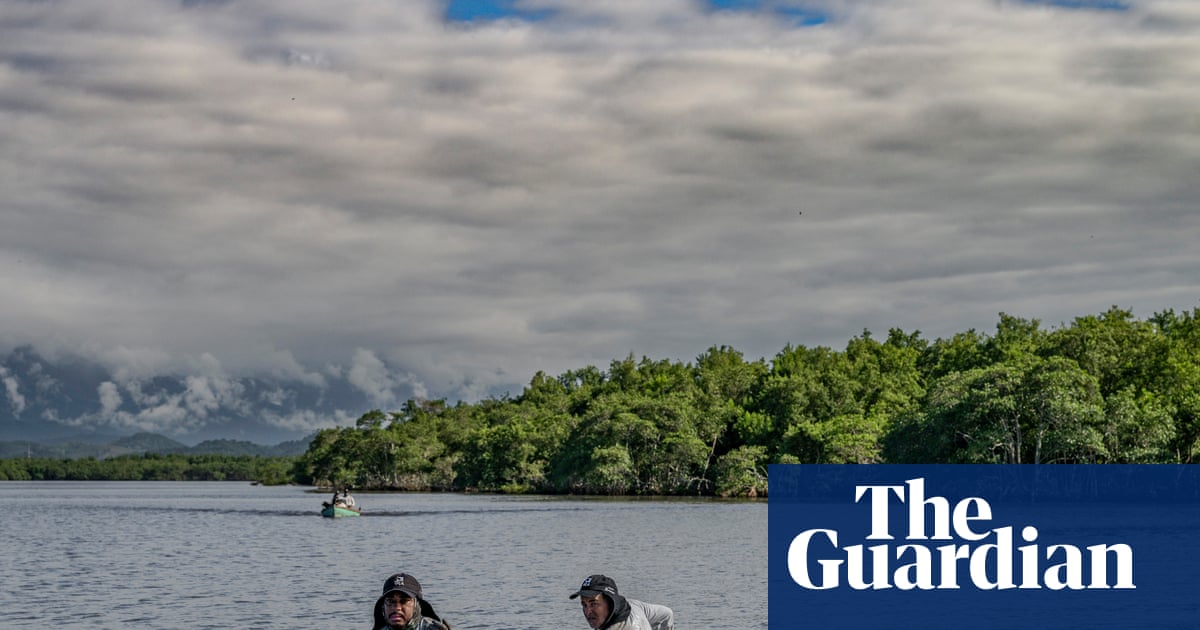
Guanabara Bay suffers severe pollution from raw sewage, solid waste, cargo ships and abandoned vessels, threatening coastal ecosystems and livelihoods. At the bay head between Itaboraí and Magé, a thriving mangrove forest within the 14,000-hectare APA Guapi-Mirim (6,000 hectares of mangroves) supports rich biodiversity and protects the coastline. Local fishers and the Uca team have restored mangroves, improving air and water conditions and providing nurseries for marine species. Mangroves filter pollution, buffer storms, and sustain fisheries. Creation of the APA in 1984 prevented large-scale development and allowed conservation and community-led restoration to persist.
"Raw sewage and solid waste flow into the bay from surrounding cities, home to more than 8 million people. Cargo ships and oil platforms chug in and out of commercial ports, while dozens of abandoned vessels lie rotting in the water. But at the head of the bay, between the cities of Itaborai and Mage, the environment feels different. The air is purer, the waters are empty but for small fishing canoes, and flocks of birds soar overhead."
"If the APA Guapi-Mirim hadn't been created on 25 September 1984, Guanabara Bay would have died. All this area would have become an airport, logistics for trucking, housing estates, says Alaildo Malafaia, a 63-year-old fisher turned environmentalist, as he steers a motorboat down the Macacu River in the protected area. Solid waste affects the mangroves crabs can no longer dig their burrows, and trees no longer find space to grow Janaina Oliveira, Projeto Uca"
Read at www.theguardian.com
Unable to calculate read time
Collection
[
|
...
]