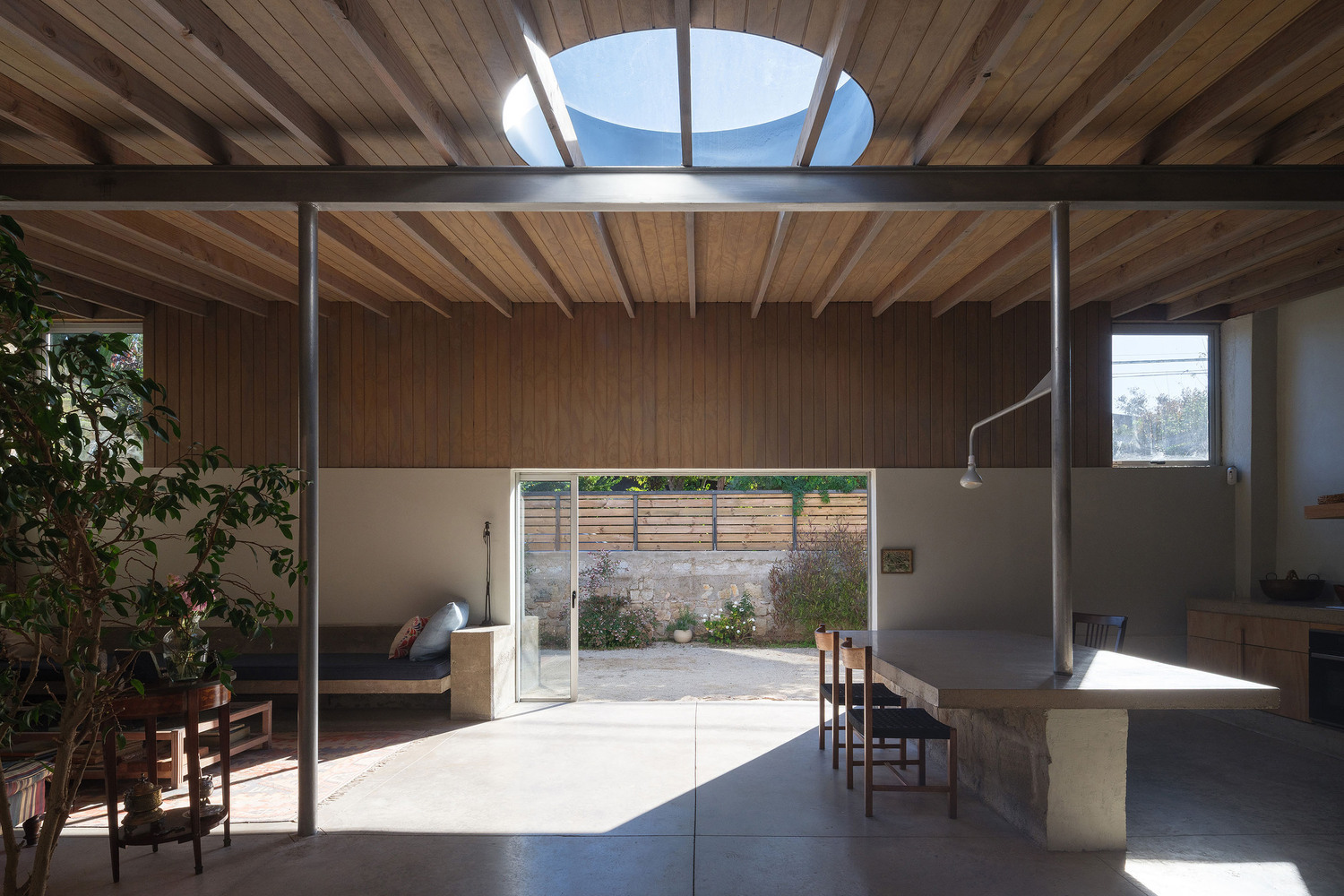
In South America, environmental comfort arises from spatial arrangements rather than isolated interior conditions. Architects in hot, humid, and variable climates moderate temperature and support daily life through openings, shading, aligned voids, and porosity. Interiors are designed with depth and intermediate zones that filter light, guide airflow, and transform thresholds into active, usable spaces. These spatial strategies prioritize adaptability and temperate conditions over uniform mechanical control. The resulting interiors remain closely attuned to seasonal and diurnal changes, providing comfortable environments through moderated light, ventilation, and graduated enclosure rather than sealed, artificially conditioned spaces.
"Across South America, environmental comfort is understood not as an interior condition, but as one shaped through space. In regions marked by heat, humidity, intense sunlight, and seasonal variation, architecture has long relied on spatial decisions to moderate climate and support daily life. Comfort emerges from how interiors are opened, shaded, ventilated, and inhabited over time. Rather than isolating interior spaces from their surroundings, many contemporary projects across the region cultivate comfort through depth, porosity, and intermediate zones."
"Light is filtered rather than maximized, air is guided through aligned openings and voids, and thresholds become active spaces of use rather than residual edges. These strategies do not seek uniform environmental control, but produce interiors that remain temperate, adaptable, and closely attuned to changing climatic conditions. In this context, environmental comfort becomes inseparable from spatial experience."
Read at ArchDaily
Unable to calculate read time
Collection
[
|
...
]