#youth
#youth
[ follow ]
#mental-health #social-media #community #tragedy #education #peace #lgbtq #pope-leo-xiv #violence #gaza #loss #wellbeing
#social-media



fromwww.theguardian.com
9 months agoUK politics
Worrying' levels of screen time means young people losing confidence to socialise in person, minister warns UK politics live
Keir Starmer highlights youth isolation due to social media, emphasizing government's investment in community youth programs to combat these issues.
Digital life
fromwww.cbc.ca
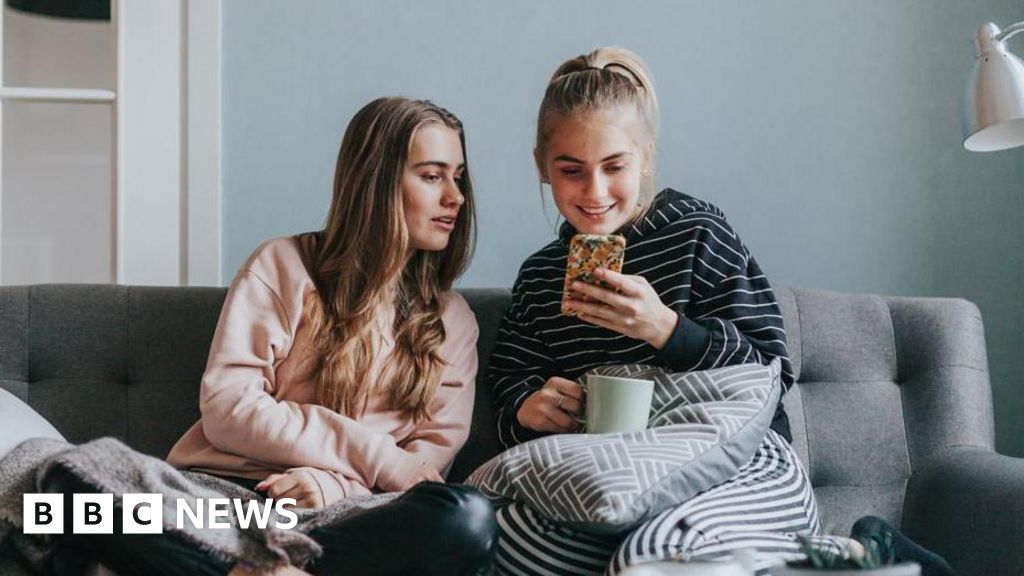
1 month agoToronto teens, parents, counsellors uncertain possible social media ban will be successful | CBC News
Valentina Poveda emphasizes the importance of social media for youth while acknowledging potential risks and advocating for parental involvement in online safety.





Privacy technologies
fromwww.theguardian.com
1 month agoFifteen-year-old Noah hasn't been kicked off any social media platforms he's still fighting Australia's under-16 ban in court
The social media ban for under-16s in Australia has not significantly impacted teens' online experiences, with many still accessing platforms despite the restrictions.
fromFast Company
2 months agoSephora and Benefit Cosmetics are under fire for marketing tactics using 'very young micro-influencers'
The investigations were opened over concerns that important information-such as warnings and precautions for cosmetics not intended for, or tested on, minors-may have been omitted or presented in a misleading manner.
France news
Miscellaneous
fromwww.theguardian.com
3 months agoThey don't see the need for division anymore': how teenagers of Belfast are escaping the city's past in pictures
Belfast young people live everyday teenage lives amid entrenched segregation, peace walls, and socioeconomic pressures, not solely defined by sectarian violence.
fromPsychology Today
4 months agoSurvival of the Friendliest: AI Companions and the Social Health Crisis
Evidence shows that, for many of us, AI has become a core part of our everyday lives. Not just our work lives, but our personal lives, too. Indeed, more and more people are turning to AI companions-designed specifically to provide emotional support and a sense of connection. A recent report found that 72 percent of teens in the United States have interacted with an AI companion at least once, with more than half (52 percent) describing themselves as regular users.
Public health
World news
fromenglish.elpais.com
4 months agoGen Z's struggle in South Africa, the most unequal country in the world
A young Generation Z student from a working-class background embodies hope amid persistent socio-economic challenges in South Africa, with ambitions to expand opportunities across Africa.


Social media marketing
fromPhys
5 months agoSocial media algorithms target lower-income youth with risky 'easy money' ads, study shows
Lower-income youth, especially boys, are disproportionately targeted by ads for risky financial products, betting, online gaming, and easy-income schemes on TikTok and Instagram.
Artificial intelligence
fromFortune
6 months agoPope Leo warns Gen Z and Gen Alpha against leaning too much on AI: 'Don't ask it to do your homework' | Fortune
AI can process information quickly but cannot replace human wisdom; use it responsibly to support growth, not substitute effort, judgement, or responsibility.
#gaza


Soccer (FIFA)
fromwww.aljazeera.com
11 months agoPalestine's World Cup dream still on as Israel ruins Gaza's sports sector
The ongoing conflict in Gaza has severely disrupted the local sporting community, with many dreams of international representation shattered.
The legacy of sports figures like Mohammed Safi highlights the impact of war on youth aspirations.
fromAeon
7 months agoA project takes teens from war-torn regions to schools in Canada | Aeon Videos
This short 1986 documentary follows the International Youth for Peace and Justice Tour, a programme in which teenagers from then-conflict zones around the world visited and spoke with high-school students across Canada. Capturing the tour's stop in Montreal, the director Premika Ratnam introduces viewers to teens from unstable or war-torn nations of the period - including Northern Ireland, East Timor, Namibia, Zimbabwe, El Salvador and Guatemala - as they recount their experiences. With wisdom often beyond their years, they discuss a range of hardships, from daily indignities and lack of job opportunities to witnessing torture and murder and fearing for their lives.
Philosophy
fromwww.theguardian.com
7 months agoA moment that changed me: I froze in a job interview and it made me stop hiding my disability
To my horror, I couldn't make out a single word on the display. The customer, a woman with her young daughter, stood impatiently as I froze. I didn't know what to say. After a few awkward minutes, the hiring manager dismissed me and I received a rejection email the next morning. My dreams of attending Wireless and Reading festivals with my friends disintegrated and I had another, more important, revelation: for the first time in my life, I realised that I was disabled.
Medicine
fromScary Mommy
8 months agoA Study Found That Many Kids Don't Realize They Are Being Bullied
A new study conducted by Ireland's Economic & Social Research Institute found that while bullying remained a pretty ubiquitous experience for teens, most of them chose not to tell an adult. Why not? Well, most of the time they didn't perceive what was being done to them as bullying, so when asked if they'd ever been bullied, they'd naturally say no.
Miscellaneous


fromCornell Chronicle
9 months agoGrant will fund first-of-its-kind National Youth Purpose Survey | Cornell Chronicle
Research conducted with adults has connected a sense of purpose with a host of benefits, including better physical and mental health, more social connections and better resiliency,
Psychology


fromFuturism
9 months agoMed Student Horrified to Learn How Much His Zoomer Patient Was Actually Vaping
A University of Vermont medical student found that his 'zoomer patient' goes through an entire disposable vape cartridge every two days, equivalent to a staggering 500-750mg of nicotine daily.
Public health


Digital life
fromwww.theguardian.com
11 months agoI don't think my brain should have gone through that': five young people on their experience of smartphones as teens
The impact of smartphones and social media on teens is debated, with some advocating for delayed access and others suggesting moderation is key.

[ Load more ]