#creative-process
#creative-process
[ follow ]
#creativity #design-thinking #fashion-design #storytelling #game-development #product-design #collaboration
fromSlate Magazine
12 hours agoHacks' Finale Was Sublime. It Was Always Supposed to End That Way, According to Its Creators.
Deborah wants to call her own light-a reference to the signal comedians get when it's time to leave. After a long and storied career-the last phase of which saw her reaching new heights alongside her much younger comedy partner, Ava ( Hannah Einbinder)-she's ready to go, even if we don't want her to. Having successfully performed a once-in-a-lifetime comedy show in Central Park that far eclipsed the Madison Square Garden production that executive Bob Lipka (Tony Goldwyn) stole from her, Deborah is finally at peace, comfortable that her legacy is forever secured.
Television
UX design
fromdesignboom | architecture & design magazine
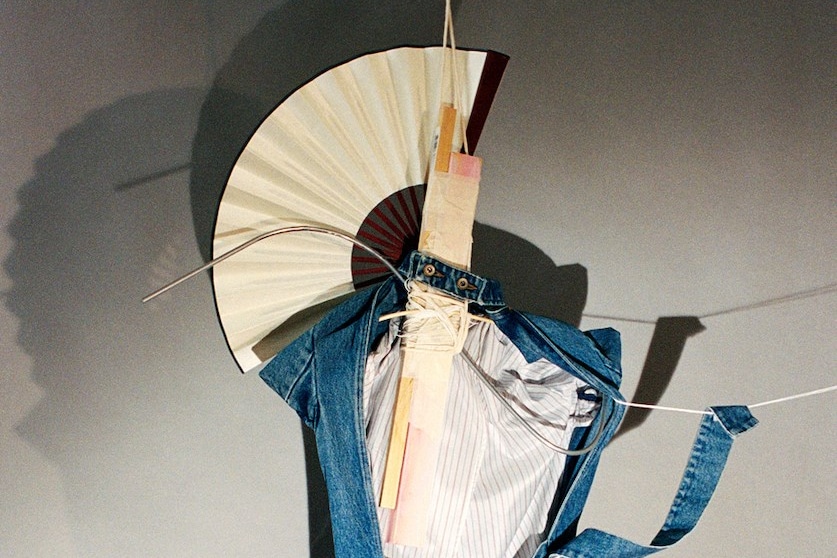
19 hours ago'design intuition is not magic': designers talk how creativity emerges subconsciously
Design creation is framed as an empathetic, human-centric process driven by intuition, subconscious flow, and lived experience rather than rigid logic.

fromAnOther
2 weeks agoA Primordial New Fragrance from Comme des Garcons Parfums
For Antoine Maisondieu, the nose behind To Vetiver, Comme des Garçons Parfums ' latest 'pebble' fragrance, the weight was doubled - this was the last completed perfume of Christian Astuguevieille, CDG Parfums' pioneering creative director of three decades, composed in devotion to the material he loved above all others.
Paris food
fromIndieWire
2 weeks agoJames Burrows on 'The Comeback' and Hollywood's AI Problem: 'I Have No Idea What the F**k Happened'
“Good, but never gonna be great,” Jimmy says. “The machine is fast and cooperative, I'll give it that. But I saw every one of those jokes coming, and so did you. Surprising only comes from a group of writers, huddled in a corner, beating themselves up to beat out a better joke. It's the chubby guy who's a secret alcoholic. It's the gay guy who, despite all the work he's done, still hates himself a little. Or the funny woman who's been invisible for way too long. They turn all that pain into a joke. Val, those broken, beautiful souls are what make something great. And you didn't see it coming.”
Independent films
fromGrub Street
3 weeks agoThe Roots' Black Thought Judges a Sandwich by Its Bread
Since then, food has developed into a love language. This past Monday, he brought homemade lunch to 30 Rock for his fellow bandmates to enjoy before prepping for The Tonight Show, where they've been the longtime backing band. He does this once every other month as a morale booster - though most recently, it was by request. The menu included six half jerk chickens and jerk wings, cedar-plank salmon, some snapper filets, crab legs, plantains and rice and peas, whipped up that morning.
Silicon Valley food
fromEntrepreneur
1 month agoFrom Getting Paid in Chipotle Gift Cards to Making $100 Million Movies: The Wild Ride of the Comedy Writing Team Behind 'The Naked Gun'
Dan and Doug didn't wait for anyone to 'pick' them—they built their own stage. They started with the Hammerkatz sketch group at NYU, then hustled their way into the legendary Upright Citizens Brigade. The first time they remember getting paid to be funny, they earned a bunch of Chipotle gift cards and some Rolling Rocks. 'We felt like we were rich,' laughs Dan.
Humor


Writing
fromwww.theguardian.com
2 months agoThe male ego is even more fragile than it ever was': Kim Gordon on shyness, AI and Zohran Mamdani's cool
Sonic Youth focused on creating unprecedented music by studying influential predecessors like the Velvet Underground and no wave bands, then pursuing innovation without long-term planning, allowing creative direction to emerge organically.
Music production
fromwww.theguardian.com
2 months agoNew York hip-hop experimentalist Elucid: I like the harmony of the city. Everybody's got a little solo'
Elucid experiences the Dream House installation's meditative drone composition, which triggers his creative process through sensory immersion and unconscious sound-to-word associations.
Women in technology
fromwww.mediaite.com
2 months agoMelania Trump Calls Herself A Visionary' and Explains, My Creative Mind Dances'
Melania Trump presented her documentary at a White House Women's History Month event, emphasizing solitude, curiosity, and attention to detail as essential to her creative success across multiple industries.
fromBuzz Usborne
2 months agoDesigning AI Experiences People Actually Use
For decades in SAAS, products reduced ambiguity. Users supplied constrained inputs, and the system handled the output. It's never been Minority Report cinematic, but it was predictable. By providing predictable environments for manipulating data, users learned by moving things, adjusting variables - and the outcome emerged through interaction.
Design
fromConsequence
2 months agoHow The Whitest Kids U' Know's Animated Space Movie Survived a Brutal Tragedy
Trying to navigate [production] while listening to the voice of your dead best friend is brutal. It changed everything. It went from being this fun capricious lark to this beautiful and sad process. It was very tough.
Film
Graphic design
fromItsnicethat
2 months agoThe illustrations of Sebastian Curi are all about learning analogue tools (flaws and freckles included)
Sebastian integrates multiple artistic mediums—acrylic painting, colored pencils, and relief printing—while using digital tools primarily for documentation and learning the foundational principles behind each technique.
fromConsequence
2 months agoPeter Gabriel Looks Forward to "What Lies Ahead" on Spiritual New Song
You see the world now all connected, flowing as a brain. You see the world the way it will be, unfolding in your hands. Gabriel sings these lyrics over the meditative composition, reflecting on interconnectedness and future possibilities.
Music
NYC music
fromBrooklynVegan
2 months agoMaya Hawke announces new album & tour dates, shares "Devil You Know"
Maya Hawke releases new album Maitreya Corso on May 1, featuring the single 'Devil You Know,' exploring themes of protecting creativity from ambition, love from control, and collaboration from jealousy.
Graphic design
fromBOOOOOOOM!
2 months agoIllustrator Spotlight: Starrenco
Italian illustrator Starrenco creates distorted, imaginative worlds grounded in reality, using drawing as a method of personal investigation to explore inner landscapes and reveal hidden meanings through intuitive creative processes.
Los Angeles
fromLos Angeles Times
2 months agoGorillaz's new album 'The Mountain' wants to 'leave the listener feeling optimistic' about death
Jamie Hewlett discusses Gorillaz's latest album 'The Mountain' and the band's 25-year journey, expressing pride in their honest creative work while enjoying downtime in Los Angeles.
Fashion & style
fromQueerty
3 months agoWATCH: Marc Jacobs strips it all down in new intimate doc on the iconic gay fashion designer - Queerty
Marc Jacobs reveals intimate moments of his creative process in Sofia Coppola's documentary, showcasing his journey from fashion student to influential designer while reflecting on transformation and personal growth.
fromI Love Typography Ltd
3 months agoHow Not to Take 10 Years to Design a Typeface - I Love Typography Ltd
I would listen with awe and think, 'That must have been a real challenge. It must be exquisitely crafted and probably a little bit groundbreaking too.' So it feels slightly absurd to admit that my last typeface, Nave, also took around ten years to complete. Not because I spent a decade polishing outlines or expanding the character set, but because I took so many wrong turns trying to chase a vision I hadn't properly defined.
fromwww.theguardian.com
3 months agoFatima Bhutto on her abusive relationship: I thought it could never happen to me'
Had Fatima Bhutto been left to her own devices, her devastating forthcoming memoir would have been almost entirely about her relationship with her dog, Coco. I know it sounds nuts, she laughs. And it's true that being dog-crazy doesn't quite track with the public perception of Bhutto as a writer, journalist, activist and member of Pakistan's most famous political dynasty. But the pandemic had forced something of a creative unravelling and when Bhutto took stock, she found herself only really able to write about Coco.
Books
fromDesign Milk
3 months agoF5: Kameh Talks Their Pet, the Messner Mountain Museum + More
Kameh was naturally drawn to design, but it wasn't until they were setting up a new apartment that they knew this interest was a true calling. "Very quickly I realized I wanted to create pieces that told a story, rather than simply serve as functional furniture," the artist says. "I wanted each object to carry a soul, to hold a memory - something that could live and breathe in the space with me."
Design
Music
fromLos Angeles Times
3 months agoHow Mount Wilson and Calabasas roads fueled Don Toliver's new album, 'Octane'
Don Toliver's album Octane channels Mount Wilson Observatory astronomy, a 'black hole' creative process, and lifelong car obsession into an instinct-led, vehicle-themed sonic exploration.
fromItsnicethat
4 months ago"A scrapbook of raw, layered process, inspiration and practice": Dixon Baxi on their 500-page manifesto for making
"We started by asking everyone to collect images regularly. Just spontaneous snapshots as we went. Of everything. Sketches, screens, notes, half thoughts, moments in motion. Over time it became this huge grab bag of elements," Simon says.
Books
fromApaonline
4 months agoRick Rubin, Kant, and the Tasteful Genius
In §46, Kant defines genius as "the inborn predisposition of the mind through which nature gives the rule to art" (5:307). Because beautiful art cannot be created according to fixed rules, the artistic genius is a kind of channel for the way beauty appears spontaneously in nature. (My slideshow includes Angelus Silesius's "Die Rose" on this point: "The rose is without why.") For Kant, genius has a talent that cannot be learned or taught, and it cannot give an account of itself.
Philosophy
fromwww.nytimes.com
4 months agoVideo: Why ASAP Rocky's New Album Took So Long
I just always said to myself, like, I ain't gonna rush it, man. I thought I was ready in 2024, and it was just, like, I thought the court case was going to be, you know, done by, you know, that fall. That kept getting pushed back, and it was just, like, kind of hard to really focus, you know what I mean? Not only that,
Music


fromItsnicethat
4 months agoGomatsu didn't plan to illustrate 80 cats of Taiwan in one day... but he did
Each pet expresses their own personality; the illustrations are simple, yet tell us so much about each individual cat. Gomatsu captured each in a specific moment, and then amplified the action, expression or energy through his characterful drawings. Brown is holding a cold, rigid blank stare while 노호유 is caught mid-clean. Yuki has a mischievous grin, and Bao looks like a stern bouncer (definitely not letting you in).
Graphic design

fromMedium
5 months agoA sharp tool can still ruin the cut
Generating content for design mocks or writing simple scripts to automate boring tasks. I even built a Figma plugin to easily rename all the icons in our icon library, to avoid the repetitive work, but also because I was curious if I could make it work. One thing led to another. I started playing around and started finding excuses to explore. I built an iOS app to keep track of daily exercise, started playing with V0 and Lovable to quickly brainstorm and generate rough design
Artificial intelligence
Artificial intelligence
fromFortune
5 months agoMark Cuban says AI allows 'creators to become exponentially more creative,' but his advice didn't land well with people working in the industry | Fortune
AI can dramatically accelerate creative iteration and expand creators' output, while many creatives worry AI strips humanity, enables exploitation, and threatens jobs.
Design
fromArchitectural Digest
5 months agoAn Architect Asked His Clients to Describe a Perfect Rainy Day-Then Designed Their House Around It
A deeply collaborative, art-school–inspired design process produced a hemlock-clad, site-sensitive home that prioritizes music, weather, and blended indoor-outdoor family living.
fromPsychology Today
5 months agoAn Art Therapist's Guide to Vision Boards
Lately, my sessions have been filled with clients reflecting on the tension that often arises during periods of transition. Some feel proud of their growth, while others feel discouraged by goals left unmet or intentions that quietly fell away as life became overwhelming. Many wonder what to do with this disappointment and whether to carry these unfinished hopes forward. As an art therapist, I guide clients toward practices rooted not in self-judgment but in intentionality, embodiment, and creative self-understanding.
Mental health
Arts
fromARTnews.com
6 months agoArt in America's Winter "Collaborations" Issue Features Talia Chetrit, Mernet Larsen, Artists' Fashion Legacies, and More
Creative activity often appears boring, consisting of slow, inwardly rich periods of problem-solving, preparation, work, and reflection rather than constant dramatic action.
Startup companies
fromBusiness Insider
6 months agoI'm an architect and CEO. These 5 lessons from my creative career helped me launch my company that has raised $2.7 million.
Distill ideas into one clear sentence, embrace creative mess, and use storytelling skills from design to inspire investors, cofounders, and employees.
Photography
fromDesign You Trust - Design Daily Since 2007
6 months agoSpectacular Award-Winning Macro Photos from the 2025 Mobile Photography Awards
Mobile phone macro photography elevates tiny details into monumental art, demonstrating that creativity depends on curiosity, good light, and a phone rather than expensive gear.
[ Load more ]