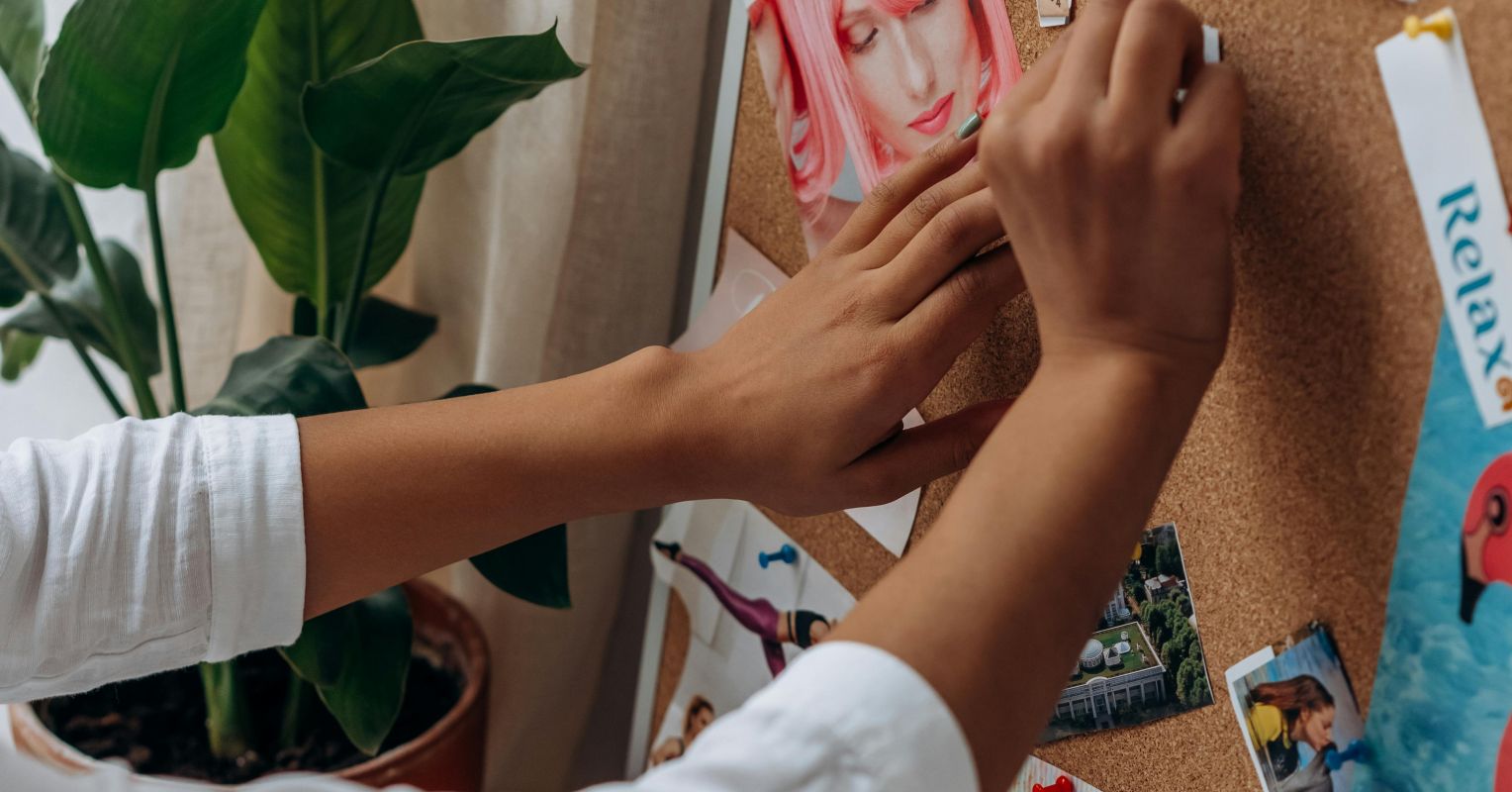
"Lately, my sessions have been filled with clients reflecting on the tension that often arises during periods of transition. Some feel proud of their growth, while others feel discouraged by goals left unmet or intentions that quietly fell away as life became overwhelming. Many wonder what to do with this disappointment and whether to carry these unfinished hopes forward. As an art therapist, I guide clients toward practices rooted not in self-judgment but in intentionality, embodiment, and creative self-understanding."
"Art making is inherently a narrative process. In the studio or the therapy room, images become a form of storytelling that bypasses the rigidity of language. According to McNiff, art allows us to externalize inner experience and witness ourselves more fully through symbolic form (McNiff, 2004). Vision boarding builds on this same principle. Whether created with paper and magazines or designed digitally, a vision board takes shape through the intentional selection of images and words that resonate."
Clients in transition commonly experience tension between pride in growth and discouragement over unmet goals and intentions that fell away under overwhelm. Reflection can slide into self-critique, prompting questions about whether to carry unfinished hopes forward. Art therapy emphasizes intentionality, embodiment, and creative self-understanding as alternatives to self-judgment. Vision boards function as compassionate bridges between past and future, curating images and words that tell desires, memories, and possibilities. Art making externalizes inner experience, enabling narrative witnessing through symbolic form. Intentions prioritize feeling and lived experience; images ground feelings into actionable, process-focused change that supports lasting psychological transformation.
Read at Psychology Today
Unable to calculate read time
Collection
[
|
...
]