Renovation
Renovation
[ follow ]
#destruction-of-relics #great-wall-of-china #unesco-world-heritage-site #ming-dynasty #unesco-world-heritage
fromArchDaily
1 day agoAntoni Gaudi's Last Original Residence at Casa Batllo Opens Following Three-Year Restoration
Casa Batlló in Barcelona has unveiled the restored Third Floor of the building, opening the last original residence preserved from Antoni Gaudí's 1904-1906 transformation of the property to the public for the first time. Led by restoration architect Xavier Villanueva and developed over three years through an archaeological-style conservation process, the intervention recovers a largely intact domestic environment that had remained inhabited by descendants of the Batlló family for more than a century.
Renovation
#residential-architecture
Renovation
fromYanko Design - Modern Industrial Design News
3 days agoInside the Log-and-Glass Home Olson Kundig Built for a Builder on Salt Spring Island - Yanko Design
A rugged glass-and-log residence on Salt Spring Island balances privacy and landscape connection through layered materials, cantilevered shelter, and a linear plan.
Renovation
fromYanko Design - Modern Industrial Design News
3 days agoThis Quebec Home Doesn't Fight the Forest - It Disappears Into It - Yanko Design
A compact Quebec house uses restrained vernacular materials and two courtyards to frame shifting forest views while prioritizing simplicity and functionality.
Renovation
fromYanko Design - Modern Industrial Design News
3 days agoInside the Log-and-Glass Home Olson Kundig Built for a Builder on Salt Spring Island - Yanko Design
A rugged glass-and-log residence on Salt Spring Island balances privacy and landscape connection through layered materials, cantilevered shelter, and a linear plan.
Renovation
fromYanko Design - Modern Industrial Design News
3 days agoThis Quebec Home Doesn't Fight the Forest - It Disappears Into It - Yanko Design
A compact Quebec house uses restrained vernacular materials and two courtyards to frame shifting forest views while prioritizing simplicity and functionality.
Renovation
fromYanko Design - Modern Industrial Design News
7 hours agoMass Timber, Passive House, & a Curving Roof: This Canadian Community Centre Is the Civic Building Other Cities Should Be Copying - Yanko Design
A mass-timber Marpole Community Centre replaces an older facility with warm, human-scaled civic architecture that integrates park protection, curved roof form, and high sustainability targets.
fromArchDaily
23 hours agoTree Tavern & Cave Teahouse / ARC Z Architects + Practice on Earth
Under Fengyuzhu's overall curation, the village has been repositioned as the Ancient Banyan Literary Village. As a node within this larger framework, the project needed to do more than produce an architectural expression; it had to balance curatorial narrative, intensified new programs, and the memory of the site.
Renovation
Renovation
fromdesignboom | architecture & design magazine
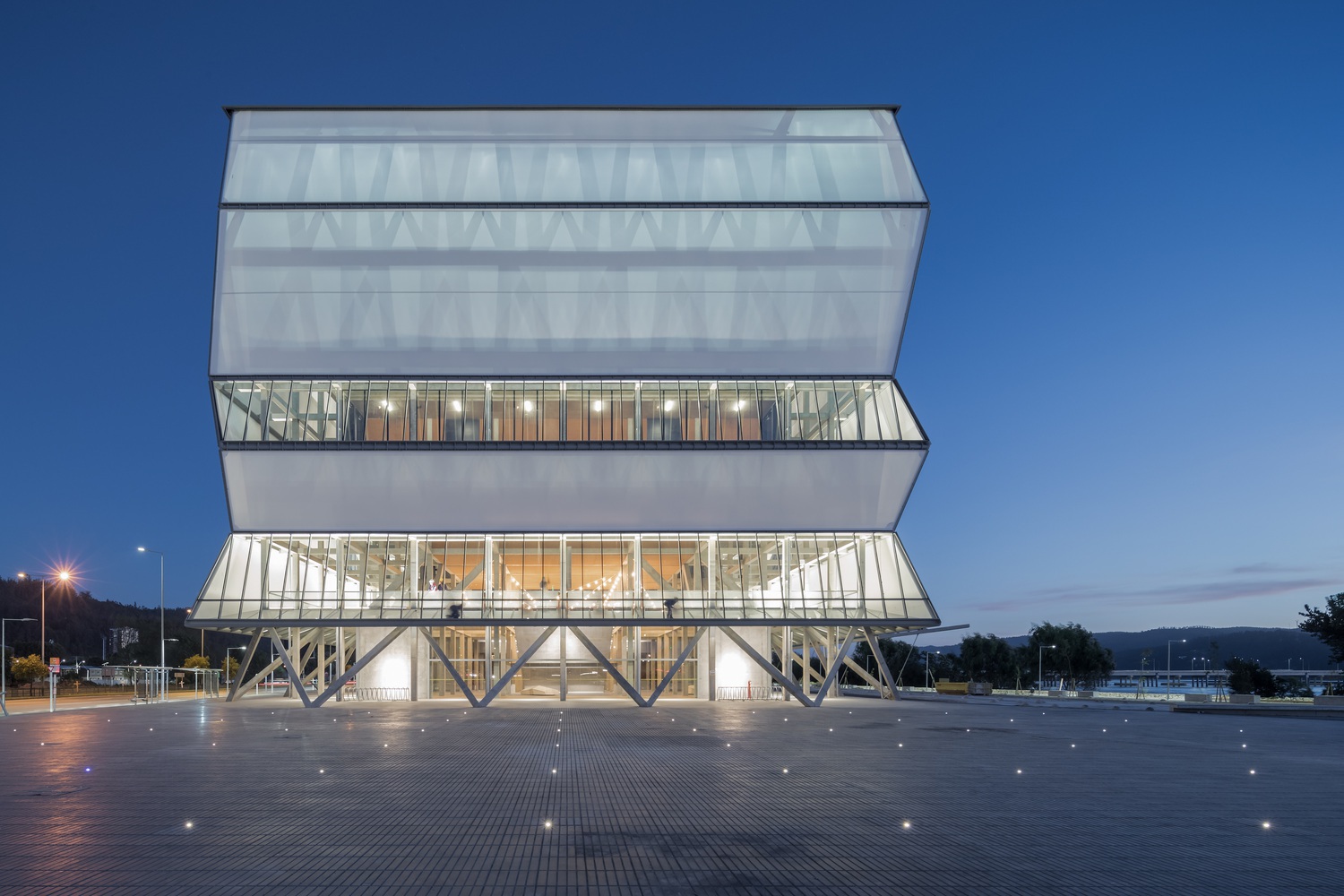
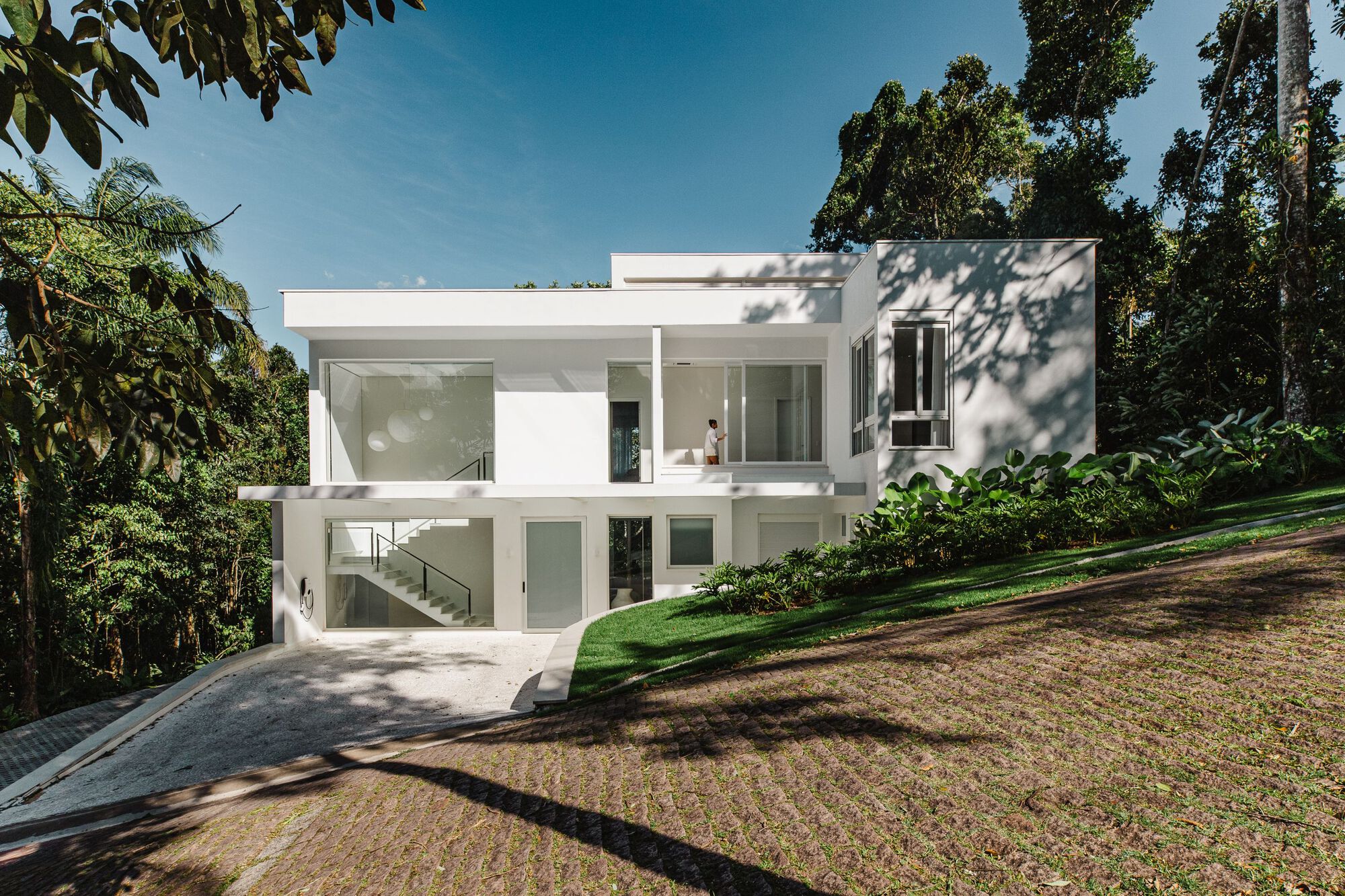
15 hours agoselgascano's sky-K rises as two colorful residential 'chimneys' along the coast of albania
Two slender residential towers rise behind Durrës’ waterfront, using a lifted, column-supported base to create a compact footprint and a Mediterranean garden.
Renovation
fromwww.archdaily.com
1 day agoCasa Selva - Housing for Hospitality Workers / anonimous + g3arquitectos + Jesus Vassallo
A compact, efficient housing project provides affordable rents for displaced hotel and restaurant workers through 200 apartments, shared amenities, gardens, and retail spaces.

fromArchitectural Digest
9 hours agoCobie Smulders Wants to Host Dinner for 27 at Her Canadian Family Cabin
Growing up in the suburbs of Vancouver, actor Cobie Smulders always relished the chance to escape the city to explore the lush wilderness beyond it. "I had a lot of friends who had family cabins on the islands, or up in Whistler, and I would try to join their family vacations as much as possible," she recalls. One of her childhood best friends was also the daughter of an architect, Elizabeth MacKenzie, and Smulders was fascinated by her office, with its fabric swatches and miniature model homes.
Renovation
fromwww.archdaily.com
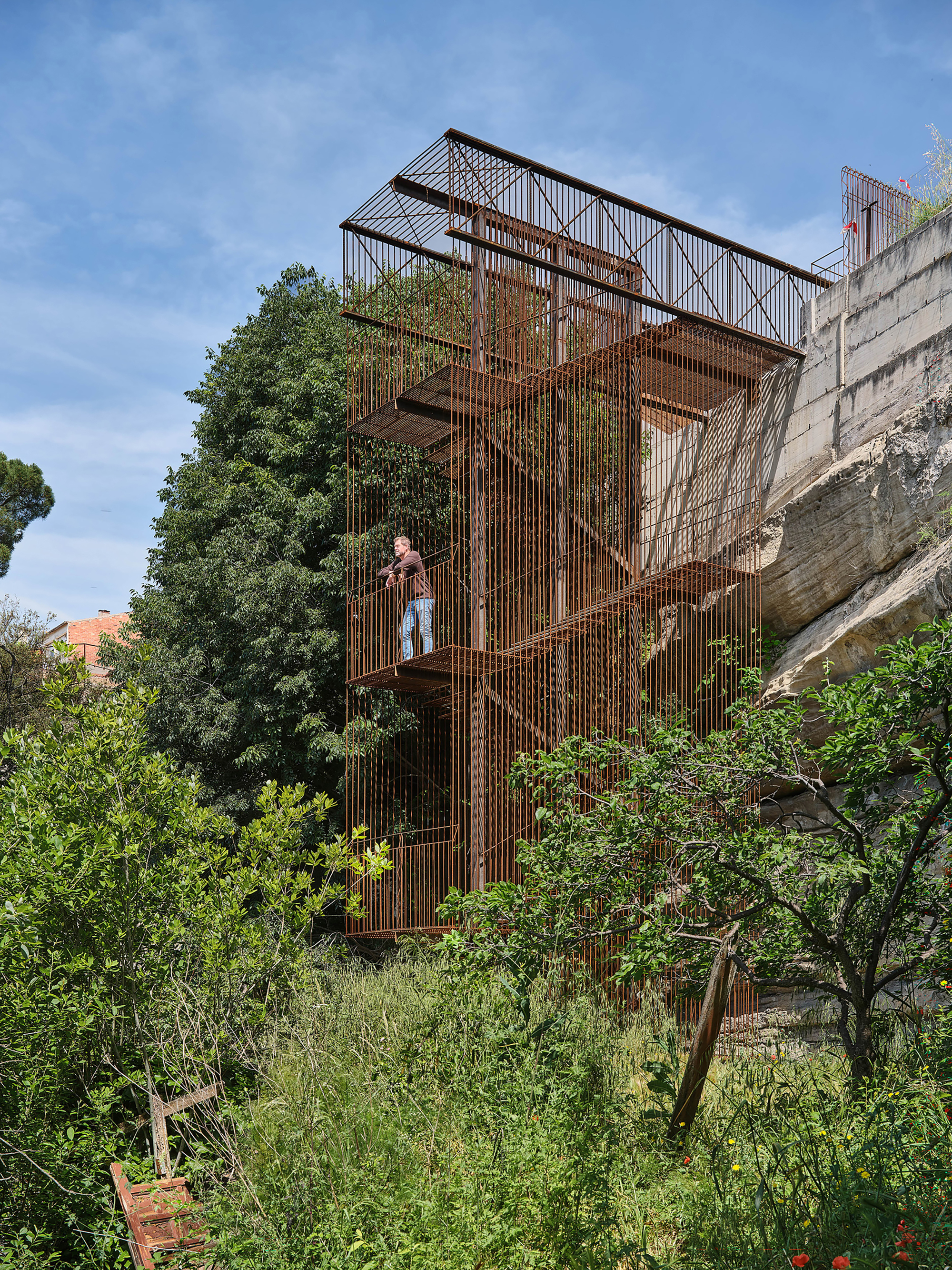
18 hours agoLand Of Wells / Le laboratoire d'architecture + A4 Architecture + Bled El Abar Collective
The modest well, built using traditional masonry, is located in the dunes of the Grand Erg Oriental, over 30 kilometers from the nearest inhabited village, along routes used for millennia by North African pastoral nomads. Before it was silted up and collapsed, it was still used as a watering point for camels, goats, and sheep, and as a refuge for the shepherds who guided them through the desert.
Renovation

fromdesignboom | architecture & design magazine
1 day agoa pair of banyan trees anchors anonym studio's open-air family house in thailand
Saikhoo House by anonym studio reconfigures a 1.38-acre family property in Samut Prakarn, , around two existing banyan trees, preserving the site's wetlands, vegetation, and mature landscape as the central framework for the residential design.
Renovation
fromArchDaily
2 days agoTallinn Architecture Biennale 2026 Announces Winners of Installation and Vision Competitions
More than 100 submissions from over 30 countries were reviewed by a jury including Elisabeth Terrisse de Botton, Karen Jagodin, Kertu Johanna Jõeste, Sille Pihlak, and Elina Liiva. The biennale's core programme consists of five main components: the Curatorial Exhibition, Symposium, Tallinn Vision Competition, Installation Programme, and Catalogue.
Renovation
fromianVisits
1 day ago1,600 new homes to be built next to West Silvertown DLR station
Ballymore has secured planning permission for just over 1,600 new homes for a wedge-shaped development near West Silvertown DLR station. The light industrial site runs in a narrow wedge to the Thames and sits alongside Lyle Park, which will receive a £1 million improvement funded by the developer. That will see the park significantly revamped and made more accessible to the two housing developments on either side.
Renovation
fromArchDaily
2 days agoRenaissance of the Real Multisensory Installation - Milan Design Week 2026 / Snhetta + USM Modular Furniture
USM Modular Furniture, in partnership with the transdisciplinary architecture studio Snøhetta, is proud to announce Renaissance of the Real, a multisensory installation by Swiss artist and experience designer Annabelle Schneider.
Renovation
Renovation
fromBusiness Insider
1 day ago9 things landscapers, gardeners, and interior designers would never have in their outdoor spaces
Gardeners, landscapers, and interior designers prefer outdoor decor choices that avoid plastic flamingos, wind chimes, hammocks, continuous pavement, and invasive plant species.
#tiny-homes
Renovation
fromYanko Design - Modern Industrial Design News
2 days ago5 Best Tiny Homes of May 2026 Prove Tiny House Design Stopped Being Cute - It Became a Category - Yanko Design
Tiny homes are shifting from lifestyle novelty to practical solutions through better layouts, higher material quality, year-round comfort, and true mobility.
Renovation
fromwww.businessinsider.com
5 days agoA couple bought a 527-square-foot tiny house for $37,500 more than a decade ago. It's helped them live debt-free.
A 527-square-foot tiny home bought for $37,500 became a long-term dream home through DIY upgrades, secondhand furnishings, and a functional layout.
Renovation
fromdesignboom | architecture & design magazine
2 days agovernacular stone cabin in northern spain gains a renewed layered inner envelope
A ruined rural cabin was rehabilitated into an EnerPHit-certified home using a layered interior envelope, preserving vernacular form and materials while upgrading energy performance.
fromArchDaily
3 days agoInnovation Lab / MTA ARCHITECTS
The project was built as a working studio and client lounge, and also as a chance to build the way they believe buildings should be built - with local materials, passive environmental strategies, and construction techniques rooted in the region's traditions.
Renovation
fromApartment Therapy
2 days agoA "Featureless" 1990s House Got a Color-Splashed Makeover
“When we first started hunting for a new home, we thought we were looking for a large, nicely renovated period property,” Orima explains. “However, when I saw this property come on the market, I was instantly drawn to it despite it not ticking any of these boxes: It is a quite modern, featureless build on a main road!”
Renovation
Renovation
fromdesignboom | architecture & design magazine
2 days agoDLF architecture designs a porous urban landscape around jerusalem's historic corridor
A mixed-use master plan along Jaffa Road reconfigures Jerusalem’s entrance with layered public circulation, civic and commercial spaces, and LEED Platinum residential towers.
fromwww.archdaily.com
2 days agoL33 Narrow House / BAST
The site, composed of two through parcels, forms a pause within the built density of the Bonnefoy district. On one side, the plot is an urban infill gap between two townhouses typical of this suburban neighborhood. On the other side, the land is occupied by dense vegetation, characteristic of an undergrowth atmosphere, including a majestic hackberry tree that extends widely over Masse Street, signaling the presence of a green plot along this urban street.
Renovation
fromwww.archdaily.com
3 days agoShenzhen Longhua Foreign Languages School (Fucheng Campus) / Z&Z STUDIO
This project is located at the southwest corner of the intersection of Guanlan Avenue and the planned Xitian Road in Longhua District, Shenzhen. Covering a site area of 24,478.25 square meters and a total construction area of 55,737 square meters. It falls within the urban renewal unit of Tianbei Industrial Zone in Fucheng Street, Longhua District.
Renovation
fromwww.archdaily.com
3 days agoWarsaw Uprising Mound / Archigrest + topoScape
The Warsaw Uprising Mound Park is the Fourth Nature refuge created on an anthropogenic hill. For years, this site served as a repository for the debris from Warsaw after the city was destroyed in World War II, gradually giving rise to an artificial hill that now stands 35 metres above the surrounding flat and marshy landscape.
Renovation
fromBoston.com
2 months agoAsk the Remodeler: ABCs of ADUs - The basics of building an accessory dwelling unit in Massachusetts
Internal units: These are built entirely within the existing home's footprint. More often than not, that's a basement renovation that can take advantage of an existing doorway that may or may not be inside a bulkhead. In a case like this, you would remove the bulkhead cover and create a set of code-compliant stairs and a landing. The landing should have some type of drain and a drywell below to handle rainwater.
Renovation
fromArchDaily
6 days agoFrom Tradition to Modern Living: The Versatility and Elegance of Timber in 12 Japanese Interiors
Wood has always been the soul of Japanese architecture. In many recent residential projects, this material transcends its structural role to become the primary finish for various surfaces - ranging from floors and ceilings to furniture and architectural elements. These environments strike a delicate balance between elegance and coziness.
Renovation
fromDesign Milk
5 days agoF5: Tryggvi Thorsteinsson on His Family, Lava Fields, Light + More
“Everything had to be imported so nothing was wasted, and that mindset stayed with me,” he says. “Architecture became an extension of that way of thinking; being intentional, simplifying, and making things that last.”
Renovation
Renovation
fromRedfin | Real Estate Tips for Home Buying, Selling & More
6 days agoA Guide to Types of Historic Homes and Preserving Their Original Character
Historic homes preserve irreplaceable craftsmanship and materials, offering lasting place identity and guiding informed buying and renovation decisions.
Renovation
fromRemodelista
5 days agoAn Abandoned Stone Building in Mallorca Resurrected: September Moore Design's Latest Remodel
A couple renovated historic homes using traditional materials and hands-on learning, moving through projects across countries while maintaining a minimalist vision and practical implementation.
Renovation
fromianVisits
6 days agoHistoric Chinese carpet returns to Eltham Palace after wartime disappearance
A rare Chinese-style carpet commissioned for Eltham Palace has been returned after decades, following conservation, to restore original display and illustrate Western-inspired Chinese collecting.
Renovation
fromArchDaily
6 days agoThe Albanian Kaleidoscope - Reconstruction and Musealization of the National Historical Museum / Casanova + Hernandez Architects
Architecture in Tirana is shifting from ideological instrument to a platform enabling critical cultural engagement amid rapid modernization.
fromApartment Therapy
6 days agoThis Bare Backyard Now Feels Like a Vacation - Thanks to a $2,500 Boho Redo
We realized the importance of having a space outside of the house, even if it is only a few feet away. Over the five years that we've lived in this home, we've had a multitude of ideas regarding the large open space that was our backyard, but they never followed through. For the most part, it was mainly used as a large potty for my Pekingese, Bentley.
Renovation
Renovation
fromApartment Therapy
6 days agoThe New Way Designers Are Using This Victorian-Era Detail (It's Gorgeous!)
Bobbin trim, featuring circular carved beads, is trending as a versatile design element for crown molding, doorways, paneling, and window frames to add whimsical character to interior spaces.
Renovation
fromYanko Design - Modern Industrial Design News
1 week agoThis Is the Tiny House the Short-Term Rental Market Has Been Waiting For - Yanko Design
The Rasa tiny home is a 224-square-foot mobile dwelling designed from three years of Airbnb hosting data, prioritizing functional space that sleeps six while maintaining livable proportions and practical amenities.
fromdesignboom | architecture & design magazine
6 days agoart deco interiors by mikou restore yves saint laurent and pierre berge's former paris atelier
The project focuses on revealing and extending the atelier's Art Deco characteristics while preserving existing architectural elements. Floral Art Nouveau detailing, exposed elements, metal framing, flooring, and beams are retained and integrated into the new spatial configuration. Additional materials, including oak, lime bricks, and translucent glass pavers, are introduced to complement the existing palette.
Renovation
Renovation
fromCN Traveller
6 days agoKoko turns 125: how a Victorian theatre rose from the ashes to become London's coolest music venue
Koko, a historic 125-year-old Camden venue, reopened after major refurbishment and now features expanded amenities including a recording studio, members' club, and enhanced live performance programming.
fromArchitectural Digest
1 year agoThese 9 Bathroom Trends Are Aging Your Home-This Is What Interior Designers Recommend Instead
Personally I hate any lighting over a mirror; it's just not flattering! So I usually opt for sconces at face height instead in our designs. The wood has often warped from water damage, the caulking has gaps, and the polished brass hardware is chipped.
Renovation
[ Load more ]