#holiday-stress
#holiday-stress
[ follow ]
#family-dynamics #self-care #parenting #boundary-setting #well-being #mental-health #relationships #christmas
#parenting


fromScary Mommy
4 months agoRelationships
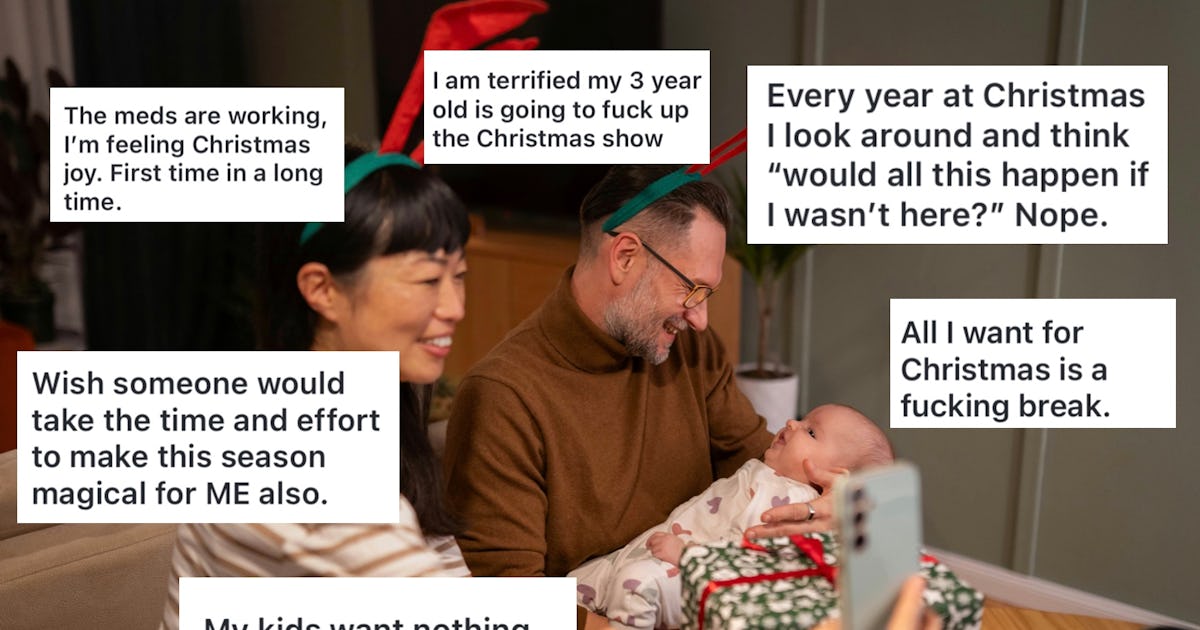
"I'm Thrifting Everyone's Gifts This Year" & 36 Other Holiday Confessions
Holidays bring intense joy and stress, leaving many moms overstimulated, overwhelmed, and sharing candid confessions about family expectations, parenting challenges, and holiday pressures.










fromeLearning Industry
3 months ago'Tis The Season To Battle Burnout: 8 Festive Employee Wellness Strategies
However, it can also cause stress as employees rush to complete outstanding tasks and projects to be able to actually enjoy their time off. During this stressful time, it is important for leaders to support their teams in combating the end-of-year burnout with a set of insightful tips and strategies. Read on to discover 8 festive employee wellness strategies that will transform December from a hectic month to a cheerful and enjoyable one.
Wellness
fromwww.bbc.com
3 months agoChristmas can be a nightmare for misophonia sufferers like me
Lottie is looking forward to spending time with her family this Christmas, but says one of the only ways she'll manage to get through it is by wearing her earplugs - especially during Christmas dinner. For the 23-year-old Christmas can be a particularly difficult time as the sounds of other people, chewing, slurping and sniffling make her feel extremely uncomfortable.
Mental health


fromPsychology Today
3 months agoWhat Winter Can Teach Us About Burnout and Self-Care
There is great irony in the fact that we tend to associate the winter holiday season with busyness, stress, and overwhelm. While we are rushing and doing, the natural world around us is in a completely oppositional state-resting, slowing down, cooling, hibernating, restoring itself.
Mental health
fromPsychology Today
3 months agoHoliday Joy (and Sanity) for Working Parents
Between end-of-year work deadlines, school programs, holiday parties, and the emotional marathon of family gatherings, December often feels like one long sprint. And don't get me started on moving that darn little elf. There have been nights I've woken up in a cold sweat thinking, "I forgot to move the elf!" Let's just say that bringing the holiday magic comes with a price for parents.
Mental health
fromPsychology Today
4 months agoCoping With Year-End Pressure
Stress tolerance is a key executive function skill that relates to our ability to cope with pressure, uncertainty, and change. Stress tolerance involves being able to navigate incoming demands and manage stressful situations. For some of us, this is a significant strength, and we may find that we thrive in uncertain, novel, and changing environments. For others, atypical circumstances can be very stressful (Dawson and Guare, 2016).
Mental health


Mindfulness
fromPsychology Today
4 months agoAre You Stuck in Your Head During the Festive Season?
High-neuroticism individuals experience intensified holiday stress and rumination; simple mindfulness grounding skills (no formal meditation) can reduce mental time-travel and increase present-moment enjoyment.
fromPsychology Today
4 months agoMake This Holiday Season Sexy
I've always loved the story How the Grinch Stole Christmas. The Grinch is an angry, isolated misanthrope who hates all the fuss, decorations, family, and feasting that come with the holidays. So he vows to steal the gifts, the lights, and even the feast-so he can have some peace and quiet. Does this sound a little bit familiar? When I ask the couples in my online program how they bring romance, togetherness, and even spice to their holiday season, it becomes a silent night.
Relationships
fromPsychology Today
4 months agoWant to Deepen Your Connection and Sexual Satisfaction?
One moment we were shaking the sand out of our sandals, the next we found ourselves carving the Thanksgiving turkey. While it's a fun and festive season, it can also be a time of heightened stress for many people. The busyness and non-stop pace can run us ragged-between decorating our homes, entertaining, attending countless work parties, and managing the hectic holiday shopping. The pressure to find the "perfect" gift for our friends and family can be downright grueling.
Relationships
fromPsychology Today
4 months agoHow the 70-20-10 Rule Can Ease Holiday Stress
There is a holiday moment many of us know well: the quiet walk outside, the long exhale, the brief escape from a room full of people we love but sometimes struggle to navigate. This season carries both beauty and weight. It can draw out our best qualities- generosity, gratitude, warmth-and also uncover the places where we are still growing. I used to think this tension meant something was wrong-and honestly, part of me still does.
Psychology
Mental health
fromWashingtonian - The website that Washington lives by.
4 months agoNot Feeling Festive This Year? You're Not the Only One.
Holiday season often increases stress and anxiety; using gratitude, grounding, honest family communication, and reframing celebrations can reduce pressure and support wellbeing.
fromBusiness Insider
4 months agoAll 6 of my kids look forward to this Christmas tradition - and it's not about gifts
As a mom of six, Christmas used to feel like a pressure cooker. Every year, I tried to create the "perfect" holiday - the ideal gifts, the matching pajamas, the Instagram-worthy stockings. I spent December weekends navigating store aisles, scrolling for deals, or stressing that I wasn't doing enough. By the time Christmas morning finally came, I was exhausted, financially stretched, and secretly relieved when it was all over.
Relationships

fromPsychology Today
4 months agoUnder the December Glitter Is the Grind
Next, greet the vanity issue: Will it matter if you wear the same outfit as last year to a dinner party? Probably nobody else will notice, and even if they do, they won't care. Do you get pleasure out of handwriting cards and mailing them? Do it if you enjoy it. If not, send a simple electronic card to those who matter most. Eliminate 30 to 50 percent of everything on your list.
Mindfulness
fromwww.scientificamerican.com
4 months agoHoliday Eating Tips From a Gut Health Expert
It's mid-November, and Thanksgiving is right around the corner, which is great news for our taste buds. But the holiday season may also bring stress that can be hard on our stomachs, causing issues such as bloating, heartburn, or just general feelings of discomfort. On supporting science journalism If you're enjoying this article, consider supporting our award-winning journalism by subscribing. By purchasing a subscription you are helping to ensure the future of impactful stories about the discoveries and ideas shaping our world today.
Health
fromPsychology Today
5 months ago4 Practices to Reduce Holiday Stress
Remember what's important and forget the rest. Obviously, some emotions are hard to manage: The automatic startle when we see a snake in the grass is hard to control. But the majority of our daily emotions are the result of how we think about the world. In one study, researchers recorded people at the airport reporting lost luggage to an airline. Even though the objective event was the same, people responded in different ways, from anger to anxiety to good humor.
Mindfulness
fromPsychology Today
5 months agoFeel Satisfied Not Stuffed: Manage Holiday Stress and Desire
While the holiday season is supposed to be a time of joy, connection, and lots of filling up on delicious holiday dishes, for many people, the pleasures fall short of their hopes. For some people, Thanksgiving and Christmas celebrations inspire stress, the pressure to live up to family expectations, and overeating to feed one's emotional pain, along with psychological and/or physical isolation. Parents juggle restless kids in unfamiliar settings, hosts fret over creating "perfect" gatherings, and privacy can be hard to come by.
Mental health
[ Load more ]