#historic-villa
#historic-villa
[ follow ]
fromArtnet News
1 week ago250-Year-Old Kiln Discovered on Thomas Jefferson's Monticello Estate
In 2025 alone, archaeologists there unearthed unusual creamware, and evidence that Monticello had prototypical bathrooms. Now, experts have uncovered yet another striking find-a 250-year-old kiln where enslaved people and indentured laborers fired the bricks used to build Monticello.
Arts
fromArtnet News
1 week agoColosseum Facelift Restores Ancient Southern Entrance to Its Former Glory
"[The project] has finally restored the perception of the monument's original size and floor level," architect Stefano Boeri said in a statement. "It also offers the public the opportunity to approach its walls and imagine the rhythm and sequence of the ambulatories and arches, now lost. It's a respectful and useful project that completes research carried out by the archaeologists of the Colosseum Archaeological Park."
Arts
fromArchDaily
1 week agoVilla in Recco / Gosplan + Giordano Hadamik Architects + caarpa + studio.skey
On November 10, 1943, the city of Recco was destroyed forever. Twenty-two bombers of the British Royal Air Force dropped 33 tons of explosives, attempting to demolish the railway bridge, an iconic element of the town and a crucial point for the supply of Nazi-fascist troops.
Renovation
:max_bytes(150000):strip_icc()/TAL-ponte-vecchio-TODOFLORENCE0923-9abdcf5bd9ff42dfb04fbeeb2f69f001.jpg)
fromArtnet News
2 weeks agoThe Sistine Chapel Is Coming to a Mall in Suburban New Jersey
"We are thrilled to bring this immersive experience to New Jersey. Whether you're an art-lover, history enthusiast, or someone encountering this masterpiece for the first time, this exhibition allows you to experience Michelangelo's genius in an intimate and unforgettable way."
Arts
Washington Nationals
fromDefector
1 month agoNobody's Having More Fun Than The Italians | Defector
The World Baseball Classic uses flexible nationality rules allowing players to represent countries through lineage and citizenship, creating amusing rosters like Team Italy's Italian-Americans defeating Team USA.
Arts
fromThe Art Newspaper - International art news and events
3 weeks agoOne of Donatello's most important bronze statues is being restored: should it ever be shown outdoors again?
Donatello's Gattamelata statue is undergoing restoration and its future location remains uncertain after being moved indoors due to corrosion.
Higher education
fromHarvard Gazette
1 month agoLike seeing art of Roman chapels in technicolor for first time - Harvard Gazette
Students learned centuries-old stucco sculpting techniques through hands-on practice, gaining deeper understanding of Renaissance and Baroque artists' material choices and creative processes.
Renovation
fromwww.archdaily.com
1 month agoVilla Modda / depaolidefranceschibaldan architetti
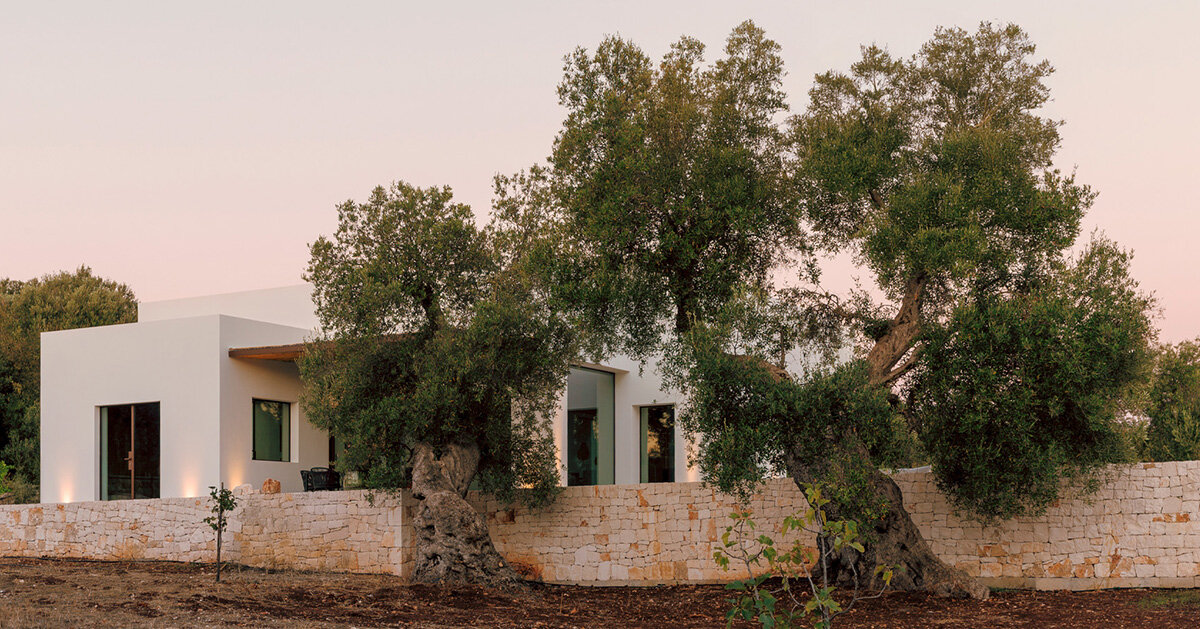
Villa Modda, designed by depaolidefranceschibaldan architetti, integrates into the Val di Noto rural landscape through its name derived from native Mediterranean vegetation, reflecting deep environmental connection.
History
fromMedievalists.net
1 month agoMedieval Bronze Doors by Donatello Return to Florence After Restoration - Medievalists.net
Donatello's fifteenth-century bronze doors have been restored and returned to the Old Sacristy of San Lorenzo in Florence, showcasing innovative sculptural techniques and Medici family patronage.
fromArchDaily
1 month agoStefano Boeri Interiors Restores Southern Ambulatory Areas of the Colosseum in Rome
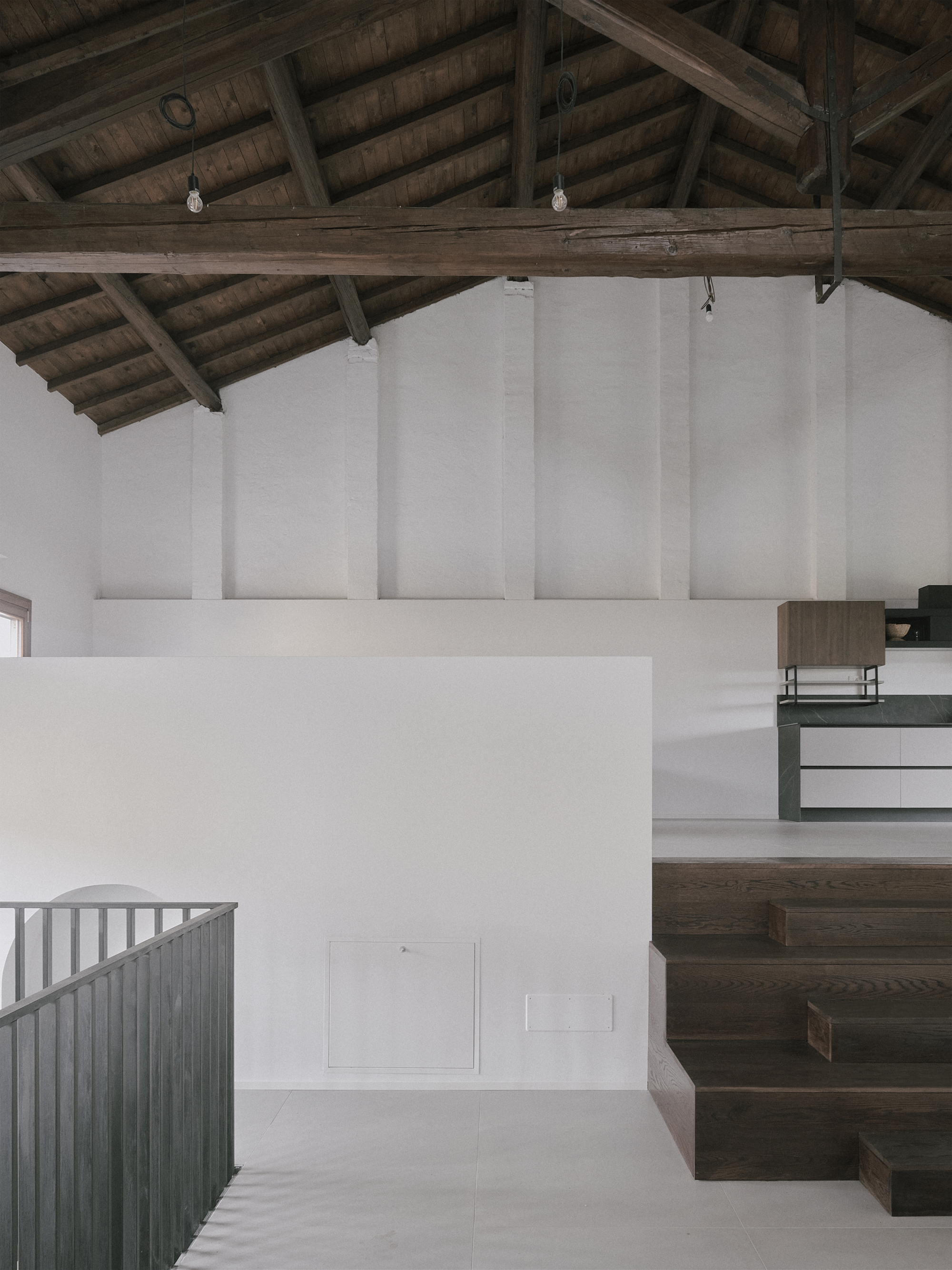
The intervention 'restored the perception of the monument's original scale and pavement level,' while enabling visitors to approach the structure more directly and understand the sequence of the ambulatory and its arches. This recalibration of levels, based on archaeological findings and geometric studies, also enabled the reorganization of the stormwater drainage system, integrating surface slopes and transitions into the paving design while maintaining coherence with the monument's historical configuration.
Renovation
fromYanko Design - Modern Industrial Design News
2 months agoThis 3D-Printed Roof Is Saving 2,000-Year-Old Roman Tombs - Yanko Design
What makes this canopy special isn't just that it uses 3D printing technology, though that's certainly impressive. It's the way the designers thought about the entire system. Rather than simply throwing a roof over the tombs and calling it a day, they created what's essentially a climate-control system disguised as architecture. The canopy features a double-layer envelope that does way more than keep rain off ancient stone. Built into this roof are ventilation and air extraction components that actively regulate temperature and humidity.
Design
fromApartment Therapy
1 month agoThis Soothing Italian Philosophy Transforms the Way I Do Everything
"Piano piano" is an old Italian saying that sounds nonsensical, but is actually full of wisdom, especially if you, like me, are finding yourself wishing away these frigid winter days and hoping spring and summer gets here fast. These days, I've found myself rushing from one thing to the next, frustrated at the smallest things, from post office lines to just missing my train. And I'm ready to make a change.
Mindfulness
fromArchDaily
1 month agoCarlo Ratti Associati Designs Buzzi Heritage Cultural Center in Italy With the New Digital Construction System
The project examines the integration of digital fabrication processes into reinforced concrete construction, highlighting that while materials such as steel and timber have undergone significant transformation through digital production methods, reinforced concrete has largely retained conventional casting techniques. The proposal aims to address this condition by incorporating digitally fabricated components into the construction system.
Renovation
fromdesignboom | architecture & design magazine
2 months agolava stone and old fisherman's house merge into contemporary villa on sicilian coast
Villa Lava is a private residence located in Santa Tecla, in the province of Acireale, on the eastern coast of Sicily. The project is a unique architectural blend of two houses in one single villa. On one side stands an old fisherman's house dating from around 1900, completely restored by Nábito Architects, maintaining its essential character and carefully uncovering and preserving the original lava stone vaults.
Remodel
Design
fromdesignboom | architecture & design magazine
1 month agoa cluster of terracotta-tiled pyramidal houses envelopes kindergarten in italy
Kinder Rain is a kindergarten designed as a small village with pyramidal classroom volumes arranged around open courtyards, drawing from Veneto vernacular architecture and creating interconnected learning spaces.
fromwww.theguardian.com
1 month agoNaples museum to allow visually impaired visitors to experience art through touch
The veil covering Christ is extraordinary. It's impossible to understand how Sanmartino managed to create it. The veil defies explanation—for those who can see and for those who cannot. When you touch it, you can feel the veins pulsing beneath.
Arts
#interior-design
Renovation
fromArchitectural Digest
1 month agoA Young Milanese Couple Restore Their New Apartment with Care-and Tons of Retro Fixtures
A Milanese couple preserved their 1960s apartment's original character while introducing contemporary design through selective updates and respectful restoration by designer Lucrezia Calvi.
fromSilicon Canals
2 months agoGoodbye to tourist traps: the small towns locals say capture the real spirit of Italy - Silicon Canals
Last summer, I found myself in Venice during peak tourist season. The crowds were suffocating. Every piazza felt like a theme park, every restaurant seemed designed for Instagram rather than actual dining. Standing on the Rialto Bridge, packed shoulder to shoulder with thousands of other visitors, I couldn't help but wonder: is this really Italy? That question stayed with me long after I returned to London.
Travel
Miscellaneous
fromABC7 Los Angeles
2 months agoVatican expands visitor experience at St. Peter's Basilica to mark 400th anniversary
St. Peter's Basilica will expand terrace access, add a larger snack bar, online reservations, multilingual Mass translations, and a Michelangelo-styled font for its 400th anniversary.
Design
fromYanko Design - Modern Industrial Design News
2 months agoThis Volcanic Stone Shelter in Sicily Reimagines 3,000-Year-Old Homes - Yanko Design
Asympta imagines ephemeral domestic architecture near Pantalica using local volcanic stone, charred timber, and traditional materials to evoke vanished everyday life.
History
fromwww.thehistoryblog.com
1 month agoEtruscan urn's polychromy restored after 1966 Florence flood
The Bottarone Urn, a 425-380 B.C. Etruscan alabaster cinerary urn depicting a married couple, was restored to its original vivid polychromy after 60 years of mud damage from Florence's 1966 Arno River flood, revealing Egyptian blue pigment for the first time.
fromwww.thehistoryblog.com
2 months agoGreat hall from 4th c. bishop's palace complex found in Ostia
The remains of a monumental hall belonging to a 4th-century episcopal palace have been discovered at Ostia Antica, Rome's ancient port town. The base of the structure is eight by 20 meters (ca. 26 by 65 feet) and the walls were an estimated eight meters high. This is an extraordinarily large space, and it was richly decorated with mosaic floors and marble panels.
History
Renovation
fromLos Angeles Times
15 years agoHome of the Week: Tuscan villa in Montecito
Architect John Saladino transformed a severely deteriorated 1920s Tuscan villa in Montecito into a luxurious residence through four years of extensive restoration and modernization, investing millions while preserving its historic character.
fromMedievalists.net
1 month agoCaterina Sforza's Renaissance Recipes for 'Restoring' Virginity - Medievalists.net
If you follow the advice of Caterina Sforza, 'you will see that thing become so narrow that you yourself will be in admiration.' That striking promise appears in the Experimenta, a collection of recipes attributed to the Renaissance noblewoman Caterina Sforza. Best known as the formidable ruler of Imola and Forli and a fierce opponent of the Borgia family, Sforza also cultivated a keen interest in medicine, alchemy, and cosmetics.
History
fromArchDaily
2 months agoBetween Materials and Memory: Three Madrid Architecture Practices on Heritage Rehabilitation
Ba-rro: "Our starting point is always the context and what already exists." We are interested in recognizing the value of things simply because they are there, without assuming that everything must be preserved as a matter of principle. The question isn't what can be kept, but what deserves to be kept in each specific project. The decision to preserve, reveal, or remove doesn't stem from universal values or a nostalgic impulse, but from a situated interpretation:
Renovation
[ Load more ]