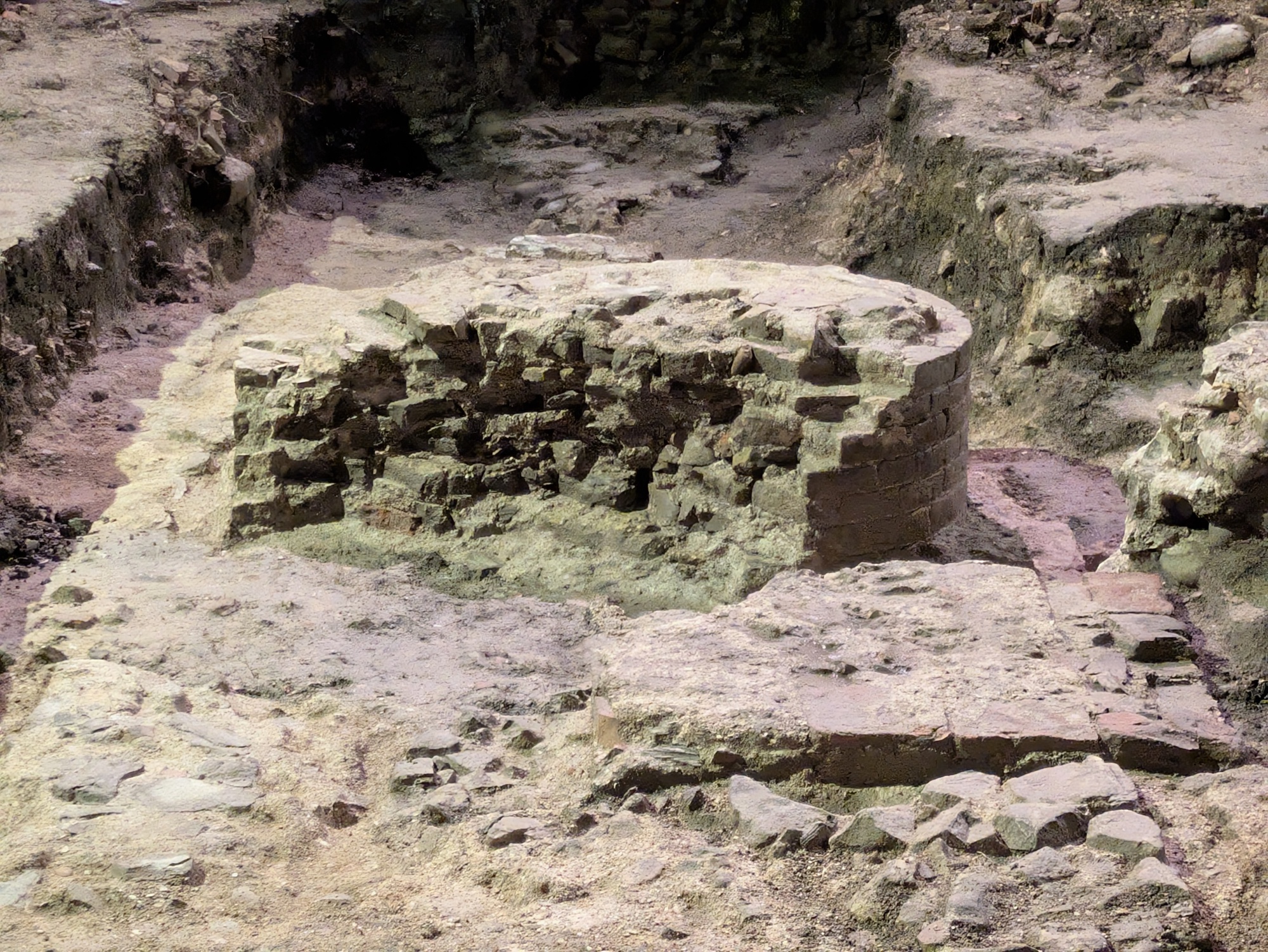
The basilica described by Vitruvius has been identified beneath Piazza Andrea Costa in Fano. The building presents a rectangular plan articulated by a perimeter colonnade with eight columns on the long sides and four on the short sides. A corner column established the exact orientation and position between two public squares. Columns measure roughly five Roman feet in diameter (147–150 cm) and likely rose to about 15 meters, supported by pillars and pilasters designed for an upper level. A planimetric reconstruction based on De Architectura matches the excavated remains to the centimeter, enabling direct comparison between Vitruvian descriptions and physical architecture and illuminating Roman spatial hierarchy, proportions, structural systems, and civic monumentalism.
"Archaeological excavations in Fano, Italy, have revealed the basilica described by Vitruvius in De Architectura, a finding of major architectural significance, as it represents the only structure that can be attributed with certainty to the Roman architect. Identified during redevelopment works in Piazza Andrea Costa, the discovery provides rare physical evidence of Vitruvian theory translated into built form and offers new insights into Roman architectural design, proportions, and construction practices."
"The basilica offers an opportunity to directly compare Vitruvius' textual descriptions with archaeological reality. The building is defined by a rectangular plan articulated by a perimeter colonnade, with eight columns along the long sides and four along the short sides. The final identification was confirmed through the discovery of a corner column, which established the structure's exact orientation and position within the urban fabric between two adjacent public squares."
Read at ArchDaily
Unable to calculate read time
Collection
[
|
...
]