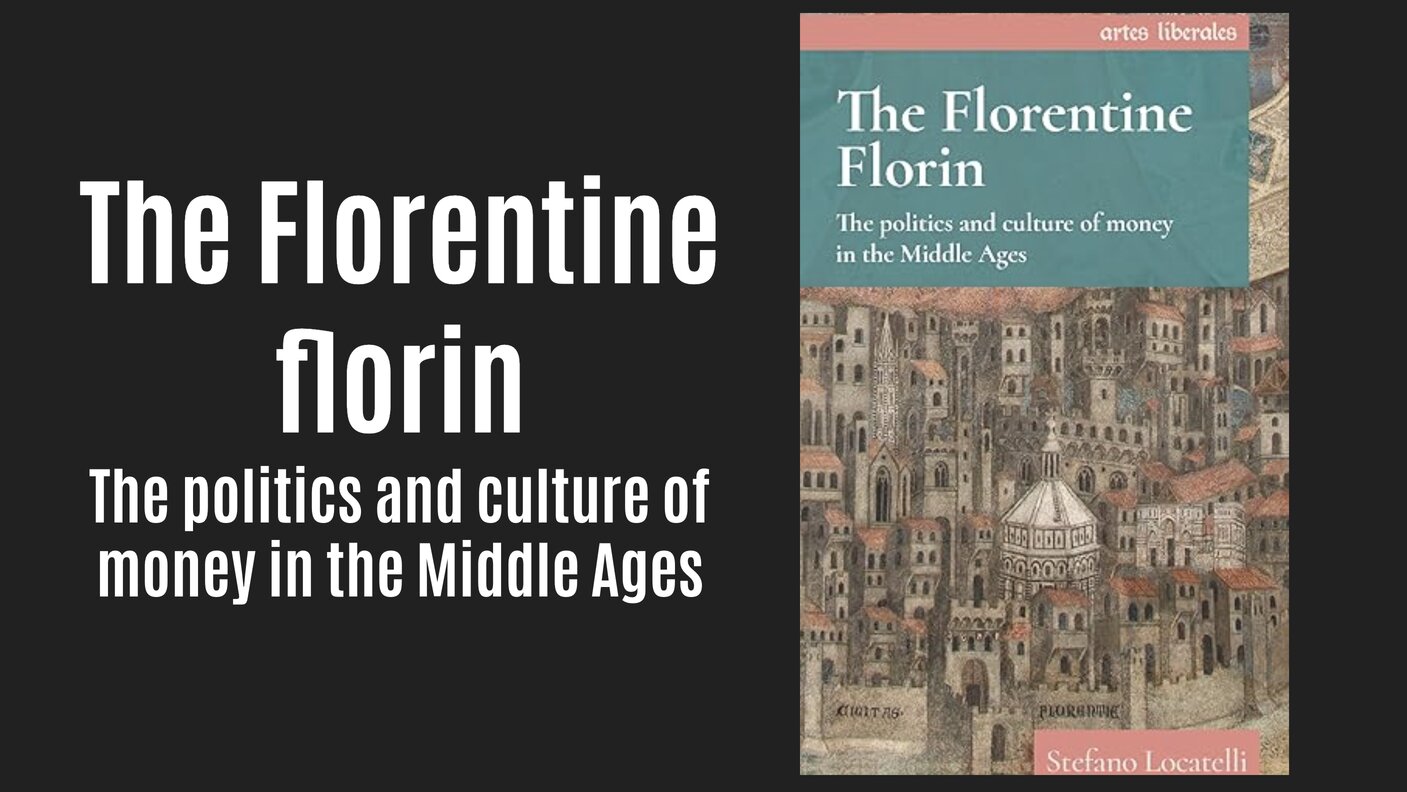
"Drawing on the research traditions and approaches of economic, political, social, and cultural history, as well as numismatics, and combining data from a large variety of sources, including archaeological material, such as coin hoards, and largely unpublished written documentation (e.g., detailed tax receipts, tithe registers, notarial documents, and so on) from seven different archives (Florence, Lucca, Pisa, Vatican City, Venice, Genoa, and Naples), this book provides a new perspective on the early life of the florin, significantly broadening the existing consensus around this coinage."
"The book is convincing and substantial: a point of arrival and a solid foundation for research on the florin and medieval monetary history. From a methodological point of view, the author succeeds in his aim: to show that money is a constructed object, shaped by politics, historical contingencies, and power relations that define its value, circulation, and use; and at the same time that money is an 'connecting agent' between people, capable of offering useful elements for understanding social, economic, and cultural dynamics."
Research integrates economic, political, social, and cultural history with numismatics and combines archaeological data, such as coin hoards, with largely unpublished written documentation from seven archives: Florence, Lucca, Pisa, Vatican City, Venice, Genoa, and Naples. The analysis reconstructs the early life and circulation of the mid-thirteenth-century Florentine florin, broadening consensus about its origins and spread. Money is shown as a constructed object shaped by politics, historical contingencies, and power relations that determine value, circulation, and use. Money also functions as a connecting agent between people, providing insights into social, economic, and cultural dynamics. Findings inform medievalists, numismatists, trade historians, and scholars of Florence and the papacy.
Read at Medievalists.net
Unable to calculate read time
Collection
[
|
...
]