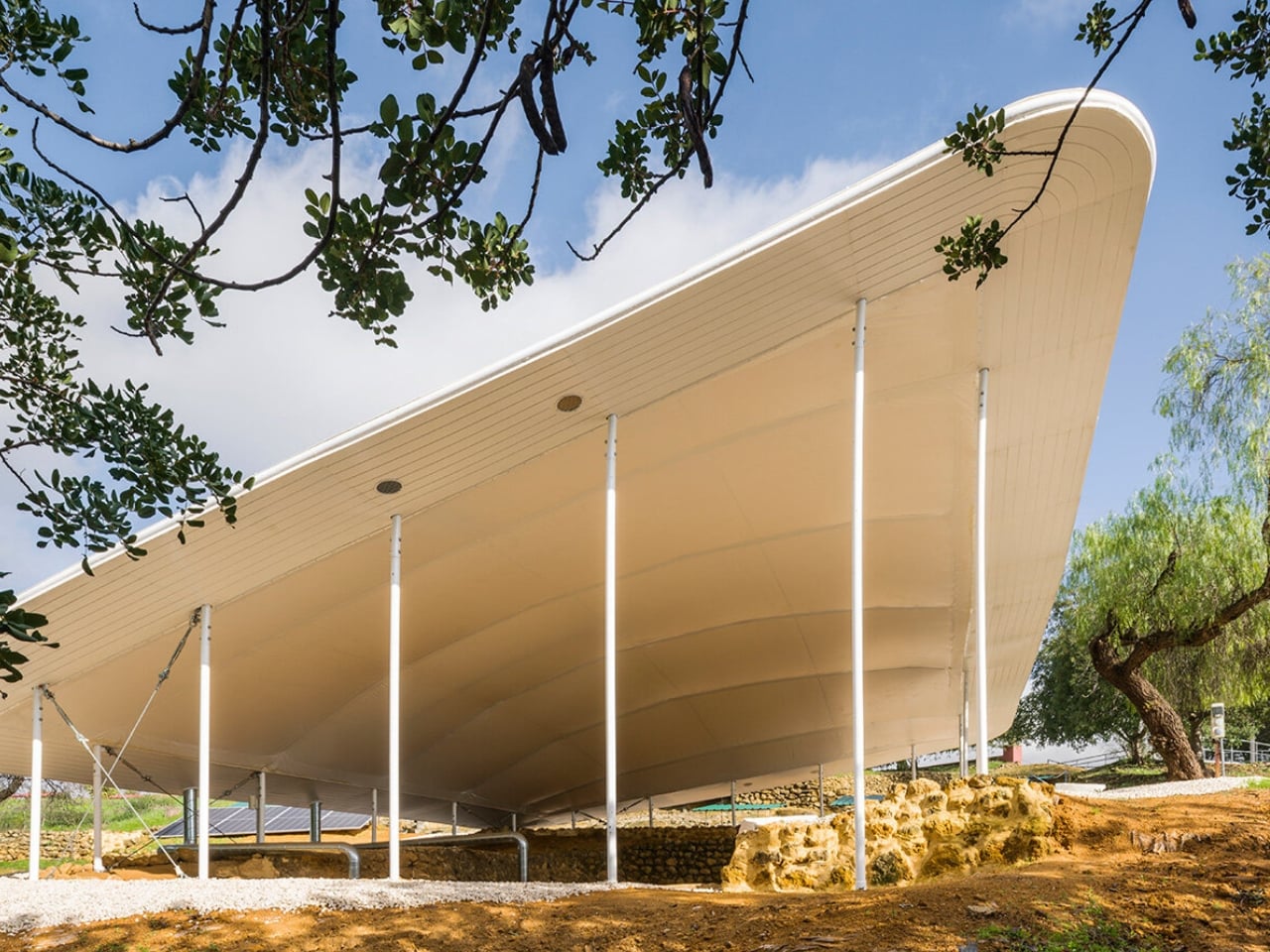
"What makes this canopy special isn't just that it uses 3D printing technology, though that's certainly impressive. It's the way the designers thought about the entire system. Rather than simply throwing a roof over the tombs and calling it a day, they created what's essentially a climate-control system disguised as architecture. The canopy features a double-layer envelope that does way more than keep rain off ancient stone. Built into this roof are ventilation and air extraction components that actively regulate temperature and humidity."
"The project tackles a challenge that archaeologists face worldwide: how do you preserve delicate historical sites without turning them into enclosed museum pieces? These Roman tombs have survived centuries, but exposure to the elements continues to threaten their integrity. The solution needed to be protective yet unobtrusive, functional yet respectful of the site's historical significance. Designers: Juan Carlos Gómez de Cózar and Manuel Ordóñez Martín (photography by Jesús Granada)"
At the Archaeological Complex of Carmona in Spain, architects Juan Carlos Gómez de Cózar and Manuel Ordóñez Martín designed a 3D-printed canopy that shields Roman tombs while remaining visually unobtrusive. The canopy employs a double-layer envelope with integrated ventilation and air-extraction elements to actively regulate temperature and humidity. The system functions passively, reducing energy needs and enabling long-term, low-maintenance protection. Supports are minimized to preserve sightlines and create an open, continuous space above the tombs. The design balances protective performance with respect for historical context, preventing weather damage without enclosing the ruins as museum pieces.
Read at Yanko Design - Modern Industrial Design News
Unable to calculate read time
Collection
[
|
...
]