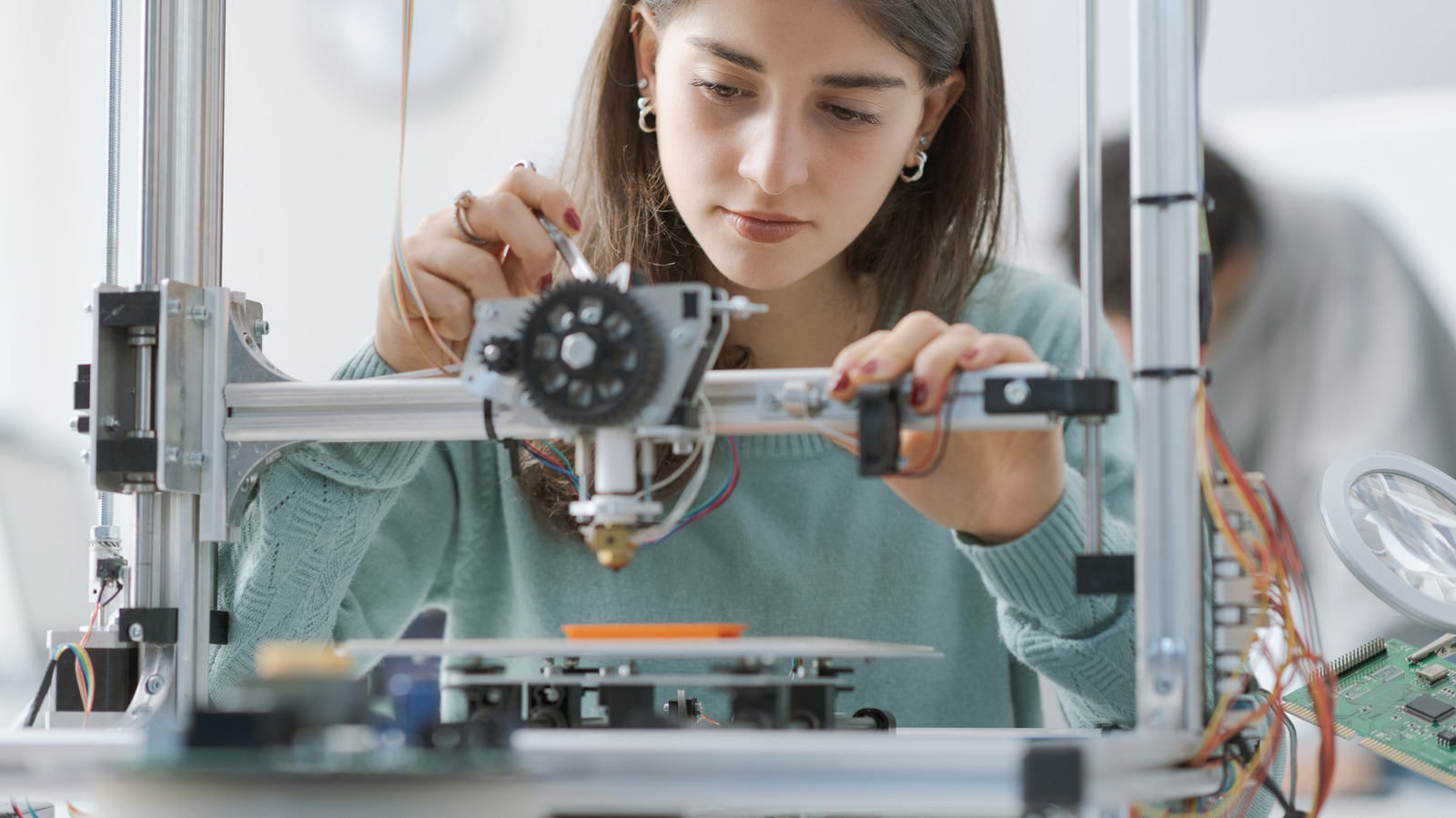
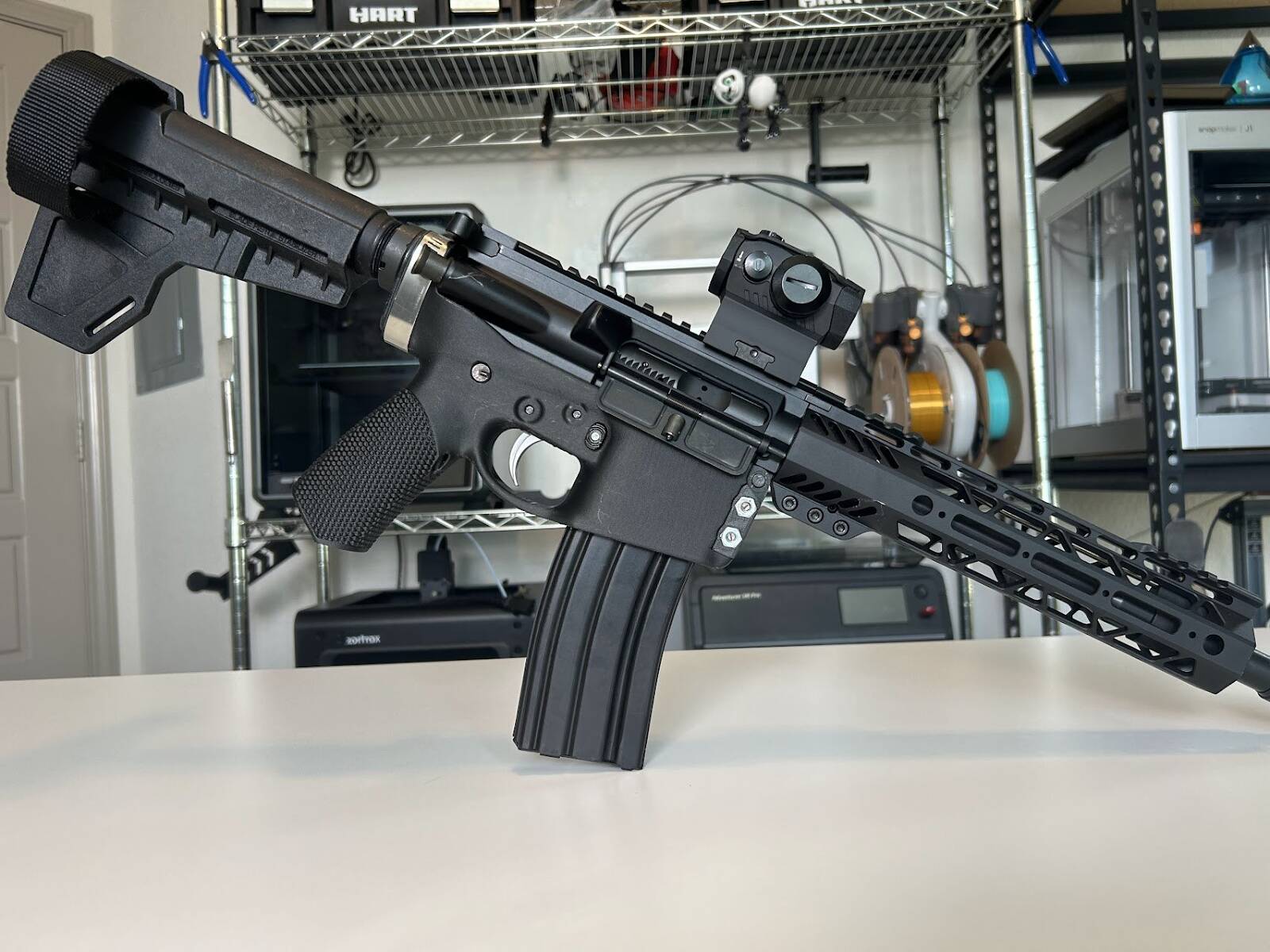
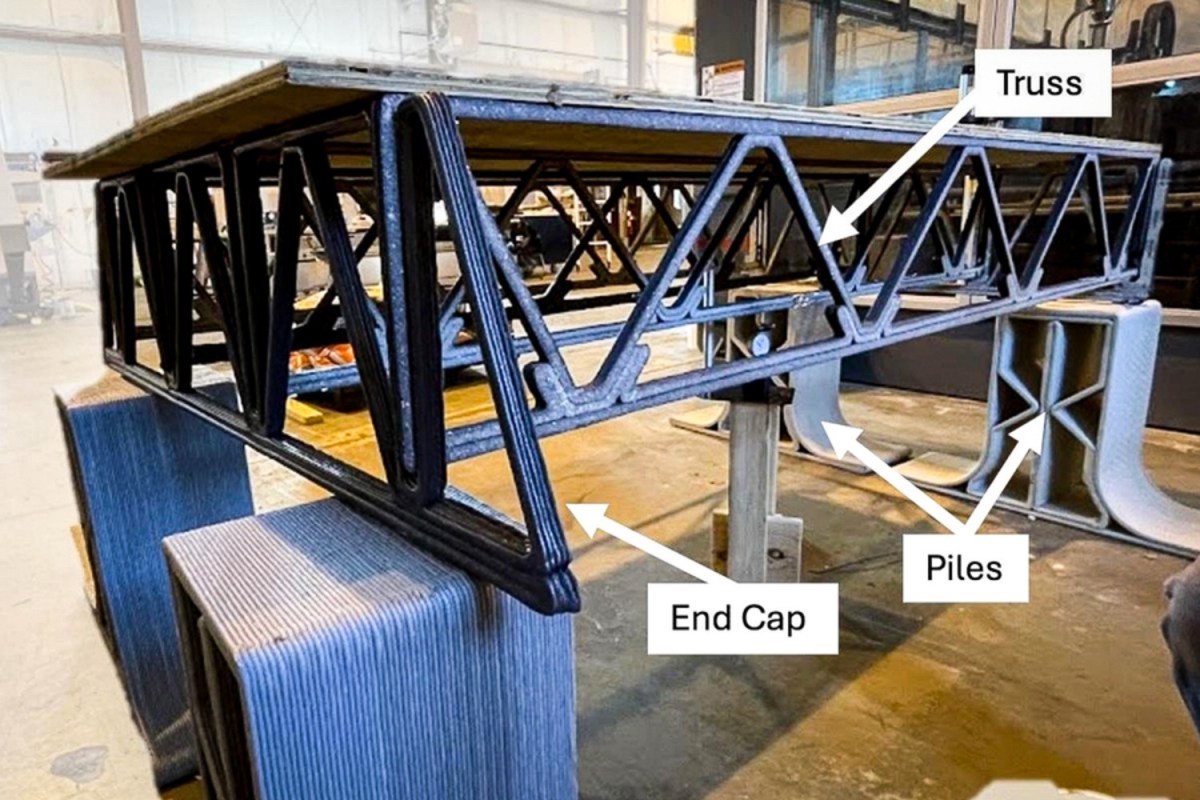
The small artworks are the calling cards of San Francisco artist DraINvader, who's on a mission to cover sewer drain holes with something worth noticing. "The idea is, every piece solves a real problem while adding something beautiful," he said. For the past several months, DraINvader has been steadily installing his pieces on city sidewalks. Each customized square plate features a 3-D printed image, such as a butterfly, a Day of the Dead skull or Star Wars' R2-D2.
Grenades - a standard but often unglamorous part of modern infantry combat - have become indispensable in Ukraine's close-quarters and grueling fight against Russia's invasion. The war blends advanced technologies like drones and electronic warfare with grinding, World War I-style fighting, where soldiers sometimes battle at arm's length in muddy trenches and bunkers. In those confined spaces, Ukrainian and Russian troops alike rely heavily on grenades.
Someone finally built a life-sized Pokéball you can actually climb inside, and honestly, it's about damn time. For nearly three decades, we've been throwing these things at Pidgeys and Rattatas without ever really knowing what happens when that button clicks and the whole thing seals shut. The anime gave us vague red-light-energy-conversion-something explanations, the games treated it like a loading screen, and the trading cards just showed them closed. The mystery has persisted through 1,000+ Pokémon species, countless regional variants,
Firestorm Labs has designed a small, mobile factory that the company says can fabricate virtually any model of drone or drone part. Each factory consists of two 20-foot shipping containers, outfitted with industrial-grade HP printers. Set-up requires just two to four people, and the company estimates that each factory can currently churn out about 17small-to-mid-sized drones drones per week. The company also has two of its own drone designs.
At first glance, these lamps appear almost impossibly delicate. Strips of fabric hang like fringes around drum-shaped modules, creating a textured exterior that filters light into something warm and inviting. But look closer and you'll notice the clever engineering at play. Each module starts with a metal frame fitted with a 3D printed cover, which becomes the base for hand-weaving reclaimed fabrics. The result is a lighting element that feels both handcrafted and high-tech, a sweet spot that's increasingly rare in contemporary design.
After two years of experimentation, the material was finally right: a particular mix of thermoplastics and fibreglass that is strong, has no need of extra coating to protect it from sunlight, and is resistant to fouling and marine growth. The perfect base, says Mr Logtenberg, from which to 3D print a boat. Boats need to withstand the unforgiving nature of the marine environment.
Luxembourg has officially entered the era of 3D-printed living. Standing at just about 11.5 feet wide and 58 feet long, the Tiny House LUX squeezes innovation, sustainability, and style into a remarkably compact 506-square-foot footprint. Developed by Coral Construction Technologies - a division of ICE Industrial Services - and designed by ODA Architects, this petite dwelling isn't just a one-off experiment. It's a bold prototype for a new kind of housing solution in one of Europe's most expensive and space-limited markets.
I remember being in the third year of design college when I was introduced to this massive book titled "Indian Anthropometric Dimensions." For the uninitiated, this book contained practically all the dimensions of the average (and non-average) Indian person, male and female, old and young. The purpose of such a book was to understand ergonomics numerically, rather than visually. And for designers, this meant adding the ultimate constraint to our wild designs... so humans could actually use them.
Anyone who's worked with flexible 3D printing filaments knows their limitations; TPU and TPE only go so far, and nothing on the desktop market has matched the heat resistance and elasticity of real silicone. We've been stuck making parts that feel rubbery but fail the moment they get too warm or need to seal properly. That's all changed with the arrival of Prusa's new XL printhead, developed in collaboration with Filament2.
Created by Ezra Feldman (who goes by EYF Design on Instagram), this Baseball Wall Lamp turns a sports moment into a piece of quirky themed lighting that I'd honestly love to see at every sports bar across the US. Simply put, the lamp features a catcher's mitt along with a ball sinking right into it, mid-catch. The ball is 3D-printed from a translucent polymer, and features a standard disc-shaped LED lamp underneath. Plug it in and the ball starts glowing.
I tend to 3D print a lot of stuff while reviewing and testing out some of the best 3D printers for Creative Bloq, and this month, it's all about the spooky prints. I came across this pumpkin-themed fidget print while browsing MakerWorld, and it was originally uploaded by a user called @pejdro3D, but has since disappeared from their profile. The exact same model can be found via 3DPmom,
What you are seeing here could be the smallest FPV quadcopter drone on the planet, measuring just 22.3 millimeters. That is comparable to the width of a coin, making the thing really tiny. The challenges in creating such a small drone are incomprehensible, right from aerodynamics to fitting the complex electronics inside a small frame. That's the reason this flying machine ditches the landing gear and shielding.
Nearly a year after Nike and Zellerfeld disrupted the sneaker industry with the release of the Air Max 1000, the world's first fully 3D-printed Nike sneaker, the revolutionary design is back in a fresh colorway that highlights the fusion of cutting-edge technology and design innovation. The Air Max 1000 "Lilac" marks the third global drop of the model and continues to demonstrate how additive manufacturing is reshaping sneaker culture, production, and performance.
Ian Falconer kept thinking about the heaps of discarded plastic fishing nets he saw at Newlyn harbour near his home in Cornwall. I thought it's such a waste', he says. There has to be a better solution than it all going into landfill. Falconer, 52, who studied environmental and mining geology at university, came up with a plan: shredding and cleaning the worn out nets, melting the plastic down and converting it into filament to be used in 3D printing. He then built a micro-factory so that the filament could be made into useful stuff.
Amazon's budget security brand, Blink, announced two new cameras during the company's fall hardware event in New York City: the Blink Mini 2K+ and the Blink Outdoor 2K+. As the names suggest, these cameras sport 2K resolution to pick up more details. But it's the Blink Arc accessory that makes these security cameras more interesting. The Arc can combine two cameras and stitch the feeds together for a complete 180-degree view.
Each piece is crafted using DFM technology, a form of additive 3D printing that eliminates molds - and therefore waste - entirely. Printed directly from digital files, the mesh structures use less material while remaining strong and lightweight. The filament itself is a durable PLA/biopolymer blend that's 100% bio-based and renewable, reinforcing the studio's commitment to sustainability. Because the collection relies on a single material, each pendant is also fully recyclable at the end of its life.
Most adults look back on their childhood earnings and think of pocket money, Christmas gifts or a Saturday job. These days, however, children as young as seven are already fluent in entrepreneurship, running side hustles, talking about profits and losses and razor-sharp in their focus on honing sophisticated business skills. Research from the children's debit card company GoHenry found that two in three young people want to be entrepreneurs when they were older,
Noctua had a couple of other interesting notes on the Framework Desktop's cooling system for people looking to make the system run cooler or quieter. First, Noctua noticed some temperature improvements when adding an 80 mm exhaust fan to the front of the system-this is supported, but it isn't the default cooling configuration-but found that the extra noise it added was disproportionate to the cooling benefit it provided.
Merve Öztemel is an independent 3D designer and sculptor known for creating stunning and elegant 3D-printed headpieces. Her designs are deeply inspired by mythology and philosophy, reflecting complex themes such as interconnectedness and transformation. One headpiece draws from the concept of "Dependent Origination," symbolizing a universe where everything is connected and constantly evolving. Another design channels the icy beauty and mysterious nature of Yuki-onna, expressed through a striking black crown that merges melancholy with modern elegance.