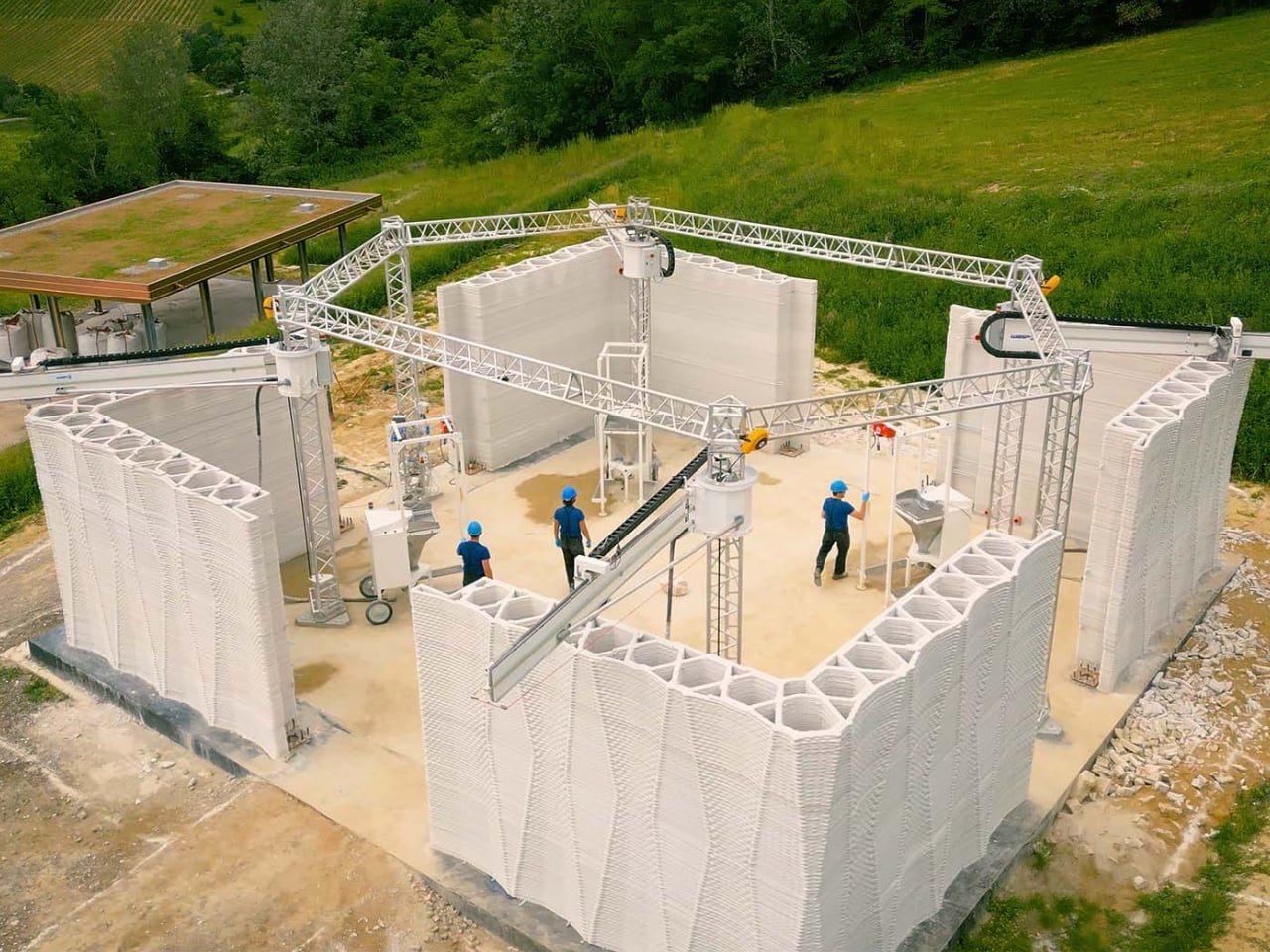
"Picture this: four robotic arms working in perfect harmony, tracing circular patterns like some kind of futuristic dance performance. But instead of creating art, they're printing the walls of an actual farm. Welcome to Itaca, a project that just wrapped up its construction in the hills of Northern Italy, and it's changing how we think about building homes. WASP, the Italian company behind this audacious venture, just finished printing the walls of what they're calling the first certified 3D-printed construction in Italy."
"The whole concept sounds like something from a sci-fi novel, but the execution is surprisingly grounded in ancient wisdom. The farm's design takes inspiration from mandala geometry, with four robotic arms positioned at the vertices of a hexagonal structure. These machines use a lime-based printing material that allows the facades to regulate their temperature naturally, breathing like a living organism. No air conditioning required."
"What makes Itaca genuinely fascinating is how it challenges our assumptions about both technology and sustainability. The walls aren't just printed and left hollow. They're packed with rice husks sourced from agricultural waste, creating natural insulation that keeps the interior comfortable year-round. The radiant heating systems and electrical installations are embedded directly during the printing process, which means less construction time and fewer workers needed on site."
Itaca is a certified 3D-printed farm in the hills of Northern Italy designed to house a family of four and produce its own food and energy. Four robotic arms print hexagonal walls inspired by mandala geometry using a lime-based material that naturally regulates temperature. Walls are packed with rice husks from agricultural waste to provide insulation, while radiant heating and electrical systems are embedded during printing to reduce construction time and labor. The site includes 3D-printed vertical hydroponic systems for year-round vegetables using minimal water. The project operates on a circular micro-economy where waste from one system fuels another, enabling self-sufficiency.
Read at Yanko Design - Modern Industrial Design News
Unable to calculate read time
Collection
[
|
...
]