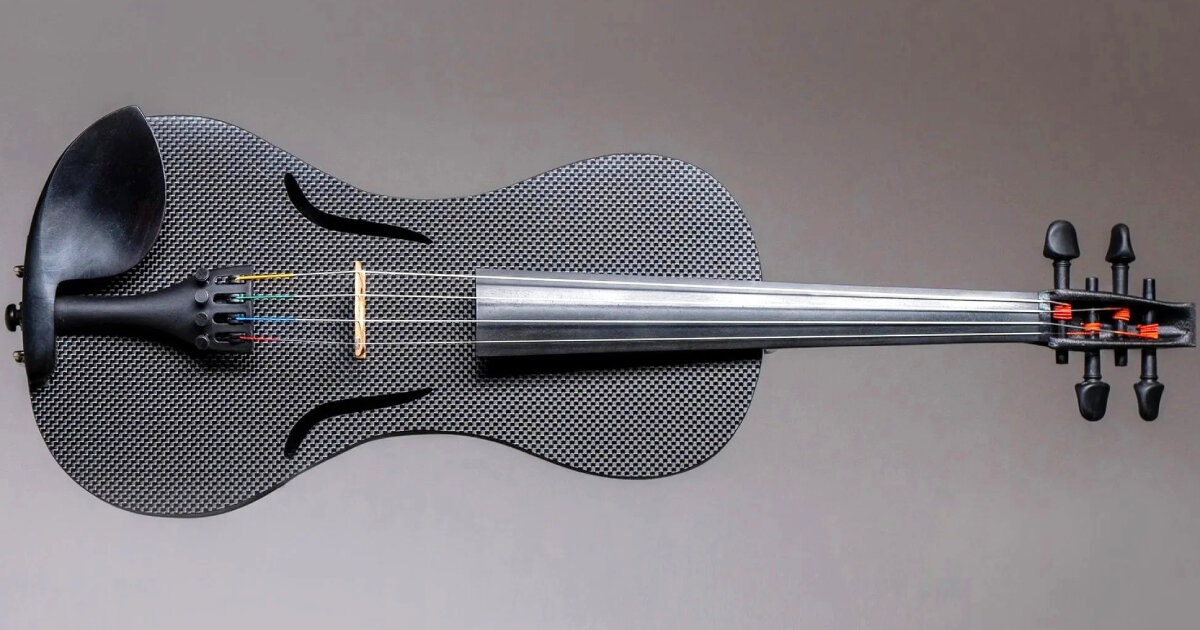
"Forte3D introduces a series of 3D printed violins and cellos that use carbon fiber as the main material instead of wood, allowing resistance to cracks and deformities. Assembled by hand, the string instruments adopt the lightweight material, which doesn't react to temperature and humidity and avoids any morphing when the environment changes over time. Traditional string instruments use wood, which can change shape when the objects are exposed to varying weather conditions."
"The company adds that playing comfort is essential since if the strings are too high or too low, the musician feels pain in the hands and their personal technique becomes harder. The team decides to add an adjustable string height system so each player can move the strings up or down on their 3D printed violin or cello. They only need a small tool, and luckily, this comes with the carbon fiber-made instrument."
Forte3D produces 3D printed violins and cellos made primarily from carbon fiber to resist cracks, deformities, temperature shifts, and humidity-related warping. The instruments are hand-assembled and use a lightweight material that prevents morphing while allowing sound to travel through the body for performance-quality tone. The carbon-fiber construction reduces scratching and weight, improving durability and portability. An adjustable string-height system enables each musician to set comfortable action using a small included tool. Cellos include smooth tuning pegs, wolf-tone stopping tools, and a printed guide for correct bridge placement. Violins feature adjustable string height and a rear sound hole to support sound flow.
Read at designboom | architecture & design magazine
Unable to calculate read time
Collection
[
|
...
]