#cultural-heritage
#cultural-heritage
[ follow ]
#architecture #archaeology #repatriation #venice-biennale #travel #art #art-restitution #milan-design-week

Travel
fromArchitectural Digest
1 year agoThe 35 Most Beautiful Cities in the World, From a Fairytale-Like Enclave to Santa's Hometown
Cities are selected for architecture, cultural treasures, historical relevance, and natural appeal, with each destination offering unique experiences not found elsewhere.
fromwww.thelocal.se
6 days agoWhy two iconic Stockholm museums might have to close
Two beloved museums in central Stockholm are at risk of closing because the government agency which owns the land is now requiring the museums, which are also run by a government agency, to pay market rents on the space.
Arts
fromenglish.elpais.com
1 week agoSodomized' gargoyles beside Spain's world-famous Santiago Cathedral: The aberration' only the public noticed
Workers renovating the Hostal dos Reis Catolicos a 15thcentury pilgrim hospital turned parador installed copper pipes straight through its Renaissance gargoyles, leaving the sculptures visibly impaled. The images have shocked locals and specialists alike, forcing authorities into damagecontrol mode. The public fury was instant. On Gargopedia the online platform created by art historian Dolores Herrero, Spain's leading specialist in gargoyles and chimeras one follower summed up the mood bluntly: When a brain can't take any more, aberrations like this happen.
Madrid food
fromwww.archdaily.com
2 weeks agoQinling Museum / CSADI
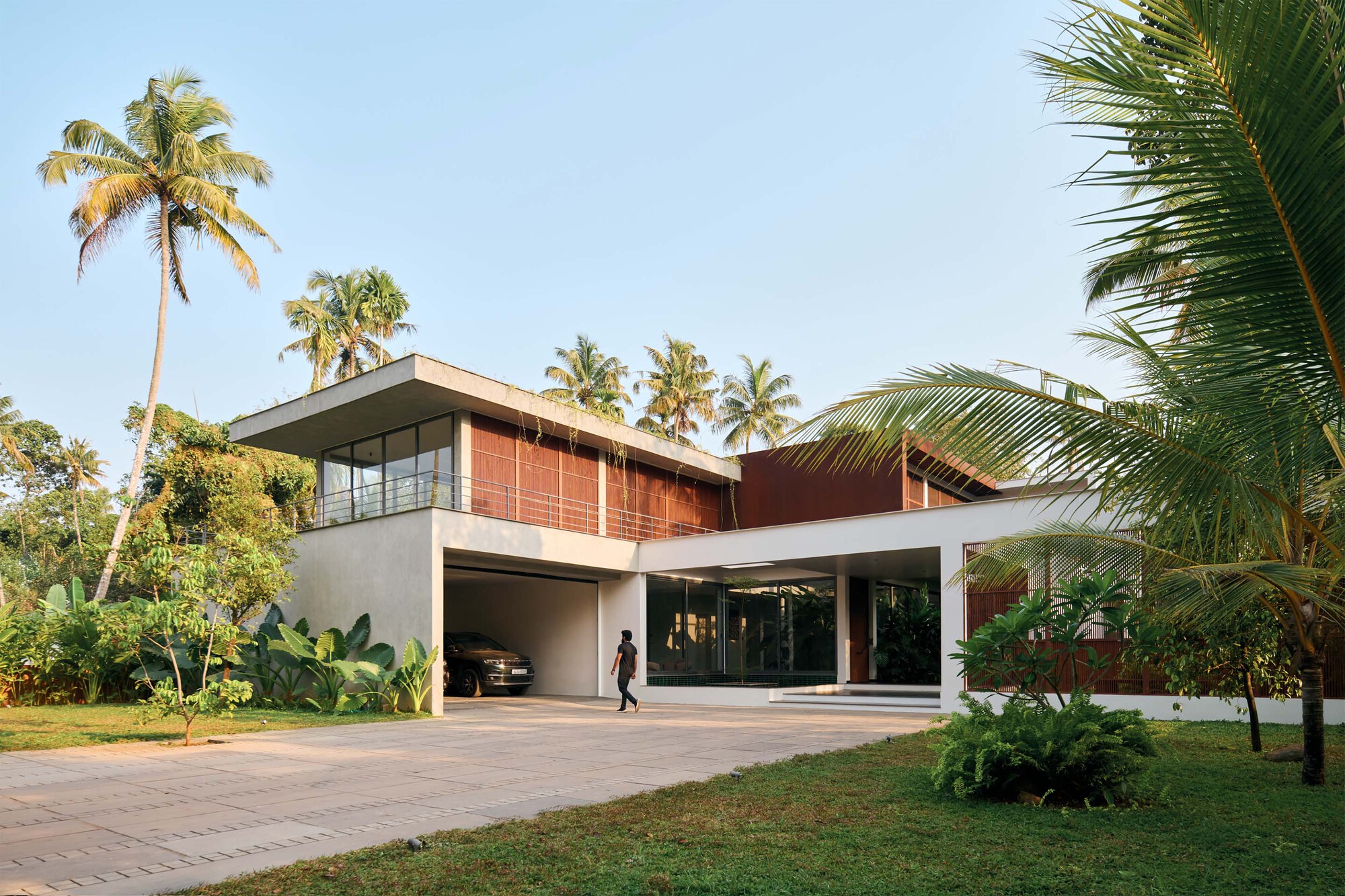
Qinling Museum: A Cultural Landmark Amidst Mountains and Rivers----Spanning China's heartland, the Qinling Mountains bridge north and south, serving as both a geographical divide and a vital ecological sanctuarythe nation's lifeline of water and biodiversity. In Shangluo, Shaanxi, the Qinling Museum emerges as China's first comprehensive space dedicated to the range's natural wonders and cultural legacy, its architecture speaking directly to the surrounding landscape.
Design
fromThe Art Newspaper - International art news and events
2 weeks agoToday's war, tomorrow's loot: attempts at stemming the illicit trade in art
The Hague Convention of 1954 ensures that countries prevent theft and pillage of cultural property during armed conflict, while a protocol to that convention prevents the export of such material, requiring other countries to seize unlawful exports and repatriate them at the end of hostilities.
Arts


Arts
fromThe Art Newspaper - International art news and events
2 weeks ago'She had a fresh, informed eye': mural depicting late Venice Biennale curator Koyo Kouoh displayed in lagoon city
A tribute collage to Koyo Kouoh by Derrick Adams is displayed in Venice, celebrating her influence and cultural heritage.


fromElite Traveler
2 weeks agoWhy This Art-Filled Scottish Hotel Is Unlike Anywhere Else in Britain
The Fife Arms has 47 rooms, none of which seem to have agreed on a design language with the others. Some draw on literary or cultural figures - rooms themed around Robert Louis Stevenson or, for instance - while others take cues from moments in Scottish history, from the Jacobite era to the Victorian fascination with the Highlands.
London food
fromSan Jose Spotlight
2 weeks agoHistoric San Jose farmhouse seeks funds for renovations - San Jose Spotlight
"This is a really historic moment for San Jose in welcoming this expanded narrative of Japanese Americans. Generations of kids will be able to see their story reflected in this space."
Mission District

Portland
fromOregon ArtsWatch * Arts & Culture News
3 weeks agoAmerica 250 spotlight: In Jacksonville, the Southern Oregon town is the museum - and its historical story keeps expanding * Oregon ArtsWatch
Jacksonville is creating a 'Museum without Walls' to celebrate its history and the 250th anniversary of the Declaration of Independence.
History
fromThe Art Newspaper - International art news and events
3 weeks agoUS exhibition unearths the Etruscans and their enduring cultural influence
The Etruscan civilization thrived in central Italy for 800 years, establishing a rich culture and trade network before assimilating into the Roman Empire.
fromArchitectural Digest
3 weeks agoJeremy Frey's Elaborate, Hand-Woven Baskets Keep Tradition Alive
Frey, a seventh-generation basket maker, joins a long line of Wabanaki people to practice the age-old craft. But Frey, a 2025 MacArthur Fellow, doesn't let himself get stuck within that tradition. "I'm weaving to innovate," he explains of his work, which, through nuanced use of technique, material, and color, pushes the craft form squarely into the realm of fine art.
Arts
fromwww.scientificamerican.com
3 weeks agoSpectacular' Viking coin hoard discovery is likely the largest in history
The hoard includes specimens from the 980s to the 1040s—the height of the Vikings' power. Notably, many of the coins are foreign made, originating from England, Germany, as well as Denmark and Norway.
History
fromwww.thehistoryblog.com
3 weeks agoTwo rare Anglo-Saxon Agnus Dei coins found in Denmark
The Agnus Dei coins, minted around 1009 by King Æthelred the Unready, are marked with a lamb pierced by a cross, symbolizing Christ's sacrifice. This design contrasts with contemporary English coins, which typically feature the king's portrait and a cross.
History
fromVulture
3 weeks agoWhere Has Alden Ehrenreich Been Hiding?
"It was a very smart trick," he tells me, because he'd start by naming the works he, as a sullen preteen, found stupid or boring, and then, by process of elimination, arrive at the pieces he liked. "Then she'd go, 'Why do you like it?'" Ehrenreich says. Suddenly, he had to learn to express why he was into art.
Arts
fromMetro Silicon Valley | Silicon Valley's Leading Weekly
3 weeks agoSan Jose Acid Test House & Grateful Dead History | Metro Silicon Valley | Silicon Valley's Leading Weekly
The same house, 38 S. Fifth St, was previously the property of a legendary San Jose figure, Mr. Horace Allen, a rancher and builder of gas stations, who lived in the house for almost 40 years.
Mission District
fromABC7 Los Angeles
3 weeks agoWalk through a time-traveling tour of American history on Staten Island
Historic Richmond Town is a living history village, where restored buildings, preserved artifacts, and immersive storytelling bring Staten Island's past to life. Visitors can explore everything from early Dutch Colonial architecture to 19th-century community spaces.
Brooklyn
fromArchDaily
3 weeks agoMemory of the Earth: 4 Adaptive Reuse Projects Transforming Ceramic Factories
Ceramic factories mark the transition from manual knowledge to serial production, expanding its scale without entirely severing its material origins. Scattered across different territories, these structures record the relationship between technique, landscape, and time.
Renovation
fromwww.theguardian.com
3 weeks agoHey-nonny-bo! The woman reclaiming maypole dancing with dancehall and drum'n'bass
Maypole dancing is a springtime pagan ceremony thought to originate from medieval Europe, originally based around a big tree or bush. Traditionally on May Day people would skip around it and sing to the blossoming snowdrops and hellebores, celebrating fertility and the awakening of nature after winter.
London music
Arts
fromThe Art Newspaper - International art news and events
3 weeks agoTitian's 'Bacchus and Ariadne' to get a refresh with bank conservation grant
Bank of America's art conservation program supports the restoration of significant artworks globally, including Titian's Bacchus and Ariadne and Rembrandt's The Night Watch.
fromHyperallergic
4 weeks agoA Buddha Is Reborn on the High Line
"This sculpture creates a friction with the surroundings here in New York. It's not sleek like everything else you can see here. It offers a hint to the public that temporality is not necessarily a straight line, that things can come back almost like in a wheel."
Arts

fromThe Nation
1 month agoMexican President Claudia Sheinbaum at the Summit for Democracy
I come on behalf of a hardworking, creative, and resilient people, but above all a deeply generous people-a people that has learned to resist without hatred, to defend its rights without ceasing to respect others.
Social justice
[ Load more ]