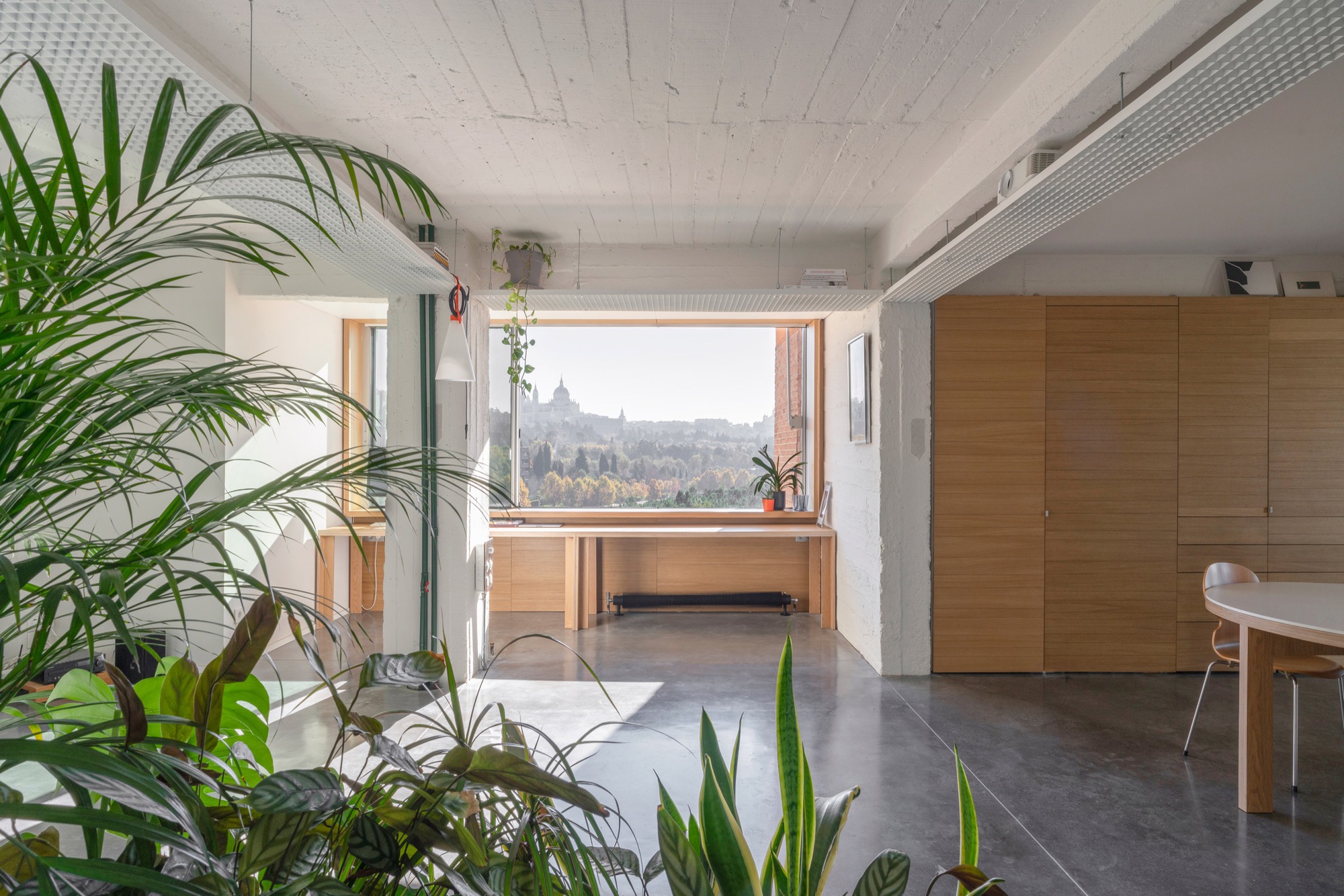
"Ba-rro: "Our starting point is always the context and what already exists." We are interested in recognizing the value of things simply because they are there, without assuming that everything must be preserved as a matter of principle. The question isn't what can be kept, but what deserves to be kept in each specific project. The decision to preserve, reveal, or remove doesn't stem from universal values or a nostalgic impulse, but from a situated interpretation:"
"In many cases, interest arises precisely from a shift in meaning-when a material, system, or structure takes on a different role from the one originally intended. It is in these "translation games" that project opportunities emerge. When a structure ceases to be merely a technical support and begins to operate as spatial infrastructure-for example, by organizing uses, paths, or relationships between spaces-a clear reason appears to make it visible and central."
Heritage rehabilitation balances preservation, transformation, and renovation through strategies that integrate existing materials and new interventions. Architects assess context and the existing fabric to determine which elements deserve retention based on their potential role in a new program. Decisions to preserve, reveal, or remove arise from situated interpretation rather than universal or nostalgic values. Adaptive reuse can reassign technical elements as spatial infrastructure, organizing uses and relationships between spaces. Translation of materials and structures into new functions generates project opportunities. Collaboration between practices leverages historical materials, construction techniques, and memories to strengthen the contemporary built environment.
Read at ArchDaily
Unable to calculate read time
Collection
[
|
...
]