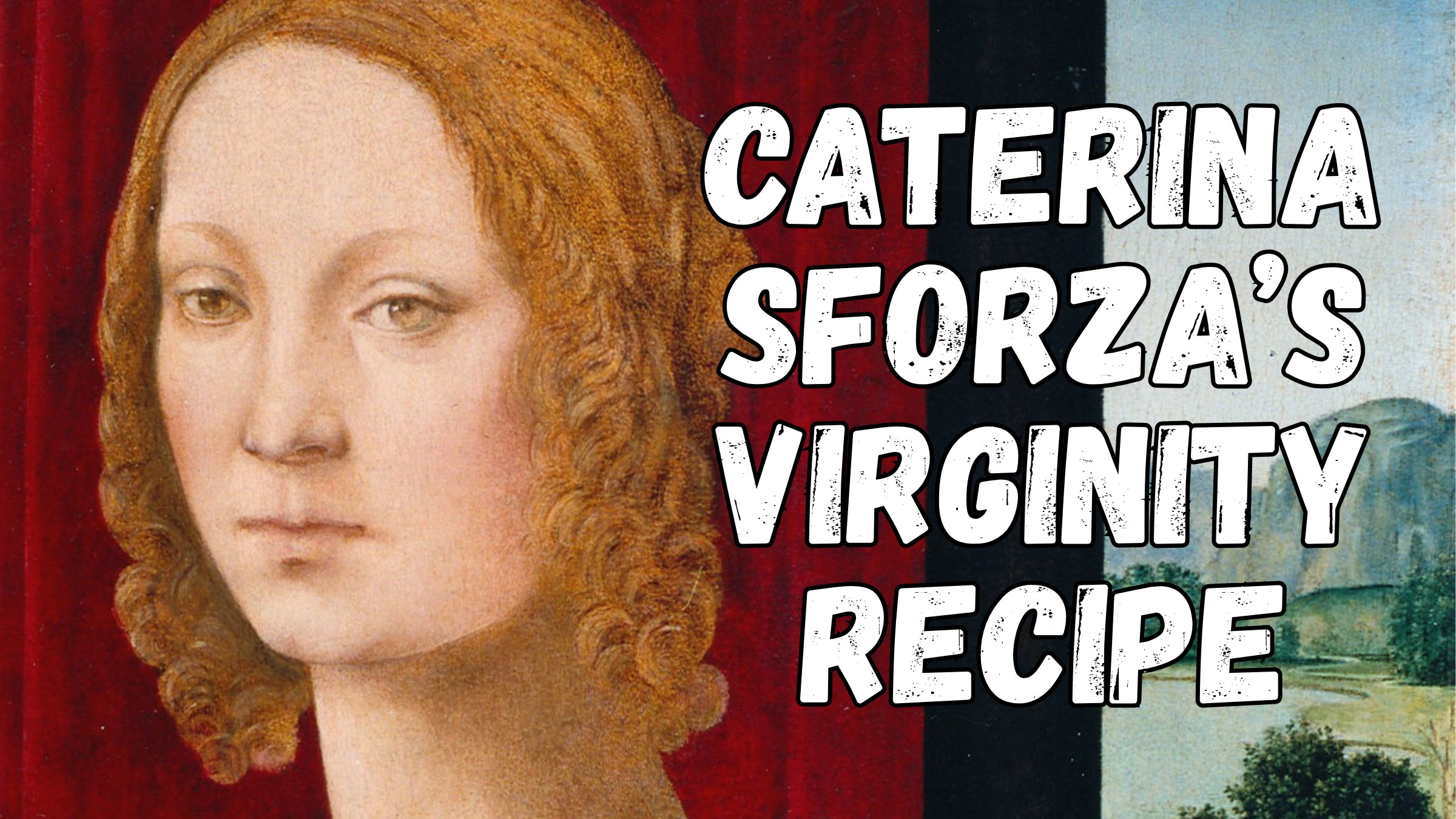
"If you follow the advice of Caterina Sforza, 'you will see that thing become so narrow that you yourself will be in admiration.' That striking promise appears in the Experimenta, a collection of recipes attributed to the Renaissance noblewoman Caterina Sforza. Best known as the formidable ruler of Imola and Forli and a fierce opponent of the Borgia family, Sforza also cultivated a keen interest in medicine, alchemy, and cosmetics."
"The Experimenta is a dense compilation of more than 300 recipes and formulas-alchemy, medicine, cosmetics-assembled in the spirit of practical, results-driven experimentation. Ray notes that Sforza's collection has been described as 'the most complete and important document' of its kind for the early sixteenth century."
"These works circulated widely in sixteenth-century Italy and combined recipes for alchemy, medicine, cosmetics, perfumery and household management. Unlike older scholarly texts written in Latin, these manuals were often composed in the vernacular and aimed at a broader audience, emphasizing practical experimentation and useful results."
Caterina Sforza, a Renaissance noblewoman and ruler of Imola and Forli, created the Experimenta, a collection of over 300 recipes and formulas addressing medicine, alchemy, cosmetics, and household management. This work exemplifies the libri di segreti, or books of secrets, a popular sixteenth-century Italian genre that circulated widely among broader audiences. Unlike scholarly Latin texts, these manuals emphasized practical experimentation and vernacular language. Within these compilations, sexual health received treatment equivalent to other bodily concerns, with conditions like impotence and infertility presented as physiological issues addressable through remedies and carefully prepared mixtures. Sforza's Experimenta stands as the most complete and important document of its kind for the early sixteenth century.
#renaissance-medicine-and-alchemy #caterina-sforza #libri-di-segreti #sexual-health-in-early-modern-italy #vernacular-knowledge-and-practical-experimentation
Read at Medievalists.net
Unable to calculate read time
Collection
[
|
...
]