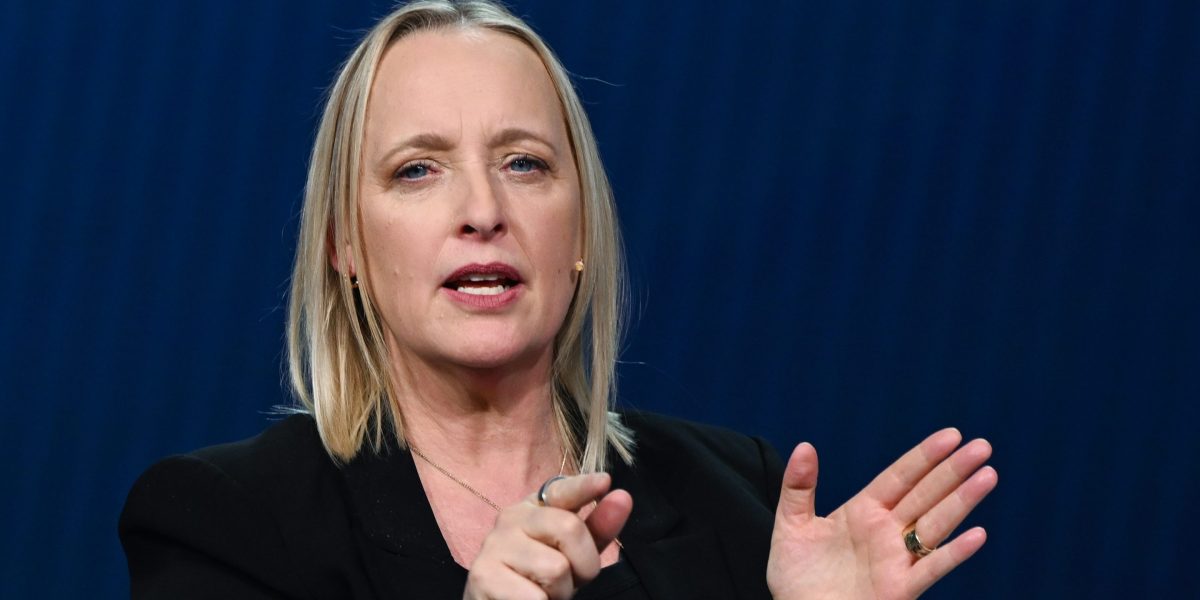
"I am honored to be appointed fire chief and continue serving the communities of Livermore and Pleasanton," Lacey wrote in a press release. "Our department is built on a strong tradition of excellence and a commitment to delivering the highest level of service. I look forward to supporting our team as we carry that mission forward."
According to nonprofit Lean In and McKinsey & Company's latest Women in the Workplace report, for the first time since the report began a decade ago, significantly fewer women than men are interested in getting a promotion at work. Compared to 80% of men in entry-level career stages, 86% in mid-career, and 92% of senior executives, only 69% of entry-level women, 82% in their mid-career, and 84% of female senior executives reported a desire to advance in their careers. The data was taken from 124 companies with 3 million workers, as well as interviews with 62 human resources executives.
According to a recent Glassdoor survey of more than 1,000 U.S. professionals, 68% of Gen Z respondents said they would not pursue management if it were not for the paycheck or the title. It may seem like younger workers lack ambition, but the reality is different. Gen Z is redefining professional success through career minimalism, choosing to treat their jobs as a source of stability while channeling ambition and creativity into pursuits outside traditional employment.
Being asked to apply for a promotion is often framed as an unqualified win: validation that your work is seen and your potential recognized. Yet for many high-achieving professionals, that invitation can spark as much ambivalence as excitement. Because the question isn't only "Can I do this?" It's also "Do I want to live this way?" Promotions can be career accelerators, but they also reconfigure your days, your priorities, and your sense of balance.
Workplace experts can't decide what's the optimal number of working hours for Gen Z workers-but they know it's not "every waking minute" of the day like Cerebras' CEO suggested, or the 60 hour "sweet spot" Google's Sergey Brin recommended earlier this year. That schedule is unsustainable, but 40-hour workweeks aren't enough for the young and hungry. The CEO of $8.1 billion AI chips company Cerebras recently hit back at the idea entrepreneurs can launch an innovative business working "30, 40, 50 hours a week."
We are professors of marketing and management who study humor and workplace dynamics. Our own research-and a growing body of work by other scholars -shows that it's harder to be funny than most people think. The downside of cracking a bad joke is often larger than what you might gain by landing a good one. Fortunately, you don't have to tell sidesplitting jokes to make humor work for you. You can learn to think like a comedian instead.
Rachel (not her real name) is the go-to person at work for everything, from helping you perfect your presentation, to unjamming the copier. She can get meetings with high-level people organized in record time, fix spreadsheets so that they make sense, mentor rising stars, and deliver presentations in a way that gets people motivated to take action. Everyone relies on Rachel because she's so competent at so many different tasks. It's almost as if she's a specialist in everything.
Gen Z is facing a dire labor market-and it's forced young professionals on the job hunt to stealthily promote their resumes with boxes of donuts, or to take up waitressing gigs at conferences just to get a foot in the door. But Suzy Welch, professor of management practice at New York University, believes the key to success is a lot simpler than that.
Julie felt dissatisfied with her work achievements despite her intelligence and qualifications. She avoided promotions, reinforcing her negative self-beliefs about competence and intelligence.
I had gone on the show hoping it would give me a leg up in my career. But I realized that if people had only heard of the show - not actually watched it - they were more likely to assume I was some narcissistic jerk.
Deborah O'Neill emphasized the impact of women leaving technology, stating, "That's not just a statistic, that is a loss - potential lost innovation, lost opportunities - for this country and for all of our organisations."