#petworth
#petworth
[ follow ]
#london #housing-development #interior-design #affordable-housing #architecture #historic-architecture
fromPortland Monthly
5 hours agoProperty Watch: Another Spanish-Style House Steps from Forest Park
In 1904, Portland was abuzz with anticipation for the Lewis and Clark Centennial Exposition, leading to a surge in vendor interest and ambitious proposals for the event, including a toboggan slide and an observation tower.
Portland
fromwww.bbc.com
10 hours agoKensington Gardens shut as police 'assess items'
Police are assessing a number of discarded items in London's Kensington Gardens after a video was shared online in which a group claimed to have targeted the nearby Embassy of Israel with drones carrying dangerous substances.
UK news


fromwww.standard.co.uk
1 week ago1,500 new homes on Greenwich peninsula set for green light
Galliard Homes reduced the amount of affordable housing in the project's housing stock from 35 per cent to just 10 per cent, citing increased construction costs and changing building regulations as key factors.
LA real estate


fromTime Out London
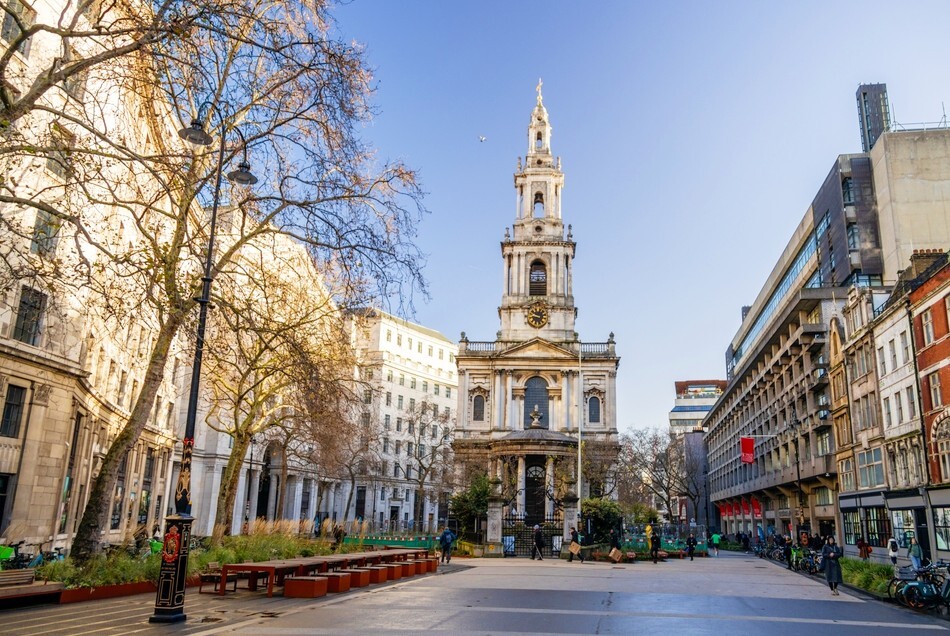
2 days agoThis south London park just got 130 new cherry blossom trees from Japan
Greenwich Park has just introduced a new 'valley of blossom', planting 130 prunus 'sekiyama' cherry trees sourced straight from Japan. These new trees will tower above the park's existing cherry trees, growing to 12 metres high and 8m in spread.
London food
fromianVisits
4 days agoLondon's Alleys: Yarmouth Place, Mayfair, W1
Originally known as Sneads Court on John Rocque's map of London in 1746, the area was wider and more of a courtyard than an alley. Over time, it was renamed Hertford Place and later Yarmouth Mews as the neighborhood evolved into larger hotels and grand houses.
London food
Renovation
fromYanko Design - Modern Industrial Design News
1 week agoHow Architects Turned a Postwar London Terrace Into an Open-Plan Home Without Touching the Facade - Yanko Design
Islington houses are redesigned to create open, continuous spaces while maintaining the original facade and architectural integrity.
fromTime Out London
1 month agoFirst look: inside the revived Peckham Palais, which has been transformed back into a nightclub
The first floor is now home to The Ballroom, a cocktail bar and events space with room for 250 people to sip cocktails and listen to vinyl. The room gives strong '70s vibes, with raspberry-pink walls, leather and PVC booth-style seating and oak details all adding to the old school aesthetic.
London music
London politics
fromwww.standard.co.uk
1 month ago176-year-old London pub facing demolition gets lifeline as plans for flats rejected
Greenwich Council rejected plans to demolish the 176-year-old Anglesea Arms pub in Woolwich for a second time, citing insufficient evidence that the pub is no longer commercially viable.
fromTime Out London
2 weeks agoPlans for a new 500 million 'town centre' in this zone 1 London neighbourhood have been revealed
The Elephant shopping centre will be home to a big M&S with a market-style food store, offering fresh produce, everyday essentials, and on-the-go meals for breakfast, lunch, or dinner.
London food
fromTime Out London
2 months agoControversial development plans have been revealed for Brick Lane's legendary Truman Brewery
Brick Lane is one of London's most beloved, and buzzing, areas. Home to the largest Bangladeshi community outside of Bangladesh, nowadays the cobbled street in the East End is known just as much for its curry houses and vintage shops as its ubiquity of fashionable young shoppers, TikTokkers and trendy coffee shops. At the centre of Brick Lane is the great Truman Brewery. Currently, the building that was once London's largest brewery is home to food and vintage markets, record stores, music venues and more.
Real estate
Renovation
fromArchitectural Digest
1 month agoA Victorian House in East London Reinterprets French Style Through Rose-Colored Glasses
Soft curves, mirrors, and architectural details transform a narrow Victorian house into a sophisticated, fluid living space with carefully curated furnishings and artistic touches.

Real estate
fromLondon Business News | Londonlovesbusiness.com
2 months agoExploring a mews house in Central London - London Business News | Londonlovesbusiness.com
Central London mews houses combine historic architectural charm with modern luxury, offering secluded, characterful, and highly desirable residential properties and strong investment potential.
fromianVisits
2 months agoLondon's Alleys: Ann's Place, Whitechapel, E1
This part of London sits just outside the historic City walls, so it attracted traders who wanted to avoid the strict rules binding City merchants. The land was later acquired by Thomas Wentworth, 1st Earl of Cleveland, who developed it, hence the main road being named Wentworth Street. If you're wondering about Ann's Place, that was probably after his wife, Anne Hopton.
History
London
fromTime Out London
1 month agoOne of London's most spectacular houses is opening to the public next month
The Cosmic House, a rare Grade I-listed postmodernist building in Kensington designed by Charles Jencks and Sir Terry Farrell, opens to the public on April 22 with an Isaac Julien film installation.
fromianVisits
2 months agoLondon Alleys: Buckingham Mews, Victoria, SW1
Despite its proximity to one of London's busiest tourist attractions, its back street location is remarkably quiet and peaceful. Leading off Stafford Place, it was originally, and unsurprisingly, called Stafford Mews, as it was built as stabling for houses on Buckingham Gate, facing the palace. Constructed around 1860, the stables were simple two-storey houses, built initially with stables at the ground and accommodation above.
Real estate
fromianVisits
2 months agoDerelict shops in Aldgate to be redeveloped as horse stables for the police
The row of shops (and pub) here used to be known as Butchers' Row as it was lined with, well, butchers of course - and they would hang their meat outside their stores on rows of metal hooks. Most of the buildings have since been redeveloped, but the gap between shops on Aldgate High Street has been there since shortly after WWII. The gap wasn't due to bomb damage, but for some reason, one building was cleared, and later its neighbour as well.
UK news
London politics
fromLondon On The Inside
1 month agoNorth vs South London | Ten Reasons Why Each Side Is Better
North London claims superiority through Roman history, the Barbican, anti-fascist heritage, major protest movements, and superior underground transport infrastructure compared to South London.
Renovation
fromwww.bbc.com
1 month agoThe house hidden in the garden of a Catford terrace
Architects Will and Sogand Howard built a modern home in a neighbor's garden in London, demonstrating how small urban plots can address housing shortages through creative land use and direct outreach to homeowners.
fromwww.standard.co.uk
2 months agoThe bitter battle over the future of Truman Brewery
London has rapidly emerged as Europe's data centre capital, much to the Government's delight, but locations close to the City, where some of the UK's biggest data users are based, are rare and much prized. That is because, when it comes to financial trading in the 21st century, milliseconds matter. The shorter the physical distance between trader and data centre, the faster instructions can be processed, creating a minute but crucial competitive advantage.
Real estate
Real estate
fromwww.theguardian.com
2 months agoGreen spaces should be the norm for all new housing developments in England, guidelines say
New government guidelines recommend mixed-use, heritage-preserving, nature-inclusive neighbourhood developments with shops, schools, green spaces and flood protection as standard for new housing developments.
[ Load more ]