#hunter-gatherer-fisher-subsistence-patterns
#hunter-gatherer-fisher-subsistence-patterns
[ follow ]
#climate-change #indigenous-rights #archaeology #greenland #environmental-justice #indigenous-sovereignty #dice
fromState of the Planet
3 days agoIndigenous Herders and Peru's Melting Glaciers: A Conversation with Anthropologist Allison Caine
Caine's book explores the ways of life in Chillca, a small community on the flanks of Mount Ausangate in Peru, 14,000 feet above sea level. In this village of 350 people, women are the primary pastoralists, tending to herds of alpacas, llama and sheep.
Books
Non-profit organizations
fromNonprofit Quarterly | Civic News. Empowering Nonprofits. Advancing Justice.
4 days agoEarth Day Is for the Planet. What About the People Protecting It? | Nonprofit Quarterly | Civic News. Empowering Nonprofits. Advancing Justice.
Conservationists face moral injury from witnessing environmental harm without adequate support, highlighting the psychological toll of their commitment to protecting the planet.
fromHigh Country News
2 weeks agoTribal leaders reflect on a year of uncertainty - and possibility - High Country News
Indigenous communities have seen dramatic changes, from rescinding land-management policies that were more inclusive of Indigenous knowledge to reducing $1.5 billion in climate funding for tribal initiatives.
Washington DC
fromwww.scientificamerican.com
3 weeks agoHumans have been gambling since the Ice Age
Madden combed through this sparse record, confirming the oldest-known dice and establishing an unbroken, previously hidden lineage of chance-based games dating back at least 12,000 years, 6,000 before any counterpart in the Old World.
History
fromLos Angeles Times
1 month agoCalifornia pledges to open 7% of its land and waters to Indigenous tribes - a step toward healing a 175-year-old broken promise
That number represents roughly 7% of the state's land and waters. It also corresponds with the amount of land the federal government promised it would hold as reservations for Indigenous tribes after California joined the union in 1850. Congress ultimately rejected these treaties in a secret meeting - after pressure from the state - and failed to notify tribes, many of whom upheld their end of the agreement to relocate.
Agriculture
Science
fromNature
2 months agoDaily briefing: Hunter-gatherers in Europe's 'water world' resisted the switch to farming for millennia
Rhine-Meuse delta populations retained substantial hunter-gatherer ancestry for millennia before steppe-related mixing spurred Bell Beaker expansion and large genetic turnovers.
Travel
fromConde Nast Traveler
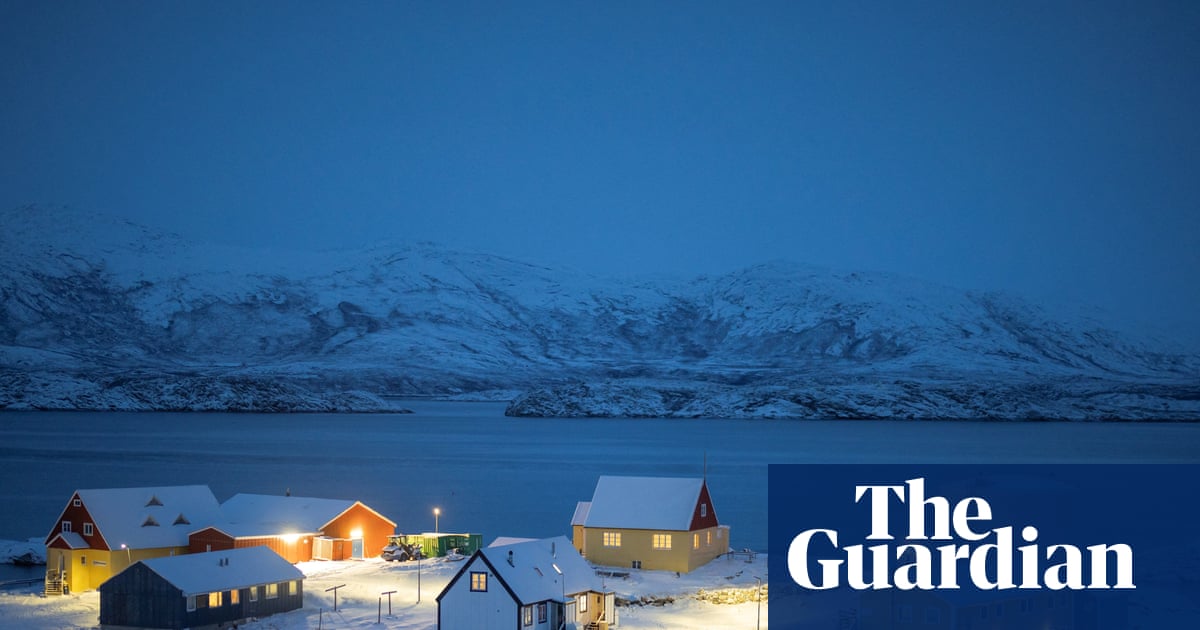
1 month agoIn Greenland's Remote Fjords and Tiny Settlements, a New Sense of Connection
Greenland's new airport and developing tourism infrastructure make Arctic exploration increasingly accessible, offering unique cultural experiences with Indigenous and settler communities unavailable in Antarctica.
Environment
fromTruthout
1 month agoGrowing Presence of AI Data Centers Prompts Debate on Native Lands
AI data center expansion creates environmental and cultural challenges for Native American tribes, sparking debates over tribal digital sovereignty and regulatory needs for data infrastructure control.
US news
fromBusiness Insider
2 months agoI was born and raised in Alaska. People are often surprised to learn about what my life there was really like.
Alaska features both extensive urban life and wilderness, with frequent flying and common small-plane ownership, and persistent misconceptions about daily life.
Online Community Development
fromABC7 Los Angeles
1 year agoPowwows: Celebrating the culture and community of Indigenous people
The Dix Park Inter-Tribal Powwow brings together Indigenous communities from North Carolina's eight state and federally recognized tribes for cultural celebration, competition dancing, and traditional music.
fromwww.theguardian.com
2 months agoWays to Traverse a Territory review documenting an ancient and disappearing way of life
Here dwells the indigenous Tzotzil community which has kept a pastoral way of life against the march of time. Apart from the odd forest ranger and passerby, Ruvalcaba's film focuses almost entirely on the Tzotzil women. Together, they tend herds of sheep which they still shear by hand, and use traditional tools for spinning yarns and natural dye for fabrics.
Film

Chicago Bears
fromHigh Country News
1 month agoCan Alaska save caribou by killing bears? - High Country News
Alaska's Mulchatna caribou herd has collapsed from 200,000 animals in the 1990s to 12,000 in 2022, devastating Indigenous subsistence hunting and prompting controversial wildlife management interventions including hunting bans and aerial predator culling.
fromKqed
2 months agoMaidu Tribe Returns to Its Roots of Ancestral Fire | KQED
The Maidu tribe of Butte County-Berry Creek, Mechoopda, Mooretown, Enterprise and Konkow Valley, come together to conduct CAL-TREX prescribed burn training to relearn how to put helpful fire back on their native lands that have been devastated by recent catastrophic wildfires. Organizers say the training camp is designed to help restore fire-scarred lands and people. While other Northern California tribes have been reintroducing cultural fire for decades,
California
fromNature
2 months agoWhat my cave stay taught me about sensors
To capture the biological impact of this extreme environment, I used a comprehensive suite of sensors and biomarker analyses. I wore a wireless electroencephalograph (EEG) system to monitor brain activity, sleep stages and neural signatures of stress and adaptation; the Oura Ring to continuously track sleep patterns, heart-rate variability and circadian-rhythm shifts; and the glucose monitor to follow metabolic responses in real time.
Wearables
fromwww.theguardian.com
1 month agoRiding the wave: can surf tourism save Peru's ancient reed-boat fishing culture?
Archaeologists estimate that fishers in Peru have been using the reed boats for approximately 3,500 years. Elaborate ceramics dating back to the sophisticated Moche culture (AD100-800) and the later Chimu civilisation (900-1470), depict figures astride the craft, which was called a tup in the now-extinct Mochica language. They are believed to be among the first crafts to be used for riding waves, possibly predating Polynesian proto-surfing in Hawaii.
Food & drink
fromAeon
2 months agoOrcas haven't changed, but our view of the killer whale has | Aeon Essays
'Orcas are psychos,' quipped a close friend recently. He wasn't joking, nor was he ill-informed. In fact, he is probably the world's leading historian of whales and people. He had just watched a BBC Earth clip, narrated by David Attenborough, in which three killer whales separate a male humpback calf from his mother in the waters of Western Australia. The video's closing footage, with two of the orcas escorting the naive youngster to his imminent death, resembles nothing so much as a kidnapping:
Philosophy
fromwww.scientificamerican.com
2 months agoA foraging teenager was mauled by a bear 27,000 years ago, skeleton shows
We have little physical evidence of these interactions turning violent, however, because burials were rare and carnivores were more likely to finish off their prey. That's why the embellished burial site of a 15-year-old from 27,000 years ago is an important window into the past: the teenager's bones indicate he was mauled by a bear. The finding represents some of the first evidence of its kind.
Science
fromenglish.elpais.com
2 months agoRobin Wall Kimmerer, scientist and writer: Capitalism is not a natural phenomenon; it's a choice'
Kimmerer proposes kindness as an act of resistance. We need to equip ourselves with a new language, she explains, something that affirms that this is what it means to be human. In a world where kindness breeds distrust or is scorned, kindness, she affirms, is becoming a militant gesture. When you're kind to someone, it's not universally expected that they'll respond with kindness, but if that seed is planted, both people feel better,
Books
fromwww.scientificamerican.com
2 months agoAncient seafarers helped shape Arctic ecosystems
In the pristine High Arctic sits the Kitsissut island cluster, also known as the Carey Islands, nestled between northwest Greenland and northeast Canada. The surrounding seas are perilous, and traveling there is difficult even with modern boats. But new archaeological evidence suggests ancient humans managed to sail to the islands, too. Early settlers lived on the islands between 4,500 and 2,700 years ago.
Science
History
fromArs Technica
1 month agoCenturies before the Inca, Peru's wealthy imported parrots from afar
The Ychsma kingdom maintained a sophisticated long-distance trade network spanning hundreds of kilometers across the Andes to import live parrots from the Amazon rainforest centuries before the Inca Empire.
fromArs Technica
2 months agoScientists hunting mammoth fossils found whales 400 km inland
At first glance, it looked like Wooller and his colleagues might have found evidence that mammoths lived in central Alaska just 2,000 years ago. But ancient DNA revealed that two "mammoth" bones actually belonged to a North Pacific right whale and a minke whale-which raised a whole new set of questions. The team's hunt for Alaska's last mammoth had turned into an epic case of mistaken identity, starring two whale species and a mid-century fossil hunter.
Science
History
fromHigh Country News
1 month agoHow Montana tribes are using sovereignty to restore their waterways - High Country News
The 2015 CSKT-Montana Compact Water Rights settlement restores tribal water rights from the 1855 Hellgate Treaty while enabling river restoration and shared management of the Jocko River watershed.
fromHigh Country News
1 month agoIt's time to rethink how we care for our public lands and waters - High Country News
Wildlife populations are in decline. Recreation sites are crowded and often underfunded. Wildfires are larger, more destructive and harder to control. Climate change is reshaping natural systems, from ocean fisheries to mountain snowpacks, faster than institutions can respond. At the same time, communities are being asked to host new energy projects, transmission lines and mineral development - often without clear processes, adequate resources or trust that decisions are being made in the public interest.
Environment
fromSmithsonian Magazine
2 months agoMeet 13 People Who Survived on Deserted Islands, From a Real-Life Robinson Crusoe to a Noblewoman Marooned With Her Lover
Countless books, movies and television shows chronicle the adventures (or misadventures) of people stranded on remote islands. Consider, for example, Daniel Defoe's Robinson Crusoe, the beloved Tom Hanks movie and the classic 1960s sitcom " Gilligan's Island." Now , a new Sam Raimi horror-thriller about a woman (played by Rachel McAdams) stuck with her overbearing boss (Dylan O'Brien) after a plane crash, is set to join the ranks of these survivalist stories.
History
[ Load more ]