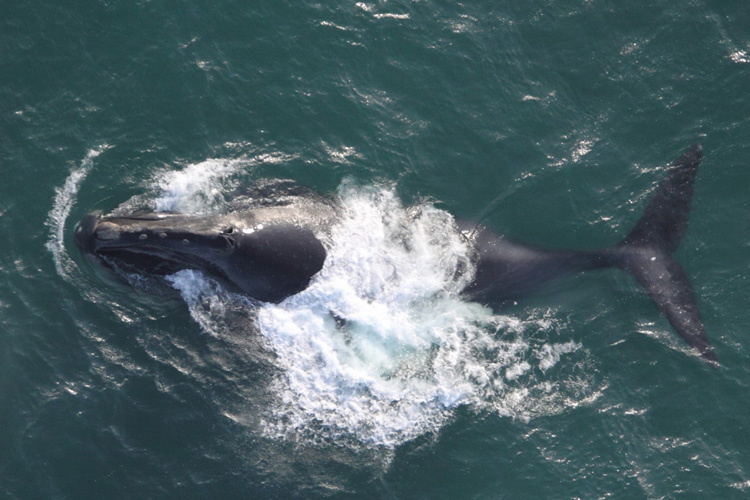
Researchers radiocarbon-dated more than 300 mammoth fossils to locate the last survivors of Pleistocene megafauna extinctions. Two specimens produced unexpectedly recent dates of about 2,800 and 1,900 years, implying unusually late mammoth survival near Fairbanks. Ancient DNA analysis later identified the specimens as marine whales: a North Pacific right whale and a minke whale. The excavated material consisted of vertebral growth plates that had been cataloged as mammoth bones. The combination of radiocarbon ages, stable isotope signals, DNA results, and specimen provenance raises new questions about labeling, collection history, and how marine remains ended up inland.
"At first glance, it looked like Wooller and his colleagues might have found evidence that mammoths lived in central Alaska just 2,000 years ago. But ancient DNA revealed that two "mammoth" bones actually belonged to a North Pacific right whale and a minke whale-which raised a whole new set of questions. The team's hunt for Alaska's last mammoth had turned into an epic case of mistaken identity, starring two whale species and a mid-century fossil hunter."
""The radiocarbon data and their associated stable isotope data were the first signs that something was amiss," wrote Wooller and his colleagues in their recent paper. At first, though, they had no idea quite how amiss things were. Those unlikely radiocarbon dates came from a pair of vertebral growth plates (structures at the top and bottom of the vertebra where new bone forms during growth)."
Read at Ars Technica
Unable to calculate read time
Collection
[
|
...
]