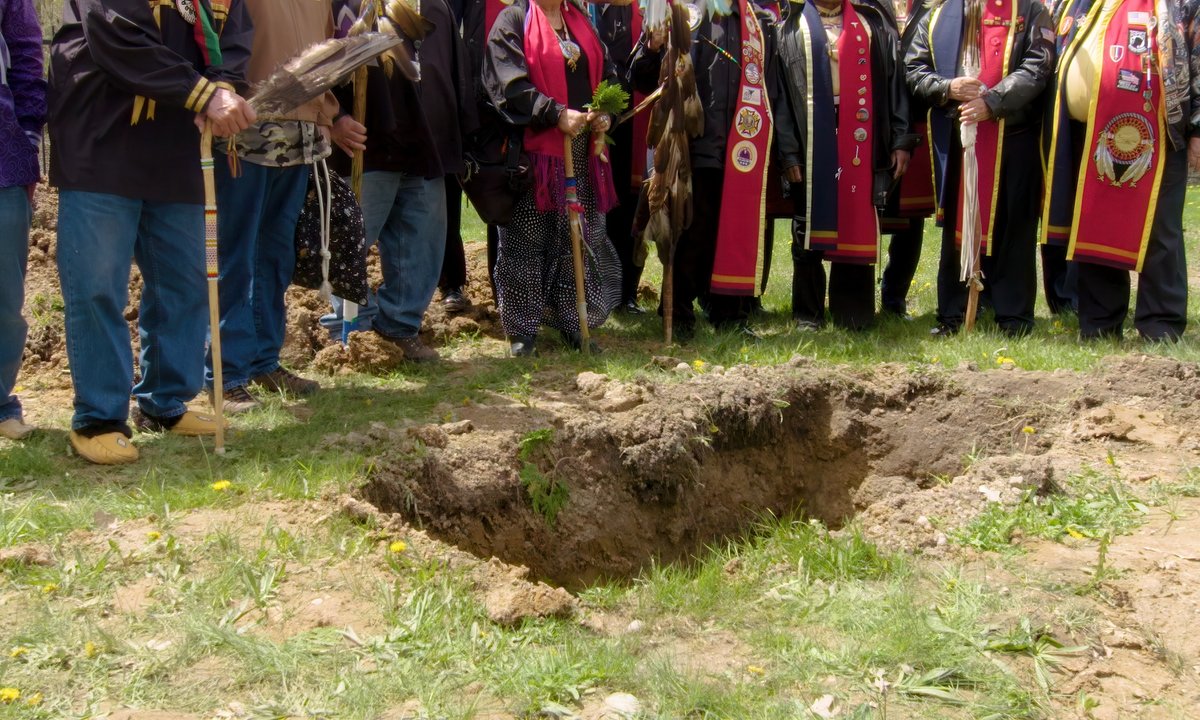
"When I enter a museum, I'm not looking for what's on the walls, I'm looking at what's behind them."
"I wonder if people know that they've paid $20 to enter a museum that's holding our ancestors hostage."
"to indulge his curiosity and unearth human remains from an Indian burial mound"
"I don't care how you got 'em-if you stole 'em, dug 'em up, bought 'em, traded for 'em. They're not yours."
Repatriation claims increasingly center on Indigenous ancestors' remains rather than art. Michigan State University faces a claim from the Michigan Anishinaabek Cultural Preservation and Repatriation Alliance (Macpra). Historical collection practices trace back to the 18th century, including Thomas Jefferson's 1784 excavation of human remains from an Indian burial mound. Universities and museums displayed remains using eugenics and phrenology frameworks that suggested Native inferiority. Tribal leaders assert that remains acquired by theft, excavation, purchase or trade do not belong to institutions. Repatriation campaigns culminate in ceremonial reburials to restore dignity, cultural continuity and legal recognition, and many more disputes are expected nationwide.
Read at The Art Newspaper - International art news and events
Unable to calculate read time
Collection
[
|
...
]