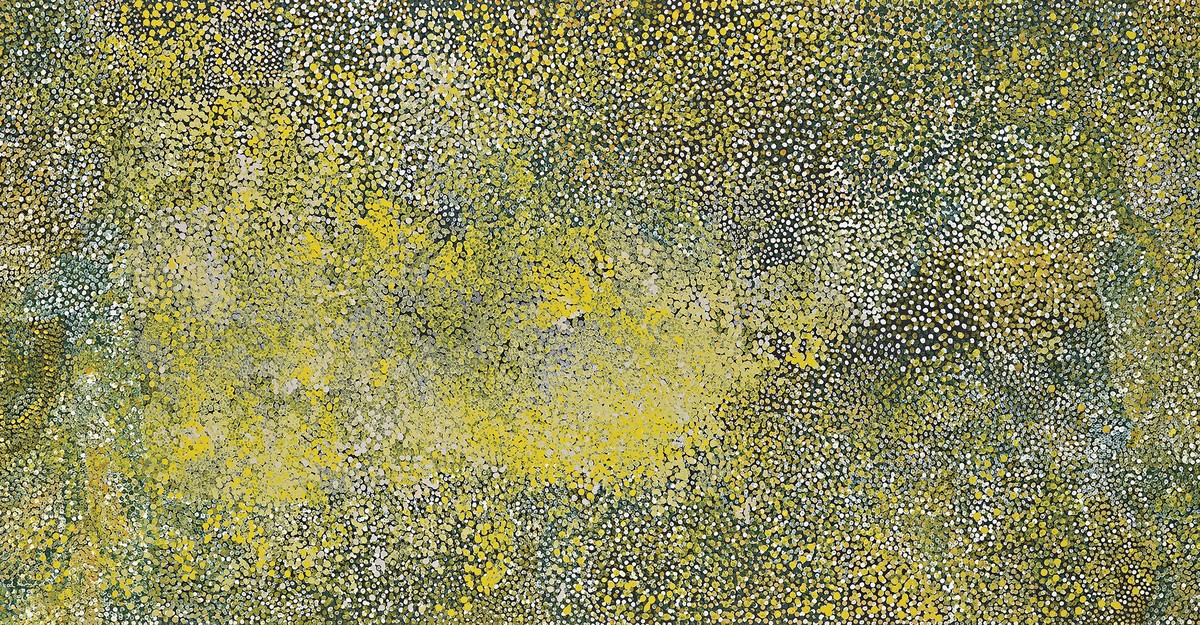
European and American avant-garde artists of the early twentieth century adopted motifs and techniques from African, Native American, and other Indigenous arts, reshaping modernism through appropriation. Museums often showcased Indigenous objects to inspire Euro-American artists rather than to recognize Indigenous modernity. Indigenous artists also repurposed European materials and imagery, but that reciprocity was marginalized and interpreted as loss of authenticity. Modernist borrowing was framed as progressive originality while Indigenous adaptation was cast as regressive repetition. The art world has begun to reassess that binary, elevating contemporary Indigenous artists and mounting exhibitions of recent Aboriginal, Native American, and Māori work.
"Every student of modern art knows how European and American avant-gardists of the early 20th century had their world rocked by Indigenous art-how they swooned over and strove to imitate the dynamic concision they saw in ethnographic exhibitions. How Picasso launched Cubism by sticking African masks on French prostitutes in Les Demoiselles d'Avignon. How Marsden Hartley paved his way to abstraction with tepees and Native American symbols."
"Generally overlooked in Art History 101 was the inverse: how European materials and images were repurposed by Indigenous artists. That 1941 MoMA show was full of ancient Native objects, along with recent work that adhered closely to historic examples. (The catalog advised readers that "Good Indian work, done without the interference of whites, includes restrained colors as well as bright ones, and usually leans to economy rather than complexity of design.")"
Read at The Atlantic
Unable to calculate read time
Collection
[
|
...
]