#copyright-dispute
#copyright-dispute
[ follow ]
#copyright #copyright-law #intellectual-property #copyright-infringement #patent-law #supreme-court #fair-use #ai
#patent-law

Intellectual property law
fromIPWatchdog.com | Patents & Intellectual Property Law
2 days agoCAFC Says Appellant Declaration Failed to Tie Planned Product Features to Challenged Substitute Claims
ironSource's appeal was dismissed due to lack of standing and failure to prove injury from Digital Turbine's patent claims.
Intellectual property law
fromGlobal IP & Technology Law Blog
3 days agoA New Path for Patent Owners in Ex Parte Reexams - But What About the Rules?
Patent owners can now respond to ex parte reexamination requests before the SNQ determination, despite existing rules that typically prohibit such responses.
fromKotaku
10 hours agoAmazon Issues A Stark Reminder That Digital Ownership Is A Lie
Amazon has informed Kindle owners that any e-readers from 2012 and earlier will no longer be supported as of May 20, 2026. Users can still read downloaded books but cannot purchase new ones, and a factory reset will render the device unusable.
Gadgets

fromSilicon Canals
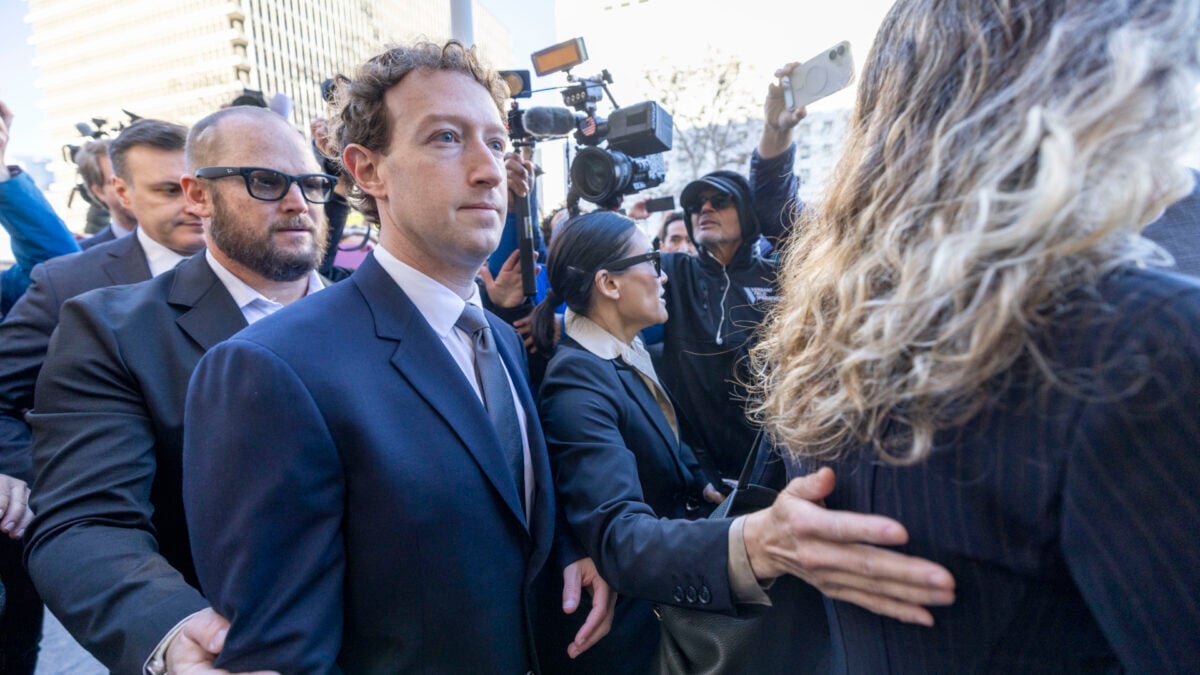
3 days agoWhy Apple would rather go to the Supreme Court than drop its App Store fee below 27% - Silicon Canals
Apple's App Store generates an estimated $85-90 billion in annual gross billings. At a 30% commission, that's roughly $25-27 billion in revenue from a business line with margins above 75%.
Apple
#copyright
Intellectual property law
fromIPWatchdog.com | Patents & Intellectual Property Law
2 months agoMusic Publishers File New Piracy Suit Against Anthropic Alleging Mass Torrenting of Copyrighted Works
Anthropic allegedly downloaded millions of unauthorized books via BitTorrent, trained Claude on stolen musical compositions, and faces copyright and DMCA lawsuits.

fromFast Company
6 days agoHarperCollins is forging ahead with AI-assisted dramas based on books. Some authors have concerns
Toonstar's proven ability to translate beloved stories into engaging animation, while keeping artists at the center of the process, makes them the ideal partner to bring Friendship List and other popular titles to new audiences in formats today's families love.
Media industry
#ai-ethics
Intellectual property law
fromFast Company
3 weeks agoGrammarly's AI tool mimicked experts without their consent. Now it's being sued
Grammarly's Expert Review tool used real people's likenesses without consent to provide writing suggestions, prompting a class action lawsuit over unauthorized use of professional writers' identities and expertise.
#ai-copyright-infringement
Books
fromwww.theguardian.com
3 weeks agoThe Guardian view on changes to copyright laws: authors should be protected over big tech | Editorial
Writers are protesting unauthorized AI training on their work through labeling schemes and blank books, demanding government protection against copyright relaxation that would allow AI companies to use their content without consent or payment.

Intellectual property law
fromwww.theguardian.com
1 month agoThousands of authors publish empty' book in protest over AI using their work
Thousands of authors published an empty book protesting AI firms using their work without permission or payment, demanding government protection of creative copyright.
Books
fromwww.theguardian.com
3 weeks agoThe Guardian view on changes to copyright laws: authors should be protected over big tech | Editorial
Writers are protesting unauthorized AI training on their work through labeling schemes and blank books, demanding government protection against copyright relaxation that would allow AI companies to use their content without consent or payment.
Intellectual property law
fromwww.theguardian.com
1 month agoThousands of authors publish empty' book in protest over AI using their work
Thousands of authors published an empty book protesting AI firms using their work without permission or payment, demanding government protection of creative copyright.
#supreme-court
Intellectual property law
fromIPWatchdog.com | Patents & Intellectual Property Law
3 days agoSCOTUS Says Fifth Circuit Must Reconsider Contributory Infringement Ruling for Record Labels after Cox v. Sony
The Supreme Court vacated a ruling against Grande Communications, questioning ISP liability for contributory copyright infringement under specific conditions.


#copyright-law
Intellectual property law
fromThe IP Law Blog
1 week agoTropes Aren't Theft: What Freeman v. Wolff Teaches About Substantial Similarity in YA Fantasy Fiction
The court ruled that substantial similarity in copyright law requires more than just shared themes or ideas, emphasizing the importance of protectable expression.
#ai
Intellectual property law
fromFuturism
6 days agoAnthropic Suddenly Cares Intensely About Intellectual Property After Realizing With Horror That It Accidentally Leaked Claude's Source Code
Anthropic's copyright takedown request for its AI model's source code highlights hypocrisy in its stance on copyright laws.
fromFuturism
2 months agoMatthew McConaughey Is Using a Clever Legal Trick to Bludgeon AI Companies
For years now, actors have rung the alarm bells over the AI industry planning to sell their likeness and voices - either with or without their consent - and hence threatening to put them out of work. Beyond a major 2023 strike by Hollywood actors fueled by these concerns, we've already seen actors take matters into their own hands, like when Scarlett Johansson threatened to sue OpenAI over a ChatGPT update that she claims imitated her voice.
Film
fromPatently-O
1 week agoDisclosed but Still Secret? The Federal Circuit Weighs Patent Publications Against Trade Secret Claims
The technology at issue is a subcutaneous cosmetic penile implant, a silicone sleeve placed between the skin and 'Buck's fascia' to enhance girth and length.
Intellectual property law
fromRAIN News
2 months agoThey're accused of stealing 86 million. (Songs.)
In an audacious action starting to attract media attention, last month a group of piracy actors called Anna's Archive copied about 86 million music files from Spotify. The intention was to release the hoard on the BitTorrent file-sharing platform. All three of the major labels (UMG, Sony Music Entertainment, and Warner Music Group), along with Spotify, launched the unsurprising lawsuit in September. The presiding judge, Jed . Rakoff, issued an injunction (HERE).
Music
Law
fromIPWatchdog.com | Patents & Intellectual Property Law
2 years agoIs AI's Copyright World Flat, or Will AI Flatten the Copyright World?
Offshoring AI training exploits cross-border copyright variance but does not reliably eliminate legal liability due to complex choice-of-law and enforcement questions.

#ai-copyright-policy
Intellectual property law
fromwww.bbc.com
3 weeks agoGovernment backtracks on AI and copyright after outcry from major artists
The UK government reversed its AI copyright policy allowing opt-out training of copyrighted works after creative industry backlash, now seeking a balanced approach without a preferred solution.
Intellectual property law
fromIPWatchdog.com | Patents & Intellectual Property Law
3 weeks agoOrganizations Warn Fast-Track of Bill to Separate Copyright Office from Library of Congress Would Be a 'Grave Mistake'
A coalition of consumer rights and library groups opposes fast-tracking H.R. 6028, which would separate the Copyright Office from the Library of Congress and restructure leadership appointments, urging regular legislative procedures to prevent unintended consequences.
Intellectual property law
fromIPWatchdog.com | Patents & Intellectual Property Law
4 weeks agoA Response to Opposition of the 'Stealing Isn't Innovation' Campaign
The Human Artistry Campaign advocates for licensing copyrighted works to train AI models, while tech industry responses lack precision and credibility despite claiming otherwise.
Intellectual property law
fromElectronic Frontier Foundation
1 month agoEFF to Court: Don't Make Embedding Illegal
The server test holds that entities controlling servers hosting copyrighted content bear direct liability for infringement, while link embedders face only secondary liability under most circumstances.
Intellectual property law
fromThe IP Law Blog
1 month agoThe Briefing: Vetter v. Resnik: When Copyright Termination Goes Global
The Fifth Circuit ruled that copyright termination under U.S. law cannot recapture foreign exploitation rights, limiting authors' ability to reclaim worldwide grants despite decades-old agreements.
fromIPWatchdog.com | Patents & Intellectual Property Law
1 month agoCopyright Office Report: Copyright Claims Board a Success, But Statutory Changes Needed for Efficiency
The Copyright Claims Board estimated that 'as much as three-quarters of its time is spent on the initial review of claims and amended claims and writing noncompliance orders explaining claim deficiencies,' according to the report. The U.S. Copyright Office on Friday released its report pursuant to the Copyright Alternative in Small-Claims Enforcement (CASE) Act, finding that the Copyright Claims Board (CCB) is largely successful but that there is 'room for improvement in various respects.'
Intellectual property law
fromIPWatchdog.com | Patents & Intellectual Property Law
2 months agoCreators Launch Campaign to Counter Big Tech's Alleged AI Copyright Theft
The campaign argues that in the race for dominance in the new GenAI technology, some of the world's wealthiest tech companies, along with private equity-backed ventures, have engaged in a "massive rip-off" of creative content without authorization or compensation. According to the campaign, this practice "imperils U.S. jobs, economic growth and global 'soft power' supported by the U.S. creative industries." The campaign warns that this widespread infringement erodes the foundation of the U.S. entertainment industry and disincentivizes the creation of new works.
Intellectual property law
Intellectual property law
fromAbove the Law
2 months agoMr. Worldwide: Artist Prevails In Fierce Battle Over The Copyright Act's Reclamation Right - Above the Law
U.S. law permits artists to reclaim copyrights after statutory periods to correct initial imbalances and pursue fairer licensing agreements.
Intellectual property law
fromThe IP Law Blog
2 months agoThe Briefing: Why Lady Gaga Beat a Trademark Injunction Over "Mayhem"
Court denied Lost International's request for a preliminary injunction, applying the Rogers test and protecting expressive tour merchandise under First Amendment considerations.
fromNature
1 month agoWhat can I do if my idea has been plagiarized?
A few years ago, I put together what I felt was a truly innovative concept, which I presented in a conference poster at an international meeting in my field. After the presentation, I spoke to another early-career scientist about my work and how it might apply to their findings. Two years later, they scooped me by publishing a preprint paper that presented my idea, with many of the same verbal formulations and an identical flow of ideas, without any acknowledgement or attribution to my work.
Intellectual property law
[ Load more ]