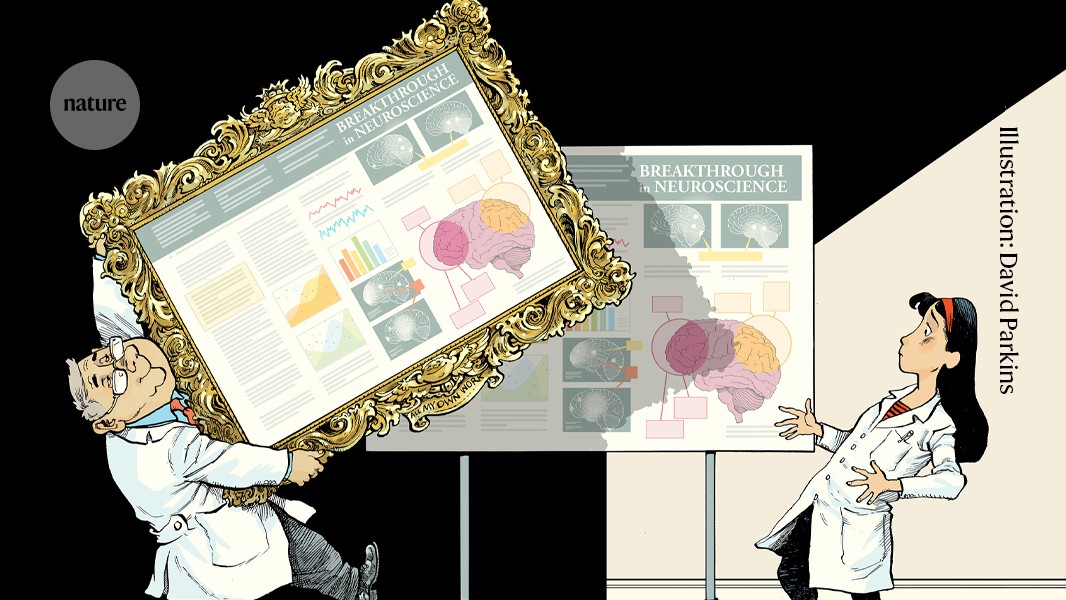
"A few years ago, I put together what I felt was a truly innovative concept, which I presented in a conference poster at an international meeting in my field. After the presentation, I spoke to another early-career scientist about my work and how it might apply to their findings. Two years later, they scooped me by publishing a preprint paper that presented my idea, with many of the same verbal formulations and an identical flow of ideas, without any acknowledgement or attribution to my work."
"I have worked for years to formulate this concept and now I have to struggle to demonstrate that I developed it first. I am worried that my paper could be published later than theirs, and because it's so similar to their publication, it's going to look like I've plagiarized them, rather than the other way around. My supervisor has reached out to their supervisor to discuss this, but the outcome hasn't been positive:"
Plagiarism involves copying another's work and claiming it as one's own. Researchers can present ideas at conferences or in conversations before formal publication, creating risk that others will publish similar concepts without acknowledgement. When another group publishes a preprint with matching wording and idea flow, proving prior development becomes challenging and can make the original developer appear to have copied. Supervisor interventions may not resolve the dispute if the other parties deny appropriation. Determining when building on others crosses into theft is complex, and recourse for stolen ideas is often limited and difficult to pursue.
Read at Nature
Unable to calculate read time
Collection
[
|
...
]