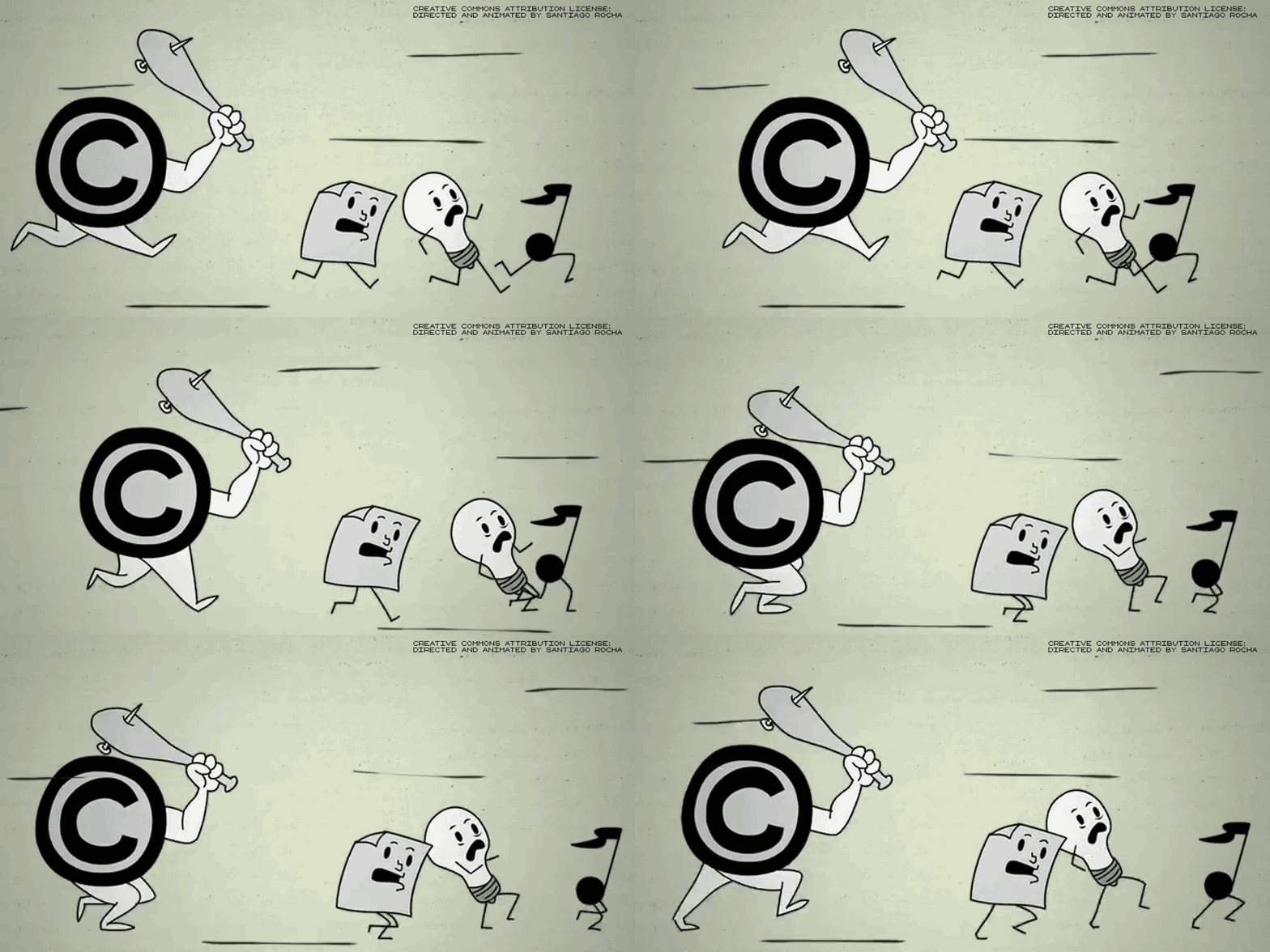
"There's a crisis of creativity in mainstream American culture. We have fewer and fewer studios and record labels fewer and fewer platforms online that serve independent artists and creators. At its core, copyright is a monopoly right on creative output and expression. It's intended to allow people who make things to make a living through those things, to incentivize creativity. To square the circle that is "exclusive control over expression" and "free speech," we have fair use."
"However, we aren't just seeing artists having a time-limited ability to make money off of their creations. We are also seeing large corporations turn into megacorporations and consolidating huge stores of copyrights under one umbrella. When the monopoly right granted by copyright is compounded by the speed and scale of media company mergers, we end up with a crisis in creativity. People have been complaining about the lack of originality in Hollywood for a long time."
"In today's consolidated media world, copyright is doing the opposite of its intended purpose: instead of encouraging creativity, it's discouraging it. The drive to snap up media franchises (or "intellectual properties") that can generate sequels, reboots, spinoffs, and series for years to come has crowded out truly original and fresh creativity in many sectors."
A crisis of creativity has emerged in mainstream American culture as studios, record labels, and online platforms have consolidated, reducing support for independent creators. Copyright functions as a monopoly right meant to let creators earn income and to incentivize new works, with fair use balancing exclusivity and free speech. Rapid media mergers and corporate accumulation of vast copyright portfolios amplify monopoly effects and suppress originality. Major studios increasingly acquire and exploit existing franchises instead of investing in original programming. Extended copyright terms further reduce pressure to release works into the public domain, crowding out fresh creative risk-taking.
Read at Electronic Frontier Foundation
Unable to calculate read time
Collection
[
|
...
]