#copyright-infringement
#copyright-infringement
[ follow ]
#ai-training-data #bytedance #trademark-infringement #supreme-court #lawsuit #generative-ai #right-of-publicity
#ai-music-generation
Music production
fromMetro Silicon Valley | Silicon Valley's Leading Weekly
5 hours agoAI-Generated Music Sparks Debate Among Bay Area Artists | Metro Silicon Valley | Silicon Valley's Leading Weekly
AI music generation enables prompt-based song creation while raising intellectual property theft concerns from voice and style cloning.
Intellectual property law
fromFuturism
2 months agoLead Investor in Music Generation App Suno Deletes Tweet That Contradicts Its Argument in High Stakes Court Cases
AI music generation company Suno reached two million paid subscribers amid ongoing copyright lawsuits, with its fair use defense facing legal challenges from multiple jurisdictions.


#supreme-court


fromIPWatchdog.com | Patents & Intellectual Property Law
1 month agoIntellectual property law
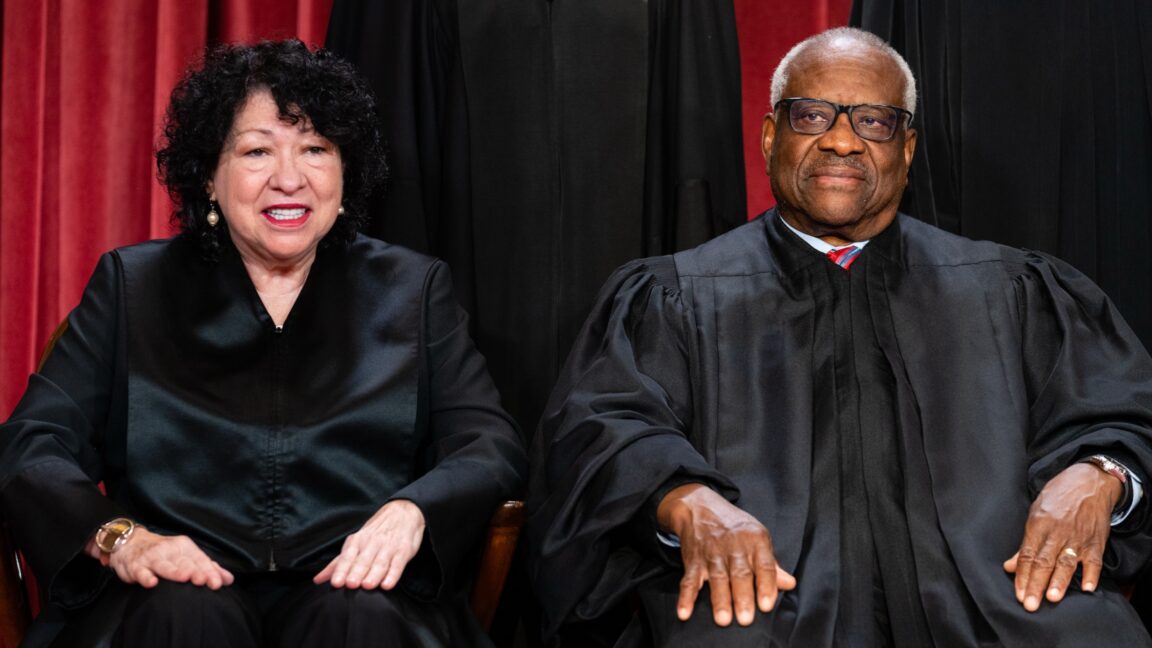
SCOTUS Says Fifth Circuit Must Reconsider Contributory Infringement Ruling for Record Labels after Cox v. Sony
The Supreme Court vacated a ruling against Grande Communications, questioning ISP liability for contributory copyright infringement under specific conditions.
Intellectual property law
fromIPWatchdog.com | Patents & Intellectual Property Law
1 month agoSCOTUS Says Fifth Circuit Must Reconsider Contributory Infringement Ruling for Record Labels after Cox v. Sony
The Supreme Court vacated a ruling against Grande Communications, questioning ISP liability for contributory copyright infringement under specific conditions.


fromWIRED
6 days agoThis Reggae Band Is in a Nightmare Battle Against AI Slop Remixes
It was exciting. But then once I found it was because of some version that was basically stolen and generated in one click, I mean, it's saddening. Right now, four different versions are going viral. He's getting royalties for none of them.
Music
#ai
Intellectual property law
fromFortune
1 week agoJames Patterson, Biden publishers say Mark Zuckerberg 'personally authorized' copyright infringement in new lawsuit against Meta | Fortune
Five publishing houses and Scott Turow sued Meta for allegedly using copyrighted works to train its AI without permission.
fromThe Verge
3 weeks agoJapanese man sentenced to prison for posting spoilers
The Tokyo District Court ruled that 39-year-old Wataru Takeuchi was guilty of violating Japanese law that prohibits the creation of 'a new work by making creative modifications to the original while preserving its essential characteristics.'
Intellectual property law
fromThe Verge
3 weeks agoSpotify just won $322 million from music pirates it can't find
The default judgement, issued on Tuesday by Judge Jed Rakoff of the Southern District of New York, awards Spotify $300 million in damages, with UMG, WMG, and Sony Music awarded $22.2 million collectively.
Intellectual property law
Intellectual property law
fromIPWatchdog.com | Patents & Intellectual Property Law
1 month agoOther Barks & Bites for Friday, March 27: Trademarks Evoking Fictitious Heritage May Be Deceptive Under EU Law; March Madness TRO Nixed by District Judge; EU Patent Applications Surpass 200K for First Time in 2025
Merck acquires Terns Pharma for $6.7 billion to enhance cancer therapy pipeline.
Intellectual property law
fromIPWatchdog.com | Patents & Intellectual Property Law
1 month agoSupreme Court Reverses $1 Billion Verdict, Rules Cox Not Contributorily Liable for Subscribers' Copyright Infringement
Cox Communications is not contributorily liable for subscribers' copyright infringement without proof of intent to facilitate such infringement.
fromEngadget
1 month agoSupreme Court rules ISPs aren't liable for subscribers' music piracy
Justice Clarence Thomas stated that a provider is not liable 'for merely providing a service to the general public with knowledge that it will be used by some to infringe copyrights.' Liability arises only if the provider intended or actively encouraged the infringement.
Intellectual property law

Media industry
fromNieman Lab
1 month agoChatGPT, Claude, Gemini, and Grok are all bad at crediting news outlets, but ChatGPT is the worst (at least in this study)
AI models extensively use Canadian journalism without crediting sources, with 92% of knowledgeable responses providing no attribution despite demonstrating clear knowledge of Canadian news events.
#ai-training-data


Intellectual property law
fromTNW | Media
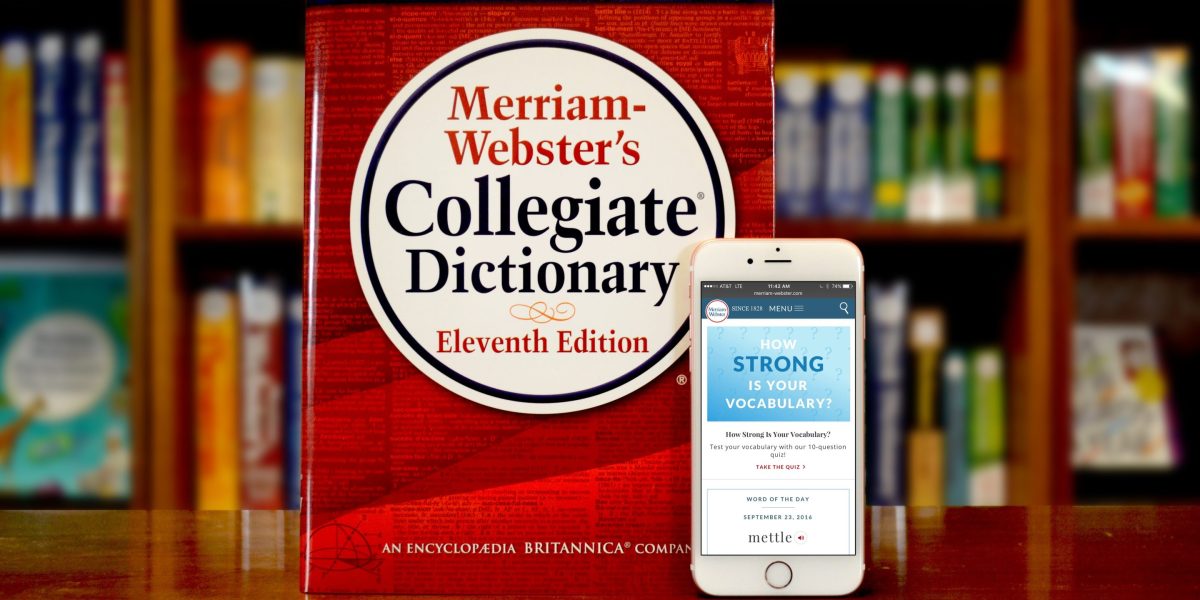
1 month agoEncyclopedia Britannica and Merriam-Webster sue OpenAI
Encyclopedia Britannica and Merriam-Webster sued OpenAI for training ChatGPT on nearly 100,000 of their articles without permission and reproducing their copyrighted content verbatim in responses.
Intellectual property law
fromTechCrunch
3 months agoYouTubers sue Snap for alleged copyright infringement in training its AI models | TechCrunch
YouTubers added Snap to a copyright lawsuit alleging the company scraped their videos to train AI features and used research-only datasets for commercial purposes.
Intellectual property law
fromFortune
1 month agoThe dictionaries are suing OpenAI for 'massive' copyright infringement, and say ChatGPT is starving publishers of revenue | Fortune
Britannica and Merriam-Webster sued OpenAI for using their copyrighted content to train ChatGPT without permission, claiming the AI diverts traffic and revenue from publishers.
Intellectual property law
fromwww.amny.com
1 month agoMerriam Webster, Encyclopedia Britannica sue OpenAI for copyright infringement | amNewYork
Merriam Webster and Encyclopedia Britannica sued OpenAI for copyright and trademark infringement, alleging systematic copying of their content to train AI models and generate verbatim user responses without compensation or permission.
Intellectual property law
fromThe Verge
1 month agoEncyclopedia Britannica is suing OpenAI for allegedly 'memorizing' its content with ChatGPT
Encyclopedia Britannica and Merriam-Webster sued OpenAI for using their copyrighted content to train AI models and generating substantially similar responses without permission.
Intellectual property law
fromTNW | Media
1 month agoEncyclopedia Britannica and Merriam-Webster sue OpenAI
Encyclopedia Britannica and Merriam-Webster sued OpenAI for training ChatGPT on nearly 100,000 of their articles without permission and reproducing their copyrighted content verbatim in responses.

#generative-ai
Intellectual property law
fromIPWatchdog.com | Patents & Intellectual Property Law
1 month agoSenators Blackburn, Welch Call for AI Video Apps to Cease IP Infringement
U.S. Senators Blackburn and Welch demand ByteDance shut down Seedance 2.0 for enabling massive unauthorized use of copyrighted creative works without licenses or compensation.



Intellectual property law
fromIPWatchdog.com | Patents & Intellectual Property Law
1 month agoSenators Blackburn, Welch Call for AI Video Apps to Cease IP Infringement
U.S. Senators Blackburn and Welch demand ByteDance shut down Seedance 2.0 for enabling massive unauthorized use of copyrighted creative works without licenses or compensation.
fromArs Technica
1 month agoApple can delist apps "with or without cause," judge says in loss for Musi app
The plain language of the DPLA governs because it is clear and explicit: Apple may "cease marketing, offering, and allowing download by end-users of the [Musi app] at any time, with or without cause, by providing notice of termination." Based on this language, Apple had the right to cease offering the Musi app without cause if Apple provided notice to Musi.
Intellectual property law


Intellectual property law
fromIPWatchdog.com | Patents & Intellectual Property Law
9 years agoReal-Life Star Trek Battle of Axanar Is Heating Up
CBS and Paramount Pictures sued Axanar Productions and Alec Peters for copyright infringement over a crowdfunded Star Trek fan film, alleging over 50 instances of infringement across multiple works including a short film, script, and feature production.
Intellectual property law
fromPsychology Today
2 months agoUnconscious Plagiarism: Fact or Fiction?
Unconscious plagiarism claims by famous artists may reflect genuine memory lapses rather than intentional theft, though distinguishing between carelessness and authentic unconscious appropriation remains difficult.
US politics
fromConsequence
2 months agoWhite House Uses "Enter Sandman" in Iran War Hype Video After Metallica Previously Denied Song's Use
The White House posted a video using Metallica's 'Enter Sandman' without permission, despite the band previously filing copyright takedowns for unauthorized use of the song.
US news
fromwww.independent.co.uk
2 months agoRadiohead publicly demand ICE to take down video using the band's song
Radiohead demanded ICE remove a promotional video using their song 'Let Down' without permission, criticizing the agency's misappropriation of their music for immigration enforcement messaging.
fromThe IP Law Blog
2 months agoThe Briefing: Kat Von D, Miles Davis, and the Possible Death of the Intrinsic Test?
The Ninth Circuit's two-part substantial similarity test works by evaluating whether works share similarities that would be apparent to ordinary observers and whether those similarities stem from protected expression rather than unprotected elements like ideas or facts.
Intellectual property law
fromIPWatchdog.com | Patents & Intellectual Property Law
2 months agoCopyright Office Report: Copyright Claims Board a Success, But Statutory Changes Needed for Efficiency
The Copyright Claims Board estimated that 'as much as three-quarters of its time is spent on the initial review of claims and amended claims and writing noncompliance orders explaining claim deficiencies,' according to the report. The U.S. Copyright Office on Friday released its report pursuant to the Copyright Alternative in Small-Claims Enforcement (CASE) Act, finding that the Copyright Claims Board (CCB) is largely successful but that there is 'room for improvement in various respects.'
Intellectual property law

fromFuturism
2 months agoGoogle Says People Are Copying Its AI Without Its Permission, Much Like It Scraped Everybody's Data Without Asking to Create Its AI in the First Place
But when it comes to its own tech being copied, Google has no problem pointing fingers. This week, the company accused "commercially motivated" actors of trying to clone its Gemini AI. In a Thursday report, Google complained it had become under "distillation attacks," with agents querying Gemini up to 100,000 times to "extract" the underlying model - the convoluted AI industry equivalent of copying somebody's homework, basically.
Artificial intelligence


Intellectual property law
fromTechCrunch
3 months agoMusic publishers sue Anthropic for $3B over 'flagrant piracy' of 20,000 works | TechCrunch
Music publishers led by Concord and Universal are suing Anthropic for allegedly illegally downloading over 20,000 copyrighted songs, seeking more than $3 billion in damages.
fromRAIN News
3 months agoThey're accused of stealing 86 million. (Songs.)
In an audacious action starting to attract media attention, last month a group of piracy actors called Anna's Archive copied about 86 million music files from Spotify. The intention was to release the hoard on the BitTorrent file-sharing platform. All three of the major labels (UMG, Sony Music Entertainment, and Warner Music Group), along with Spotify, launched the unsurprising lawsuit in September. The presiding judge, Jed . Rakoff, issued an injunction (HERE).
Music

fromIPWatchdog.com | Patents & Intellectual Property Law
4 months agoNinth Circuit Affirms Summary Judgment for Paramount in Top Gun: Maverick Copyright Suit
The dispute centered on the 11-page article published in California Magazine in 1983, which vividly described the experiences of Navy fighter pilots at the United States Navy Fighter Weapons School, popularly known as "Top Gun." Following the article's publication, Ehud Yonay granted Paramount all rights to the work, leading to the 1986 release of Top Gun. In 2020, the Yonays terminated the copyright grant by invoking 17 U.S.C. § 203(a)(3), which allows an author's heirs to terminate certain grants.
Intellectual property law
Intellectual property law
fromwww.mediaite.com
4 months agoNorman Rockwell Was Antifa': Artist's Granddaughter Bashes Trump Admin for Hijacking His Art
Federal agencies used memes and Norman Rockwell imagery to promote anti-immigrant messages, prompting criticism for decorum breaches and intellectual property violations.
fromFuturism
4 months agoYouTube Now Shutting Down Channels Posting AI Slop
As reported by Deadline, the Google-owned video platform has terminated two massive YouTube channels that peddled fake, AI-generated movie trailers, in what is one of the most high profile actions it's taken against the AI spam polluting the platform. Combined, the channels - called Screen Culture, based in India, and KH Studio, based in the US - boasted over two million subscribers and more than one billion views.
Film
fromTechCrunch
4 months agoAdobe hit with proposed class-action, accused of misusing authors' work in AI training | TechCrunch
A proposed class-action lawsuit filed on behalf of Elizabeth Lyon, an author from Oregon, claims that Adobe used pirated versions of numerous books-including her own-to train the company's SlimLM program. Adobe describes SlimLM as a small language model series that can be "optimized for document assistance tasks on mobile devices." It states that SlimLM was pre-trained on SlimPajama-627B, a "deduplicated, multi-corpora, open-source dataset" released by Cerebras in June of 2023.
Artificial intelligence


fromIPWatchdog.com | Patents & Intellectual Property Law
5 months agoSecond Circuit Dismisses Zuru's Appeal in LEGO Copyright/Trademark Case for Lack of Jurisdiction
Lego A/S, Lego Systems, Inc., and Lego Juris A/S first brought claims against Zuru Inc. in 2019, alleging that Zuru's "First-Generation" toy figurines infringed on the copyright and trademark rights of Lego's Minifigure. The U.S. District Court for the District of Connecticut granted Lego's motion for a preliminary injunction, which enjoined Zuru from manufacturing or selling the infringing First-Generation figurines and "any figurine or image that is substantially similar to the Minifigure Copyrights or likely to be confused with the Minifigure Trademarks."
Intellectual property law
Artificial intelligence
fromTechCrunch
5 months agoDisney hits Google with cease-and-desist claiming 'massive' copyright infringement | TechCrunch
Disney accuses Google of large-scale copyright infringement via AI services reproducing and commercially distributing unauthorized images and videos of Disney characters.
fromTechCrunch
5 months agoChicago Tribune sues Perplexity | TechCrunch
The Tribune alleges that its lawyers contacted Perplexity in mid-October asking if the AI search engine was using its content, according to the complaint. Perplexity's lawyers replied it did not train models with the Tribune's work, but that it "may receive non-verbatim factual summaries," the lawsuit claims. The Tribune's lawyers, however, argue that Perplexity is delivering Tribune content verbatim. Interestingly, the newspaper's lawyers are also calling out Perplexity's Retrieval Augmented Generation (RAG) as a culprit.
Law
fromBusiness Insider
5 months agoCelebrity lawyer Alex Spiro will represent a CoStar competitor in the legal fight of its life
Real estate data company Crexi has brought on celebrity lawyer Alex Spiro - known for defending billionaires, rappers, and professional athletes - in its scrap with CoStar Group. According to court filings on Wednesday, Spiro will now defend Crexi in its legal battle with the real estate data giant. The $3,000-an-hour lawyer has represented clients like Elon Musk, Jay-Z, and Megan Thee Stallion, and has also worked for a variety of businesses in disputes with short-sellers, rivals, and regulators.
Real estate
fromTheregister
5 months agoVMware re-states claim Siemens used unlicensed software
The case then went quiet, save for Siemens arguing that its software licenses mean it can move the matter to Germany instead of the US court for the District of Delaware in which VMware brought its case. Siemens also argued that this was a contractual matter, not a copyright claim. On Wednesday, VMware fired back with filings that argue Siemens' interpretation of its software licenses is wrong and the agreements do not allow the case to be heard in Germany, as the defendant has sought.
Intellectual property law
[ Load more ]