Exercise
fromScienceDaily
21 hours agoJust a few minutes of effort could lower your risk of 8 major diseases
Just a few minutes of vigorous activity daily can significantly reduce the risk of major diseases like heart disease and dementia.
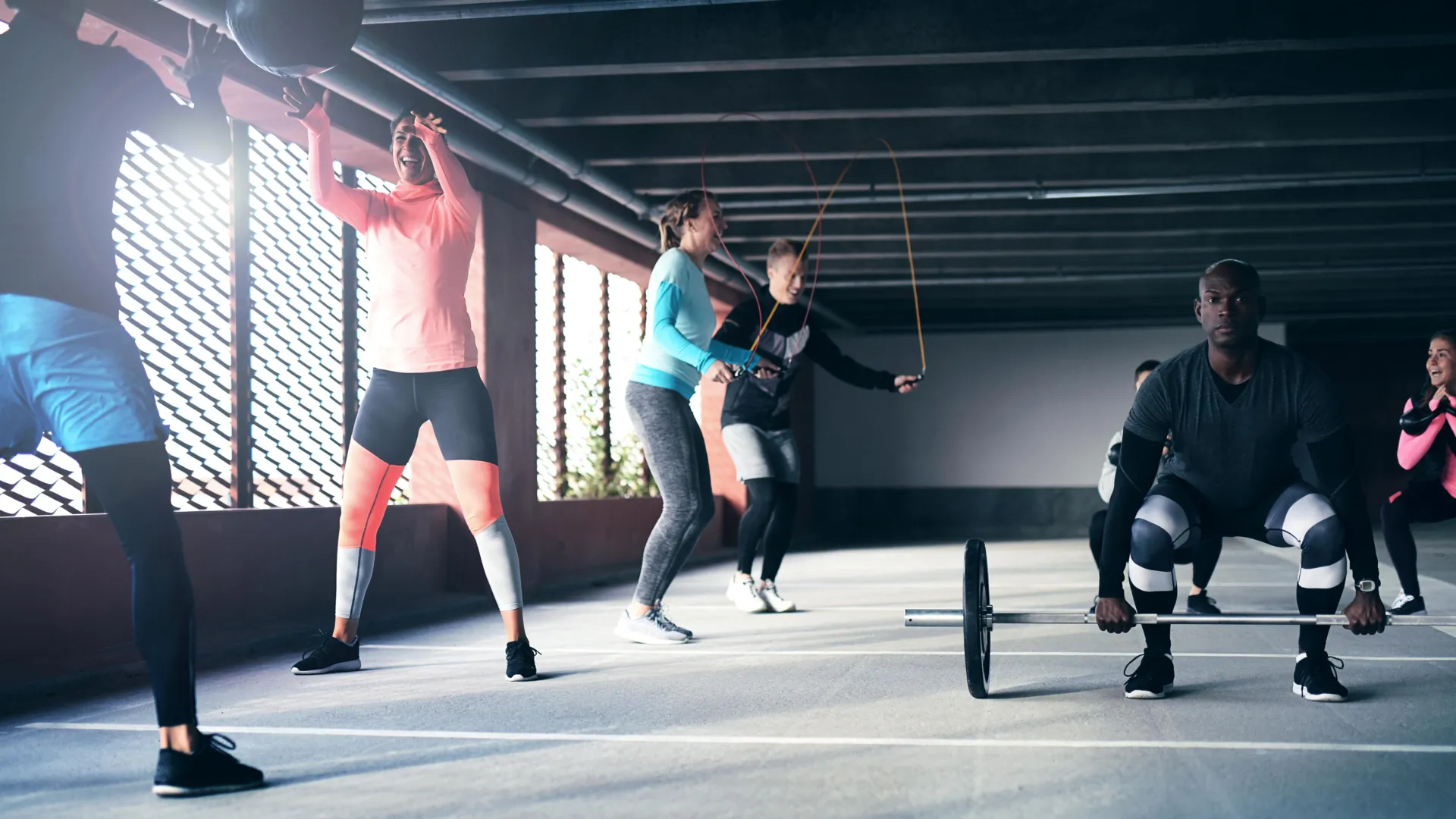
The gym belongs to the Good Shepherd United Methodist Church in Madison, Alabama. As a way of connecting with the community, the church often allows teams and social groups use of its gym.
Before I retired, I taught physics at a secondary school in China. While working as a teacher, I met my wife at an event. We were as active as the students we taught, spending our free time playing badminton, basketball, volleyball, and table tennis.
I've always been in plus, extended sizes...like, Lane Bryant queen as a 14-year-old, business casual. Now I have a clothing sponsor. I get paid to ride my bike and be in photo shoots. My cellulite is out and my stomach is out. I'm just proudly standing there with my body on display.
By directly recording brain activity, our study shows, for the first time in humans, that even a single bout of exercise can rapidly alter the neural rhythms and brain networks involved in memory and cognitive function.
Start with the obvious question: how much protein are you actually getting per scoop? Most decent powders fall somewhere around the 20-25 gram range. That's enough to make a real dent in your daily intake, especially if you're trying to push past the 100-gram mark without eating chicken six times a day.
John Peters (33) of Wellingtonia, Knockrabo Apartments, Dundrum, pleaded guilty at Dublin Circuit Criminal Court to assault and assault causing harm to the woman and criminal damage to her phone on dates in 2022 and 2023.
According to the Lawn Tennis Association, only 15,000 British players picked up a padel racket in 2019 but by the end of 2024, that figure was more than 400,000. Of those, about 399,000 are probably mispronouncing it: think pah-dell rather than paddle.
The first thing that quickly passes through your mind as the body starts to ache is 'how in Jaysus do horses do this on a daily basis and make it look so easy?' An extra pair of legs probably helps!
While warming up in the gym this morning, I felt a small twinge in my back. As I started hitting balls on the range before the round, it worsened and developed into muscle spasms in my lower back. Unfortunately, I'm not able to continue and have to withdraw. I was excited to compete this weekend.
I got a 3D scan that measured my flexibility last August, hoping the predictably subpar results would finally inspire me to stretch more. Then, I did basically nothing. Even knowing my shoulder rotation movement was in the "red" zone - needing serious improvement if I wanted to avoid future pain - it wasn't enough to get me to devote three minutes of light stretching before my cardio and strength workouts as suggested by trainers I had spoken with.
The air is sharp. The stakes are higher. The world is watching. In just 60 seconds, it is you versus the frostbitten glory of the 2026 Winter Olympics. From gravity-defying jumps to blink-and-you-miss-it sprints on ice, these sports demand nerves of steel. But can you name them before the clock runs out, or will you wipe out under pressure? Lace up. It is time to find out.
It got me thinking. While everyone's obsessing over the latest fitness trends and biohacking protocols, these folks have been consistently moving their bodies for decades. No fancy equipment, no Instagram-worthy routines, just simple habits they picked up long before movement became a multibillion-dollar industry. So I started asking around, digging into research, and talking to people who've stayed active well into their golden years. What I found wasn't revolutionary or complicated. It was refreshingly simple.
For runners, the hips can be one of the most confounding and frustrating parts of the physiological puzzle for efficient movement. Every runner knows how crucial hip strength is - and how mobile hips are essential for both fast and pain-free running. Yet healthy, happy hips remain elusive. For many of us, our hips stay stiff no matter how much we massage and stretch them.
I used to think they were just genetically blessed or had superhuman willpower. But after years of observation and my own fitness journey, I've realized something crucial: naturally fit people don't force themselves to do healthy things. They've simply developed habits that run on autopilot. Meanwhile, those struggling with fitness are constantly battling themselves, forcing behaviors that feel unnatural and exhausting.
Most people think walking faster and taking longer strides equals better exercise. After all, covering more ground should mean burning more calories and getting fitter, right? But here's what I've learned after interviewing physical therapists and orthopedic specialists over the years: that aggressive, overextended walking style is actually one of the worst things you can do to your knees, especially after 50.
This is an absolute beginners course on the foundations of classical ballet and, a single catastrophic line dance lesson aside, it is also the first dance class I have ever attended. I am in the minority. As we take the barre, it quickly becomes apparent that not being able to tell my left from my right will be a significant deficit over the next 16 weeks. This, however, is a tertiary concern.
It's just what it looks like: I time my planks then file them away, determined to last a little longer tomorrow. And sometimes I do, for several days in a row, then one day I'll collapse nearly a minute short of my personal best. I'll pound the mat like Charlton Heston at the end of Planet of the Apes, then I'll get myself together - you've got to stay cool at Equinox - and move on with my day.