#singing-bowls
#singing-bowls
[ follow ]
#yoga
Yoga
fromYoga Journal
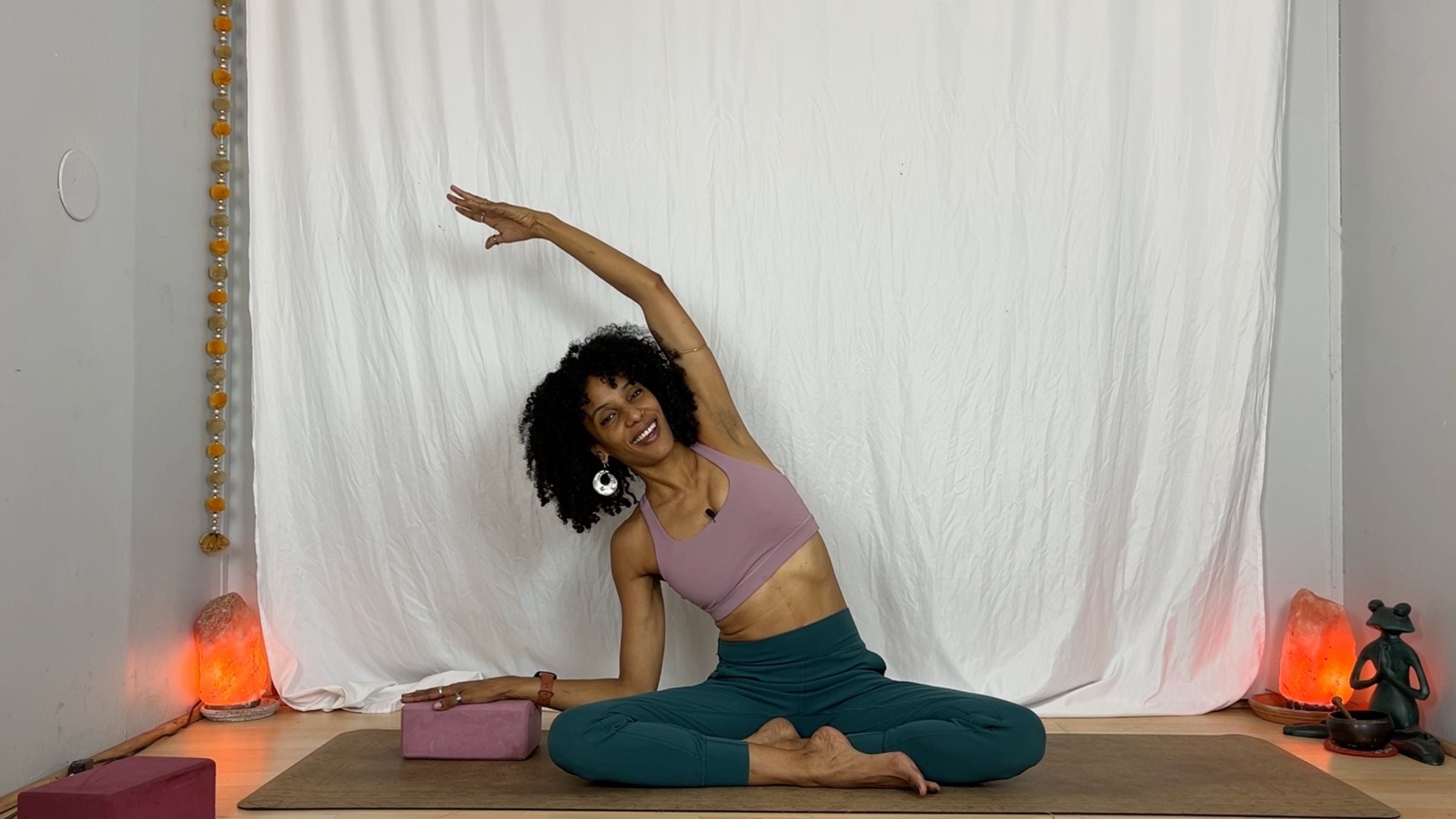
2 days agoOverstimulated? This Yoga Practice Can Get You Out of Your Head.
Grounding yoga practices can help alleviate feelings of overstimulation through breathwork and mindful movement.
Yoga
fromYoga Journal
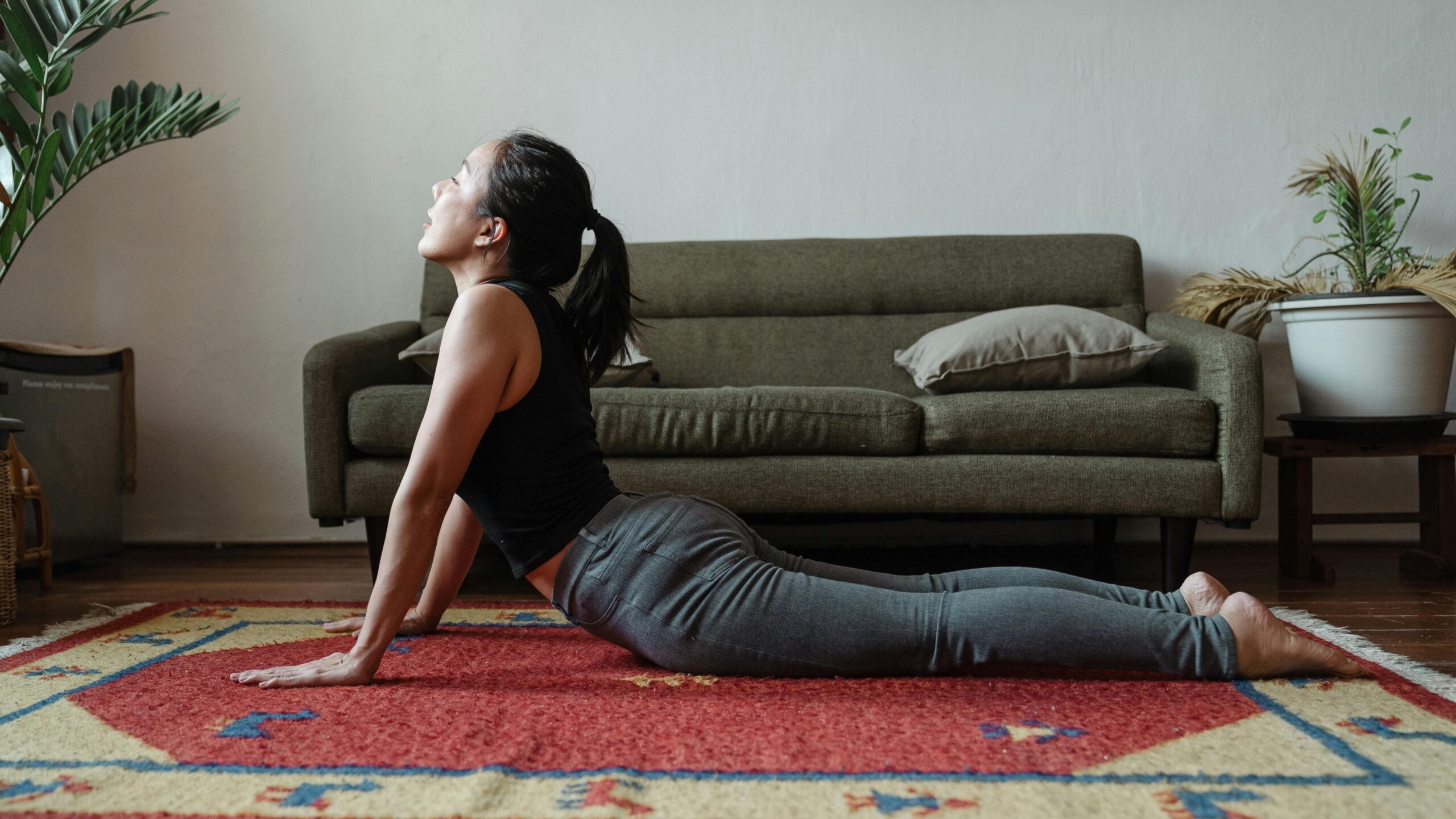
1 week agoCan't Focus? These 8 Yoga Poses Help Boost Your Mental Clarity.
Yoga can help improve focus by training the mind to stay present during practice.
Mindfulness
fromYanko Design - Modern Industrial Design News
1 week agoFlow meditation assistive wearables customize your zen routine in real-time for deeper immersion - Yanko Design
Meditation can be enhanced through innovative wearable devices that monitor physiological responses to optimize the experience.

Parenting
fromSilicon Canals
1 month agoI meditated every morning for three years and I was still the most reactive person in every room I walked into - and a monk in Thailand told me the problem wasn't my practice, it was that I was using stillness as preparation for chaos instead of learning to find stillness inside the chaos itself - Silicon Canals
Emotional neglect occurs when parents provide materially but fail to be emotionally present for their children.

SF LGBT
fromHigh Country News
1 month ago'Music brings an uplifting spiritual experience' - High Country News
Ramonda Holiday's album chronicles her journey from addiction and survival to sobriety and spiritual recovery, while her nonprofit Before the Rocks Cry Out uses music to provide mental health support and resources to Indigenous communities experiencing addiction and trauma.
fromLondon On The Inside
1 month agoFree Sound Baths, Pilates and Neuroscience Workshops at Westfield
Luxury wellness is coming to Westfield London as the Feel the Frequency 'wellness sensorium' is taking over The Village with free immersive experiences designed to reset your nervous systems and boost your moods.
Wellness
Philosophy
fromThe Conversation
1 month agoThe long history of silent meditation retreats and the individuals who helped shape them
Burmese meditation master Sayagyi U Ba Khin's 10-day silent mindfulness retreats became a foundational model for secular meditation practices now widespread in the United States.
Medicine
fromwww.theguardian.com
1 month agoA moment that changed me: I was planning to be a musician then I had my ears syringed
Sudden hearing loss and distorted sound perception following ear treatment led to a diagnosis of degenerative hearing loss that fundamentally altered a music student's life and career aspirations.
fromFast Company
1 month agoThese sounds could soothe your restless brain
I'm very sensitive to sound, so the smallest noises can be distracting. Silence is sometimes loud for me. After the diagnosis, Sussman's parents switched him to a school that specialized in helping students with learning differences. His mom also started playing brown noise to help him relax or fall asleep, after she read that low-frequency (lo-fi), deep rumbling sounds-like heavy machinery or strong rainfall-can soothe those with ADHD.
Music production
fromYanko Design - Modern Industrial Design News
2 months agoAn Art Retreat in the Himalayas Where Architecture Follows the Mountain's Rhythm - Yanko Design
High above the Naggar valley in Himachal Pradesh, Eila reveals itself slowly. It is not the kind of resort that announces its presence with grand façades or rigid terraces. Instead, it feels as if the architecture has quietly grown out of the mountainside. Soft, organic forms follow the contours of the land, echoing the rhythms of the terrain rather than resisting them.
Design
fromAlternative Medicine Magazine
2 months ago7 Easy Tips for Grounding to Reduce Anxiety
In today's fast-paced world, stress and anxiety have become constant companions for many of us. It may feel impossible to get out from under our fears, worries, and other distressing thoughts. That's why learning how to get grounded is so important. Keep reading to discover seven quick and easy grounding techniques to reduce anxiety and help you enjoy a more peaceful, joyful life.
Alternative medicine
fromwww.theguardian.com
2 months agoFeeling chirpy: how listening to birdsong can boost your wellbeing
Previous research has shown that people feel better in bird-rich environments, but Christoph Randler, from the University of Tubingen, and colleagues wanted to see if that warm fuzzy feeling translated into measurable physiological changes. They rigged up a park with loudspeakers playing the songs of rare birds and measured the blood pressure, heart rate and cortisol levels (a marker of stress) of volunteers before and after taking a 30-minute walk through the park.
Mental health
fromCN Traveller
2 months agoIs yodelling the wackiest wellness trend of 2026?
There is a specific high that comes with outrunning your own limiting beliefs - a chase that has previously landed me in an Austrian fasting clinic, on a half-marathon start line in Madrid, and sitting ten days of silent meditation in the English countryside. But even I, a glutton for punishingly offbeat wellness trends, would have laughed you out of the juice bar had you told me a year ago that I'd soon be yodelling my way to self-improvement.
Wellness
fromYoga Journal
1 month agoAre You Breathing Wrong? Here's How to Get More Out of Your Inhalations and Exhalations.
The human neuroendocrine system has changed very little since the time of cave people. Yet today we are likely to receive more stimulation in one day than our ancestors did in their entire lifetime.
Yoga
fromPsychology Today
2 months agoMusic and the Brain: Love in the Key of Everyday Life
Wooden spoons as microphones, siblings spinning in socks across the floor, a mother laughing as Whitney Houston's "I Wanna Dance With Somebody" fills the room for the third time in a row-this is love. Long before children understand romance, they learn connection this way, through synchronized movement, shared joy, and the safety of familiar songs. Research on rhythm and social bonding suggests that moving in time together can regulate the nervous system and strengthen feelings of connection.
Music
fromSilicon Canals
2 months agoIf you can't fall asleep without background noise, psychology says it reveals something deeper about your mind - Silicon Canals
Like clockwork, every night around 10 PM, I reach for my phone and open my white noise app. The familiar whoosh of ocean waves or steady hum of a fan fills my bedroom, and only then can I finally drift off to sleep. For years, I thought this was just a quirky habit I'd developed during college. But recently, I discovered there's actually fascinating psychology behind why some of us literally cannot fall asleep in complete silence.
Mental health
fromCN Traveller
2 months agoWhat is a "dark retreat" and how did it become 2026's most radical wellness trend?
If you are exhausted and yearn to rest, like nearly everyone I know, you may be interested in what's arguably the most radical wellness trend of 2026 - an ancient practice called "dark retreat." This powerful experience, touted by celebrities as the latest way to achieve self-realisation and peace, involves no drugs (unlike, say, ayahuasca), no intense physical work, and no strict diet - just staying in absolute darkness in a comfortable room for 24 hours a day, for several days.
Wellness
fromYoga Journal
1 month agoWTF Is a Wellness Festival? An Antidote to Loneliness, Apparently.
A true wellness gathering is something far more ancient and far more urgent: it's any intentional space where humans are invited to arrive whole, body, mind, spirit, and leave more alive than when they walked in. That's it. That's the whole definition.
Yoga
Yoga
fromYOGMAY
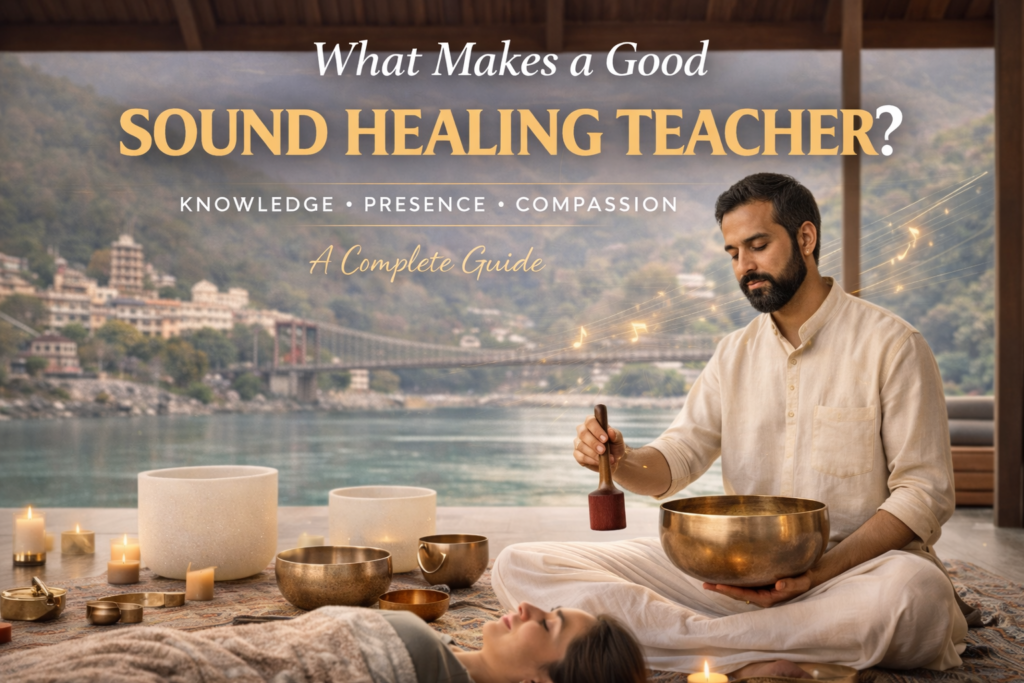
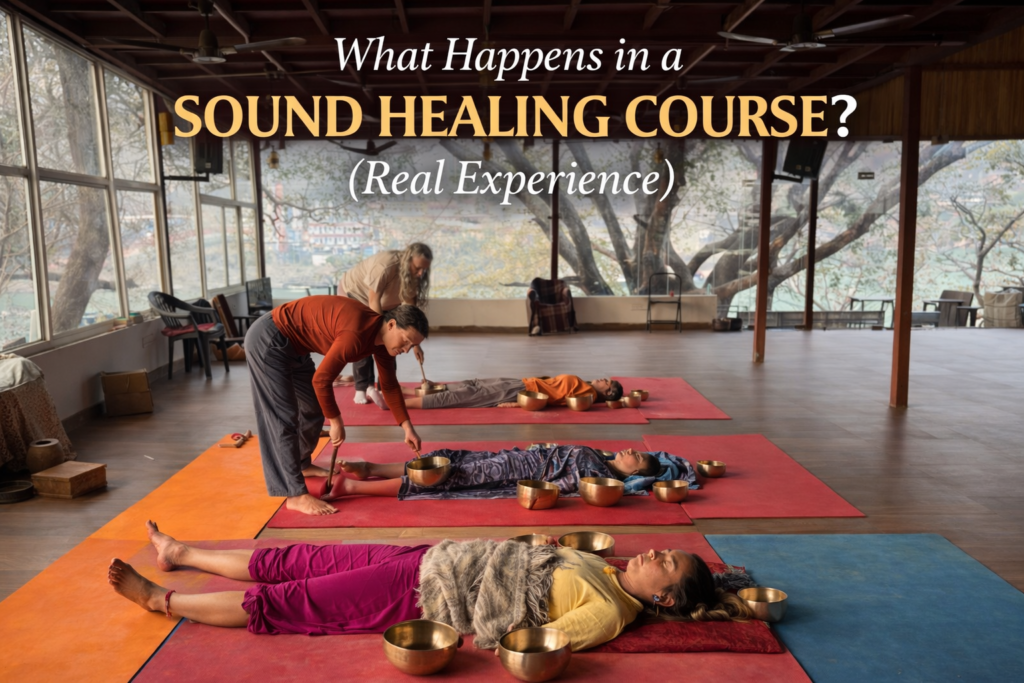
1 month agoHow to Choose a Professional Sound Healing Course in India
Sound healing training in India offers authentic instruction rooted in traditional yogic practices, with experienced teachers providing both theoretical knowledge and practical experience in vibrational healing techniques.
fromYoga Journal
2 months agoYin Yoga to Help Release Your Upper Back and Open Your Heart-Despite It All
Whenever we talk about practicing yoga for the heart chakra, our focus is releasing tension around the heart, including the chest as well as the upper back and shoulders. More than that, the anahata, or heart chakra, has to do with our ability to give and receive love as well as our ability to feel compassion and empathy toward ourselves and others in the world.
Yoga
fromhttps://www.arogyayogaschool.com/blog
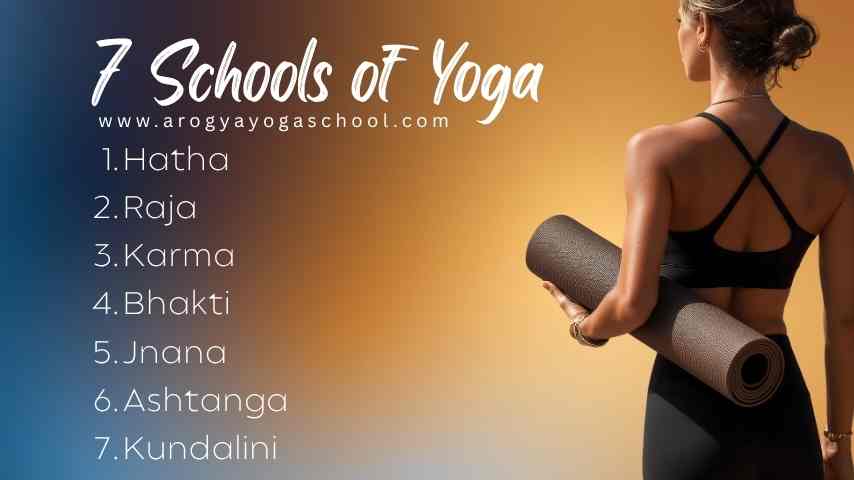
1 month agoThe Overstimulated Mind: What Yoga Philosophy Teaches About Inner Balance
At the heart of yoga philosophy is the belief that stillness is not simply the absence of movement, but a profound engagement with our inner landscape. Practices such as asana (postures), pranayama (breath control), and meditation serve as gateways to this stillness, allowing us to cultivate awareness amidst chaos. Through these disciplines, we learn to quiet the mind's incessant chatter and tune into our true essence.
Yoga
fromClassic Yoga
6 months agoHow I Built a Daily Yoga & Meditation Practice - Classic Yoga
I had no idea what to practice, when to practice, or for how long. As a result, my practice lacked structure, variety, and inspiration. Then, I discovered an online yoga & meditation platform rooted in Himalayan wisdom. It wasn't just about movement; it was about building a relationship with myself. I started with 15 minutes a day. That was it. Sometimes, just breathwork. Other times, meditation. And occasionally, a full-body kriya that left me buzzing with energy.
Yoga
fromYoga Journal
2 months agoHow to Quiet Your Mind, According to Yoga
Popular definitions of yoga often include terms such as balance, harmony, health, and peace. While these qualities are certainly desirable, and must be created before one can enter the state of fixity, or yoga, they are not included in the definition Patanjali offers us in his Yoga Sutras, the classic second-century B.C. exposition generally accepted as the bible of yoga.
Yoga
[ Load more ]