Berlin
fromArtforum
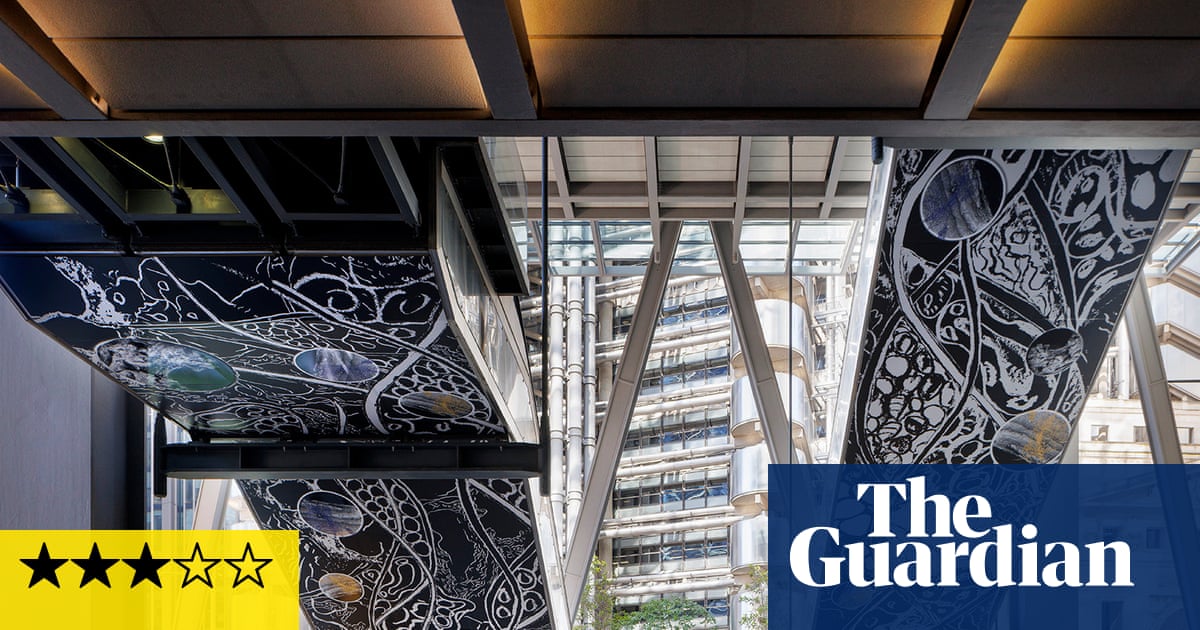
1 week agoVenice Biennale 2026: Henrike Naumann's Last Work
Henrike Naumann's work at the Venice Biennale reflects on Germany's ideological history and the complexities of national representation in art.
I'm the kind of historian obsessed with small details. I'm not saying that foreign policy or constitutional matters aren't important, but I enjoy the minutiae of daily life, which, when added together, can give you a complete picture of the cultural and social features of an era.
Hite learned early on that women walk a sexual tightrope: 'If you had too much sex, you could be shunned like her mother was; if you didn't have enough, you could be deserted like her grandmother.'
Cameron was best known for her work on late antiquity, early Byzantium, and the cultural and religious transformations of the eastern Roman Empire. Her books, including Procopius and the Sixth Century, Byzantine Matters, and Byzantine Christianity: A Very Brief History, were widely read both within academia and beyond.
If you're hunkering down ahead of the big winter storm this weekend, we want to make sure you're well prepared. Yes, with batteries, flashlights, toilet paper, and food but perhaps most importantly with good reading material. We looked back through some recent interviews and Books We Love, our annual year-end reading guide, to find snowy suggestions to get you through the storm.
Inspired by a reading of As You Like It, Judith Chernaik, an American writer living in London, conceived a plan to scatter poetry across the underground as the love-sick Orlando hangs sonnets through the Forest of Arden. Her simple idea took root below the sewers and spread to cities across the world. Poetry in Motion launched in New York in 1992, and today poems can be found on public transport in Dublin, Paris, Beijing, Shanghai, Warsaw and Moscow.
Over the holidays, my father told me he was going to send me a Tim Wakefield bobblehead that he found in a junk pile at his house. I didn't have high hopes for this, given that description of its provenance, but it arrived last week, and it's beautiful. Truly awesome. Opening it, I felt moved-by remembering Wake's accomplishments and the man he was, and by memories of seeing him pitch. I'm also appreciating the high-class packaging, the two baseball cards inside, and the first-class craftsmanship.
There's an old myth that Inuit cultures have as many as a hundred words for snow. I remember learning about it in school, and there was just something wonderful about the idea that people's perceptions can be so deeply rich and different. I guess that's why, although it has been debunked many times, the story keeps getting repeated. There is also a lot of truth to the underlying concept.
The stylish patrons of a hookah lounge on a terrace in the shadow of Dubai's Burj Khalifa; the teens I spotted taking selfies around a hookah at Istanbul's Ciragan Palace; the friends sharing a pipe on a sidewalk in Cairo; the men setting up a hookah on a sand dune in the Saudi desert-they're all carrying on a tradition that began in the royal courts of Mughal India before traveling to Iran, Turkey, the Middle East and North Africa, and, eventually, the West.
Though references to AI slop date back at least to 2022, a poet and technologist who writes under the name deepfates popularized it two years later as the term for unwanted AI generated content in a post on X. Shortly afterward, developer Simon Willison shared the concept in a blog post: Not all AI-generated content is slop, he wrote. But if it's mindlessly generated and thrust upon someone who didn't ask for it, slop is the perfect term.
Bill Nighy is the agony uncle you never knew you needed as he answers readers' questions in his new show. It's a laconic delight, listening to his louche suggestions on topics from lipstick application to decluttering a record collection. Wisdom is being dispensed despite his self-deprecating protestations. Alexi Duggins Widely available, episodes weekly Limerick native Ruth Negga narrates this RTE podcast about a couple convicted of carrying out female genital mutilation (FGM) on their young daughter.
The Angel Orensanz Foundation shimmered like a secular cathedral on Sept. 29th, when Project for Empty Space convened its fifteenth Badass Art Woman Awards. This was not a gala in the predictable sense. It was ritual, a liturgy of resilience, a convocation of women who have made it their life's work to cultivate beauty, sustain truth, and preserve the radical power of art in a world increasingly hostile to difference.
Boat docks and harbors are liminal spaces where the shore marks the meeting of land and water, and serve as a space for the convergence of culture, industry, and community. For those who work at sea, from commercial fishers to marine freight operators, the dock is a threshold between labor and rest, between oceanic uncertainty and terrestrial stability. For others, the dock serves as a gateway to recreation, sport, and adventure, accommodating everything from rowing clubs to family sailing trips.
"For a long, long time, spicy meant exactly what it is supposed to be: that which is containing spice, or redolent of spice," Anatoly Liberman, a linguist at the University of Minnesota. But it was around the 19th century, that records show people started to use spicy in other less literal ways, he said. It can also refer to "racy" or "engagingly provocative" in reference to scandalous gossip or anything tantalizing.
Experimental archaeology involves doing things—making things, re-creating things from the past. This hands-on approach understands not just what our ancestors made but how they made it.
"The romance of hair is too prolific a subject to be lightly handled." The evolution of facial hair acceptance reflects cultural attitudes that have shifted dramatically over the centuries, showing how societal norms dictate personal expression. This historical context reveals the complexities surrounding the idea of beards and mustaches, which once carried significant stigma but later became symbols of status and masculinity.
The tradition of cake pulls in Southern weddings involves the bride inviting close friends to pull ribbons from the wedding cake, with charms symbolizing good luck or fate.