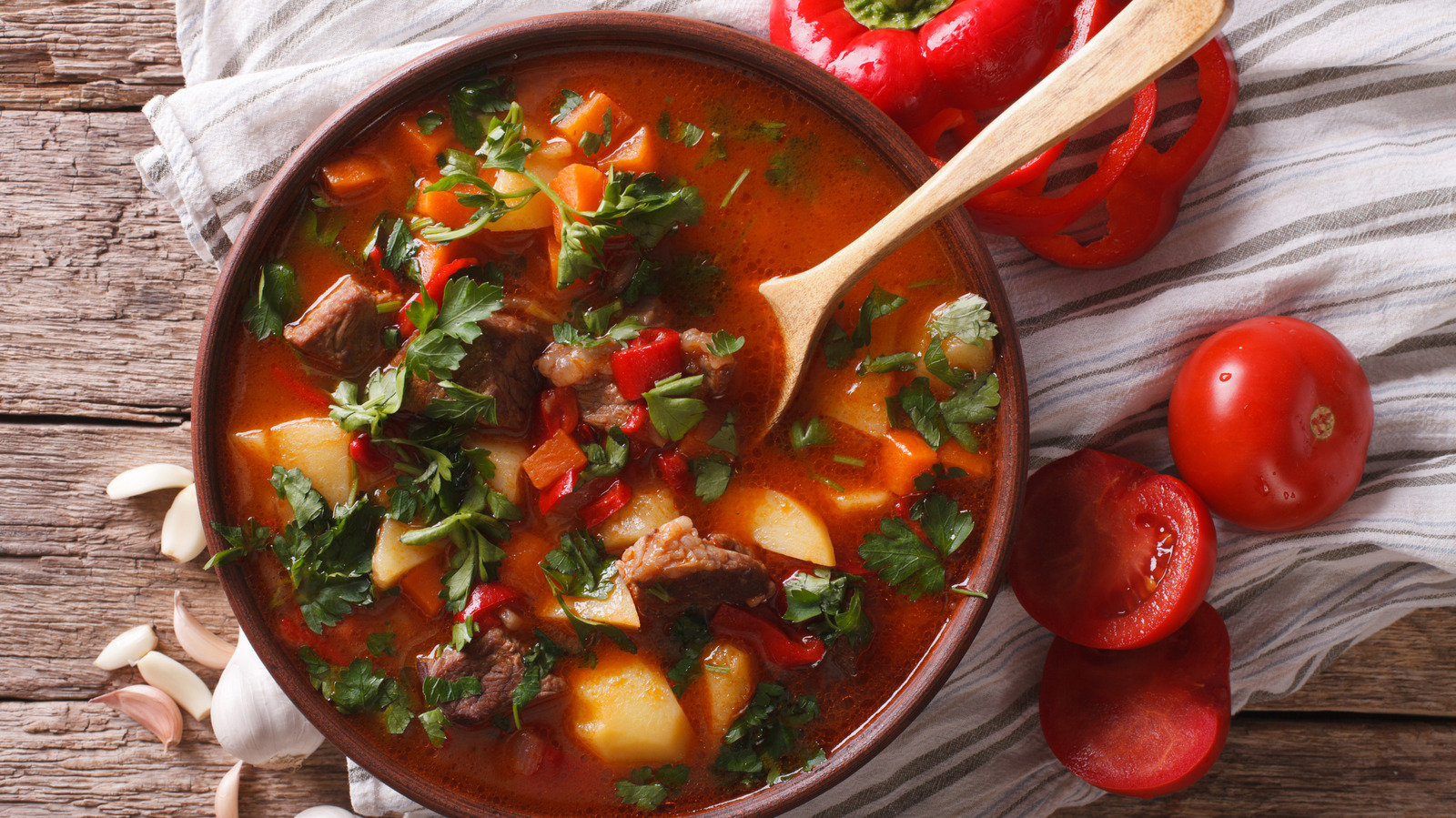
"The etymological root of goulash is the gulyás - cowherds who drove long-horned cattle over the Great Hungarian Plain, and would boil their beef into a gulyásleves (goulash soup)."
"Despite both onions and paprika featuring in most recipes for Hungarian goulash today, the earliest incarnation of the dish would have neither. Onions didn't reach Hungary until 1476, and paprika would not be properly refined until the 19th century."
"In his book 'The Cuisine of Hungary', George Lang wrote that, when preparing goulash, 'lard and bacon (either one or both) are absolute musts', but sternly instructs that one must never use any spice besides caraway."
"Other Hungarian cooks hold that the common inclusion of tomatoes should also be eschewed, emphasizing the traditional aspects of the dish."
Goulash, a Hungarian classic, raises questions about authenticity as recipes change over time. While many Hungarians assert goulash is not a stew, its evolution includes the historical context of ingredients like onions and paprika, which were introduced later. The dish's origins trace back to cowherds boiling beef into a soup. Controversies exist regarding ingredients, with some purists rejecting modern additions like tomatoes. American goulash, while different, remains a popular variation.
Read at Tasting Table
Unable to calculate read time
Collection
[
|
...
]