#teewing
#teewing
[ follow ]
#sustainable-fashion #fashion #cultural-heritage #cultural-identity #sustainable-design #architecture

Design
fromYanko Design - Modern Industrial Design News
8 hours agoIssey Miyake's Most Beautiful Material Was Always the Scrap - Yanko Design
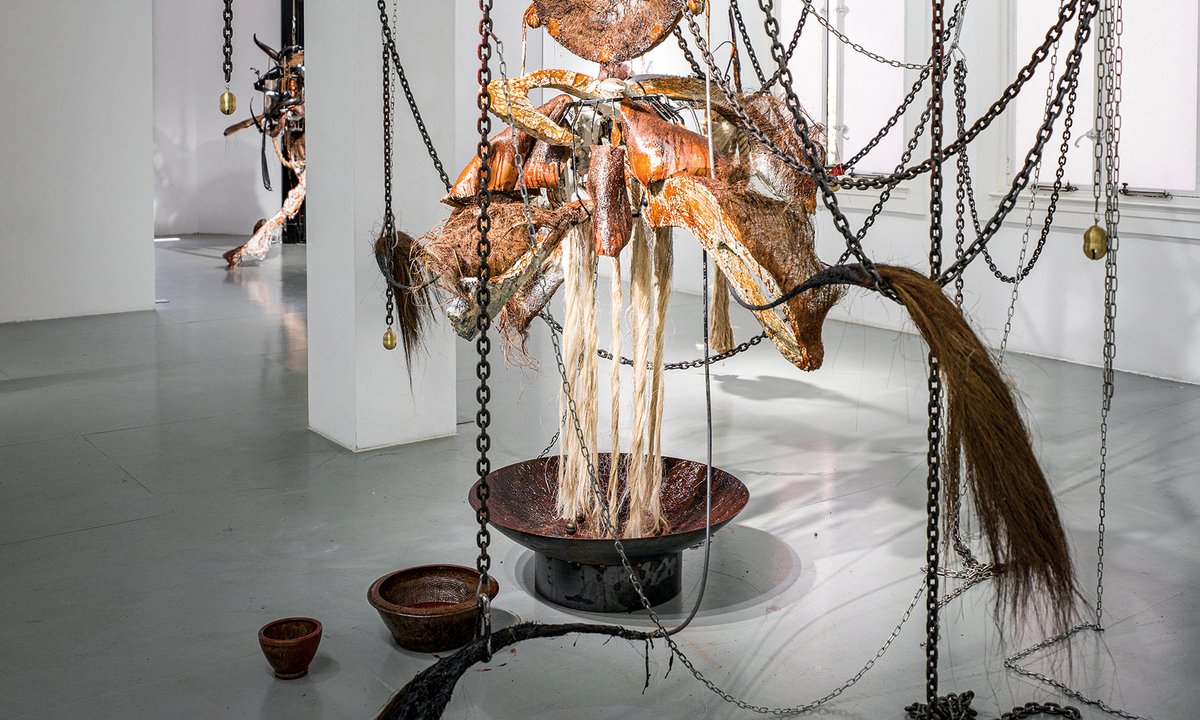
Satoshi Kondo's exhibition transforms discarded paper from garment production into art, highlighting the beauty and memory in what is typically considered waste.

fromdesignboom | architecture & design magazine
2 days agohow spanish ceramics bridge culture, memory and identity at milan design week 2026
Throughout its history, Spain has been shaped by a wide range of cultures and civilizations, including Muslim, Phoenician, Roman, Greek, Carthaginian, and Visigothic influences, which are reflected in its architecture and design.
Madrid food
fromConde Nast Traveler
2 days agoIn Rural Ireland, Textile Weavers Offer a Glimpse of a Craft's Past and Future
"We met with linen and wool weavers and were blown away by the exceptional quality and beauty of the cloth they produced, as well as the depth of [textile] history in Ireland. We were in equal measure concerned by the decline in the number of weavers. They mentioned that they were losing out to cheaper cloth from abroad and that Irish buyers were few and far between."
Fashion & style
fromChrbutler
1 week agoCraft is Untouchable - Christopher Butler
Craft is often defined as skill in making things by hand, but this interpretation is being challenged by AI. Craft transcends physical interaction; historical figures like Mozart and Beethoven exemplify mastery without traditional methods.
Intellectual property law


fromHyperallergic
4 days agoNikyle Begay Resurrects Century-Old Dine Weavings
Nikyle Begay's weaving practice is rooted in heritage, particularly the twill technique used for saddle blankets, showcasing their ability to reconstruct complex woven patterns. This skill has been pivotal in reviving techniques marginalized by the trading-post economy, which favored regional styles over functional, historic designs.
Arts
Portland
fromMetro Silicon Valley | Silicon Valley's Leading Weekly
3 weeks agoJeremy Frey: Woven at Stanford | Metro Silicon Valley | Silicon Valley's Leading Weekly
Wabanaki baskets, crafted by Jeremy Frey, showcase a 13,000-year tradition and innovative techniques, now featured in a significant exhibition at the Cantor Arts Center.
#sustainable-fashion

fromBusiness Matters
1 month agoFashion & style
Why Sustainable Fashion is More Than Just a Trend: Clothing, Bags, and Accessories for a Better Future
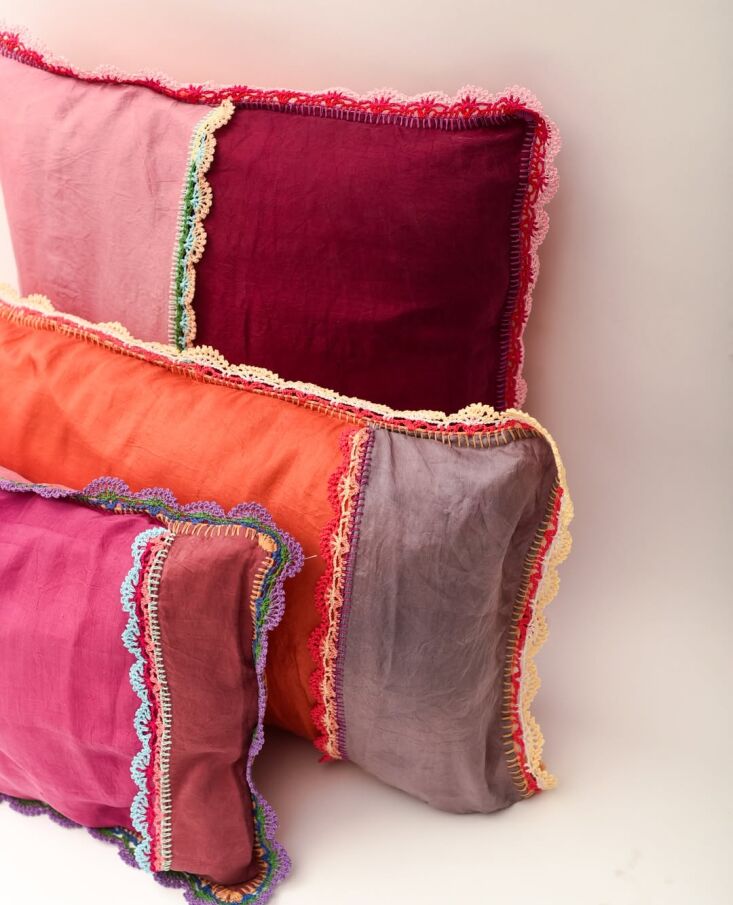
Sustainable fashion has moved from niche to mainstream as consumers increasingly demand transparency about production, labor practices, and environmental impact of clothing and accessories.
Fashion & style
fromBusiness Matters
1 month agoWhy Sustainable Fashion is More Than Just a Trend: Clothing, Bags, and Accessories for a Better Future
Sustainable fashion has moved from niche to mainstream as consumers increasingly demand transparency about production, labor practices, and environmental impact of clothing and accessories.
fromThe Art Newspaper - International art news and events
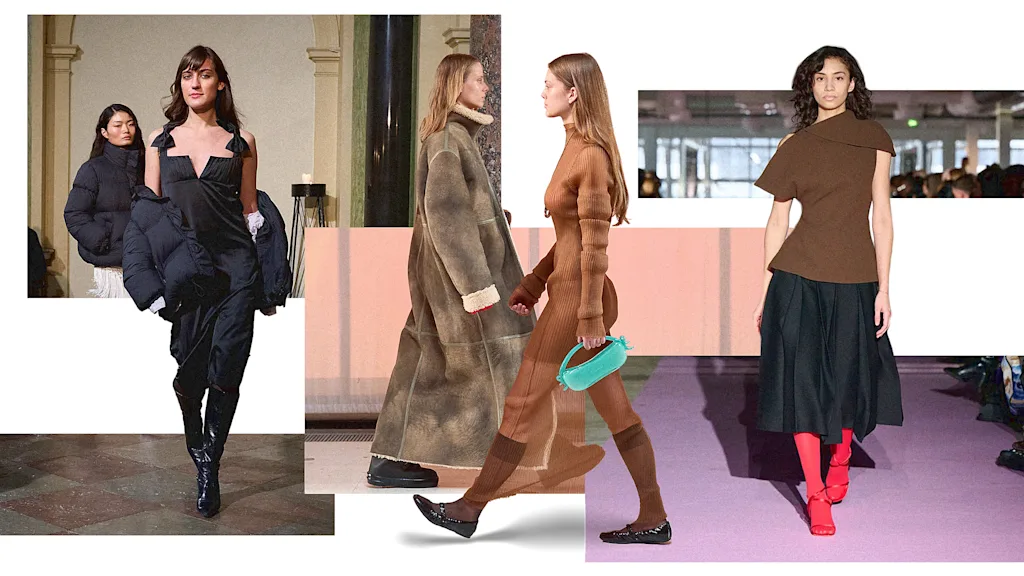
5 days agoAntwerp exhibition celebrates its homegrown fashion designers, the influential Antwerp Six
"The name is a paradox. They never functioned as a collective," says Kaat Debo, MoMu's director. "Some of them still describe that label as a blessing and a curse. But they were friends."
Fashion & style
fromMindful
1 month agoClothing Designer Eileen Fisher Models Mindfulness
Despite having to haul a dozen dumpster-loads of damaged goods out of the offices and the nearby Lab Store, to the tune of $1.5 million, Eileen said at the time, 'It was just stuff.' You can only imagine the emotions that might arise in a chief executive if they saw their sewage-soaked products floating by. Eileen and her staff did not linger there. They mobilized quickly-organizing carpools, impromptu meeting spaces, and arranging interest-free loans for staff needing cash during the crisis.
Women
fromThe Art Newspaper - International art news and events
3 weeks agoTextiles weave tales of Palestine's rich but troubled history
Textiles are a window into the communities that created them, with every motif and line signalling a different memory, tradition or identity. Often seen as folk art, these pieces of embroidery and weaving bring together dozens of narrative threads, from Japan to South America. But nowhere is it more fraught with meaning than in Palestine.
Arts
History
fromOpen Culture
1 month agoThe Ingenious Engineering of Silk: How the 2,000-Year-Old Pattern Loom Powered the Silk Road and the Wealth of Ancient China
The Silk Road was a vast trade network spanning from the second century BC to the fifteenth century AD, named over 400 years after its decline, with silk being the most glamorous and visible commodity despite not being the highest-volume item traded.
fromCN Traveller
2 months agoThis underrated Mexican city's artisans have transformed their home into a shopaholic's paradise
Traveller check into hotels for easy access to historical Mayan sites and the cenotes beyond, with ambles through colourful squares and late, balmy nights digesting feasts over tequila tipples. Between cultural excursions and natural wonders, however, there's much to be said for the artisans in these parts. From crafted perfumes to handmade chocolates, these are the gifts and trinkets to make space for in your luggage.
Food & drink
fromRemodelista
2 months agoA New Use for Old Blankets: Custom Wool Chore Coats - Remodelista
But this week I spotted an ingenious use for the extras, courtesy of NY-based company Proche Studio. Here's their proposal: Mail in a wool blanket, and they'll give it new life in the form of a great-looking-and uber snug-chore coat, vest, or scarf. I'm particularly smitten by the chore coat, a fresh version of the quilt coats that became popular a couple of years ago, and much, much warmer.
Renovation
fromRemodelista
1 month ago12 Pojagi-Style Patchwork Curtains in a Range of Styles and Prices
Making pojagi was a way of "economizing resources," and also "an act of affection," explains artist-fashion designer Christina Kim of Remodelista longtime favorite Dosa. Shown here: Dosa's cotton and silk Pojagi Scarves are "both a reminder of Christina's childhood in Korea and a beautiful expression of traditional recycling"-and would work well on a wall or in a doorway.
Fashion & style
Design
fromdesignboom | architecture & design magazine
2 months agowearable collection repurposes leftover leather powder as translucent composite material
OBRO converts leather manufacturing offcuts into semi-transparent PVC composite by embedding finely ground leather powder to create visually layered, tactile, durable sheets.
Fashion & style
fromElite Traveler
1 month agoNot All Cashmere Is Equal - These Four Brands Get It Right
Emerging luxury cashmere brands like Cutler and Extreme Cashmere distinguish themselves through superior materials, innovative production techniques, and distinctive design approaches that justify premium pricing.
fromColossal
2 months agoIn Collaboration with Indigenous Artisans Around the World, PET Lamp Emphasizes Sustainability
Tons upon tons of these single-use plastics end up in landfills or even floating in the ocean. Spanish design firm PET Lamp set out give another purpose to these otherwise short-lived materials. Partnering with artisans in communities from Chile to Ethiopia to Australia, the company celebrates both Indigeneity and sustainability, drawing upon time-honored global craft traditions while supporting local economies and recycling discarded materials.
Arts
Arts
fromdesignboom | architecture & design magazine
2 months agolight sculptures preserve ancestral designs through antique doilies and lace textile
Kinship transforms heirloom doilies and stockings into LED-lit stainless steel sculptures that preserve textiles and project lace-like shadows and layered histories.
fromwww.theguardian.com
1 month agoFabric of memory: the artists turning secondhand clothes into monumental art
These clothes are not secondhand, says Yin Xiuzhen, the Beijing-born artist known for creating large-scale installations out of found garments and keepsakes. I prefer to call them used' or worn', she explains. Clothes that have been worn' carry a lot of information like a second skin, imprinted with social meaning. In some of Yin's works the clothes are her own, telling a personal story. In others, the clothes are collected, stained and stretched across towering steel frames resembling planes, trains or organic forms.
Arts
fromDocumentjournal
1 month agoOnce upon a time, fashion got dirty
In the show, "dirty" extends to anything that breaks fashion's pact with propriety. Here are clothes caked in grime, blotted with makeup, stiffened by salt, pieced from trash, frayed, and faded. The garments span decades, from the 1980s through the mid-2000s, when the likes of Vivienne Westwood and Jean Paul Gaultier built their fame on defying convention, to today, when corporatization has made such daring increasingly rare. But forgoing practicality frees certain designers from the demands that the body be polite-and thereby policed.
Fashion & style
fromThe Local France
2 months agoMen's fashion turns to embroidery as guys want 'something different'
Embroidery is a historic mainstay of traditional clothing in Asia or the Middle East, as well as Western Haute Couture, but it is increasingly present in Paris, Milan or New York on modern men's shirts, bomber jackets or blazers. Designers at Dior, Dolce Gabbana, Kenzo or Gucci have adopted it in recent runway shows, while Louis Vuitton's celebrity rapper-designer Pharell Williams dedicated his entire June collection to India after visiting the country.
Fashion & style
Fashion & style
fromdesignboom | architecture & design magazine
1 month agofour typologies explores decentralized upcycling fashion factories in digital space
Digital spatial systems enable decentralized Garden Factory typologies and nonlinear upcycling workflows that support iterative, small-batch fashion production across multiple scales.
fromBusiness Insider
2 months agoIt took me a second solo trip to Bali to finally launch my slow fashion business
The 26-year-old real estate project manager from Munich came to the surf camp to improve her skills on the water. I came to talk with adventurous travelers about their big ideas, from new businesses to life after layoffs.
Fashion & style
fromwww.kaltblut-magazine.com
2 months agoAphrodie
It captures seven different femininities during an all-day pool party, enjoying themselves while revealing their distinctive styles. Creative Direction, Production & Styling by Maria Gkin. Photography by Eliza Poultidou. The models are Vanessa Otilia, Cyka, Alvina Chamberland and Angelica Komninak. The concept examines the thin line between what is seen as acceptable and what has been labelled ugly or immoral, explored through each woman's personal story. Textures, colours, makeup and styling come together, breaking down stereotypes and highlighting fashion as a means of freedom
Fashion & style
Fashion & style
fromKALTBLUT Magazine
1 month agoPOET-LAB Fall/Winter 2026 - Inside the Lab - KALTBLUT Magazine
Poet-Lab's FW26 collection presents genderless luxury streetwear emphasizing poetic minimalism, architectural restraint, and sustainability through repurposed deadstock fabrics, rejecting binary identities and prescribed gender roles.
Fashion & style
fromwww.kaltblut-magazine.com
1 month agoUnity in Design Global Network (UDGN) x Fashion Scout: Anthology of African Stories The People. The Land. The Heritage
Three African designers showcase heritage-inspired collections at London Fashion Week 2026, transforming traditional textiles and cultural narratives into contemporary high fashion through sculptural silhouettes, landscape-informed tailoring, and personal storytelling.
fromVogue
1 month agoHow a New Generation of Designers Are Promoting, and Protecting, Their Names
What if I took my design lens and built out my essentials capsule for the Everlane customer? I felt like that would be a really amazing opportunity for me to introduce myself as a designer to an audience outside of EB Denim.
Fashion & style
[ Load more ]