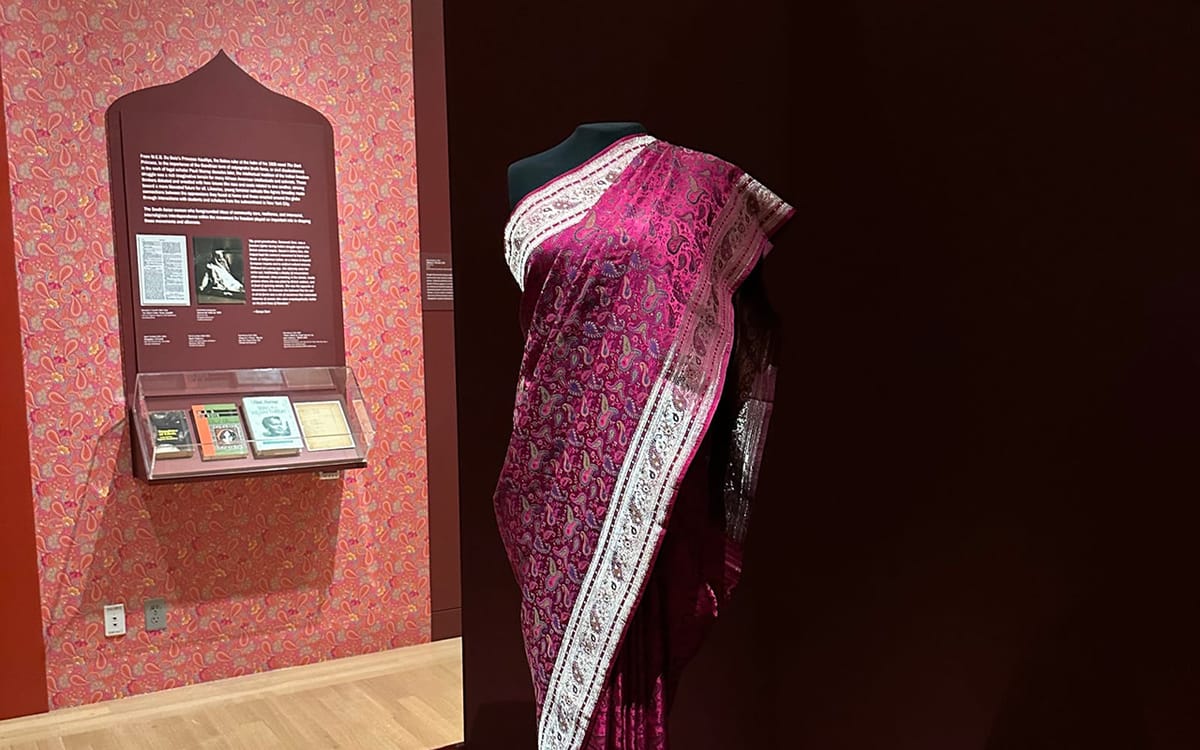
The New York Historical presents an exhibition exploring the sari as a multifaceted cultural artifact through South Asian history in New York. The curated show features artistic installations, including a Bharatnatyam dancer sculpture made from used saris, accompanied by music from South Asian and African American artists. Co-curators Salonee Bhaman and Anna Danzinger Halperin deliberately avoided presenting a singular narrative, recognizing the complexity of the garment and diaspora experience. Bhaman, a scholar of social movements and Asian American feminist, emphasizes that the sari carries personal, political, and communal significance. The exhibition frames the sari as a site for ongoing contemplation rather than a fixed historical artifact, allowing multiple perspectives on identity, belonging, and self-definition within diaspora communities.
"I knew going into working on this show that there was no singular story of the sari, and that there were particular things that a diaspora experience brings out of the garment. That self-awareness frames the exhibition not as an airtight artifact but as a site of living, breathing contemplation."
"There is always a battle for self-definition within any diaspora. In my experience, there's a lot of asking, 'Who are we to the outside world and to each other?' It's important to allow the full richness of that conversation to come through in a history exhibition."
"Suchitra Mattai's 'she arose (from a pool of tears)' (2024), a Bharatnatyam dancer made from used and loved saris, greets visitors at the entrance. The small but mighty show serves as a primer on South Asian history in New York, framed conceptually and visually through the sari in all its infinite pleats, drapes, and patterns."
#sari-as-cultural-artifact #south-asian-diaspora #identity-and-self-definition #museum-exhibition #political-symbolism
Read at Hyperallergic
Unable to calculate read time
Collection
[
|
...
]