#textile-art
#textile-art
[ follow ]
#contemporary-art #exhibition #sculpture #embroidery #cultural-heritage #materiality #installation #art-history
Paris food
fromdesignboom | architecture & design magazine
6 days ago'a little theater of life': JR weaves monumental tapestry of community care in venice
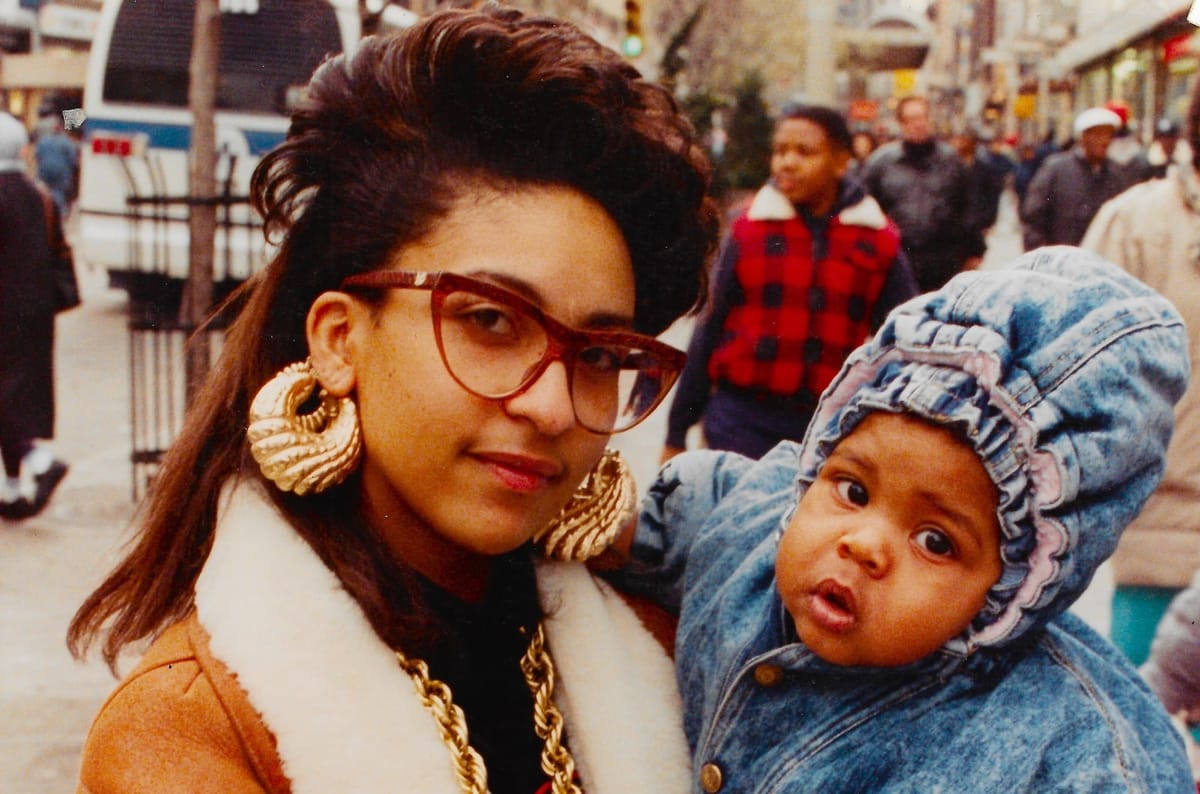
JR's 'Il Gesto' transforms a Venice palazzo into a public artwork celebrating community care through a monumental tapestry reinterpreting Veronese's 'The Wedding at Cana' with real Refettorio participants.



#embroidery
Arts
fromdesignboom | architecture & design magazine
2 months agoema shin embroiders intricate detailing into monumental heart for biennial of sydney
Ema Shin presents a monumental embroidered heart at the 2026 Biennale of Sydney, scaling up her signature textile practice to create an anatomically detailed sculpture celebrating unrecognized women in family histories.

fromArtnet News
2 months agoRare Madge Gill Textile Sets Auction Record for the Self-Taught Artist
The artist is best known for her dense, visionary ink drawings on calico and postcards. She believed her intricate compositions were guided by a spiritual entity she called "Myrninerest," which she described as an unseen collaborator. Only a small number of her textile works are known to survive, with examples held in institutions including the Whitworth Art Gallery in Manchester, England and the Collection de l'Art Brut in Lausanne, Switzerland.
Arts
fromHyperallergic
2 months agoMagdalena Abakanowicz Sculpted the Collective Body
The organicity of the human body we're born inside of is encoded in us. This concept of our organic nature as the source of elemental knowledge, at once direct and mysterious, permeates the textural abstractions exhibited in her survey Magdalena Abakanowicz: The Thread of Existence at Musée Bourdelle.
Arts
fromYanko Design - Modern Industrial Design News
2 months agoThese Lace-Shade Lamps Transform Family Heirlooms Into Memorable Floor Lighting - Yanko Design
In Lana Launay's Kinship series, light does more than illuminate space. It acts as a living archivist, revealing, preserving, and narrating stories embedded within inherited textiles. Through works such as Kinship I and Kinship II, the artist transforms antique doilies, lace fragments, and stockings passed down through generations into sculptural lighting forms that do not simply display history but actively project it into the present.
Arts
fromColossal
2 months agoEthereal Kites by Hai-Wen Lin Transform into Elegant Garments and Sculptures
In works that merge sculpture, fashion, and kite-making, Hai-Wen Lin traverses the thresholds that connect one's physical self, the mind, and the elements. The artist describes their practice as "an act of reorienting: looking back, looking forward, looking in, looking up." Using a wide range of materials, Lin creates vibrant, abstract compositions in textile often manipulated with cyanotype patterns or dyed with natural hues such as indigo and turmeric.
Arts
Agriculture
fromRemodelista
3 months agoObject of Desire: Rustic Woolens from Isabella Rossellini's Mama Farm - Remodelista
Isabella Rossellini founded Mama Farm to conserve heritage breeds and produces heritage-sheep wool textiles—ponchos, blankets, carpets—in collaboration with textile artist Mimi Prober.
fromPortland Mercury
3 months agoThe Mercury's Do This, Do That: Your Top Events for January 12-18
The news is bleak, the nights are long. Yet somehow... the calendar is still stacked. January is when culture gets weird in the best way; this week, medieval manuscripts emerge from the vault, and camp horror and queer literature come out to play. Plus, artist Elizabeth Knight presents her dog embroideries, and local hardcore shows up to shred. Don't say we didn't warn you!
Arts
Design
fromdesignboom | architecture & design magazine
4 months agodelphine denereaz weaves provencal memory into Hermes' winter windows in shanghai
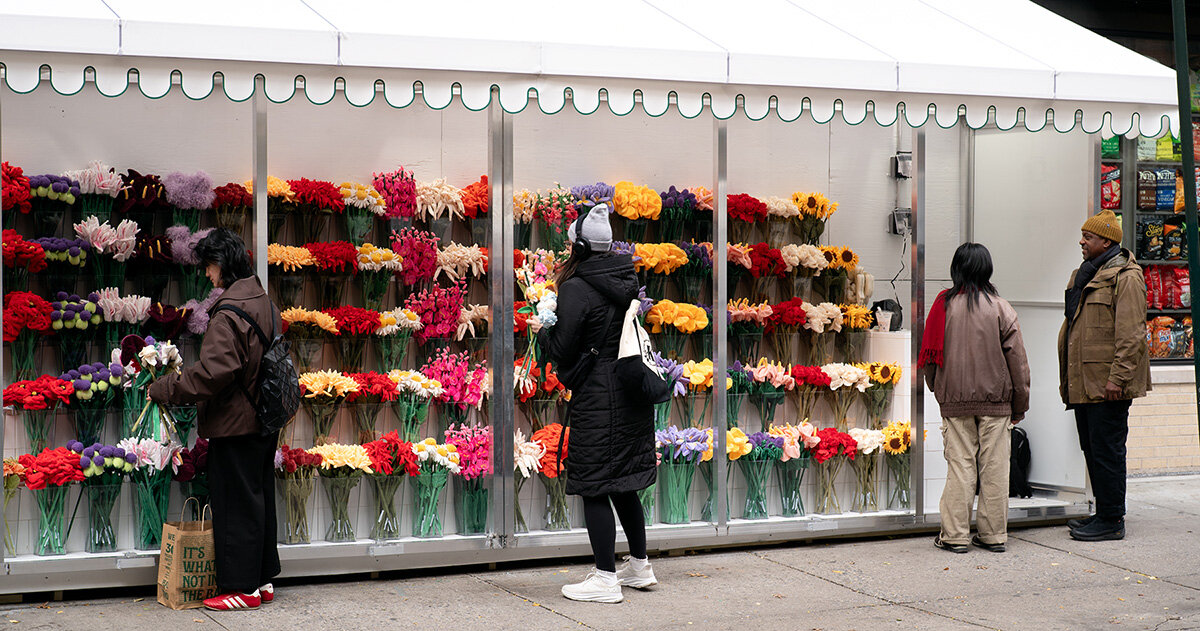
A winter window installation transforms Provençal rituals and textile exchange with China into tactile, woven, illuminated landscapes bridging southern France and the birthplace of silk.


fromThe Art Newspaper - International art news and events
5 months ago'Materials are so easily imported, but the people are not welcome': Diana Eusebio's show at the Museum of Contemporary Art North Miami tackles the realities of immigration
Diana Eusebio's first solo museum exhibition, Field of Dreams at the Museum of Contemporary Art North Miami, is a homecoming in many ways. The award-winning Peruvian Dominican artist grew up in the city, and her work is steeped in the local community and its natural environment. The exhibition features more than 30 works rooted in Eusebio's unique practice of combining textiles hand-coloured with natural dyes-drawing on her African and Indigenous heritage-with digital prints.
Arts
fromColossal
5 months agoAbdoulaye Konate Translates Ancient Spirituality into Lush Tapestries
Through large-scale tapestries of fringed strips of fabric, Abdoulaye Konaté explores the contemporary relevance of ancient signs and symbols. The Malian artist began working with textiles in the 1990s, when it became clear to him how prevalent they are in our everyday lives, from clothing and home goods to tools and more. This early interest began what's become a research-driven artistic practice, and today, he layers long, stitched pieces of Bazin and Kente fabrics into dynamic, largely abstract works.
Arts
fromARTnews.com
5 months agoChristie's 21st-Century Evening Sale Sets Auction Records for Three Women Artists
Báez's monumental 2021 painting Untitled (Colonization in America, Visual History Wall Map, Prepared by Civic Education Service) sold for $1,111,250, setting a new record for the Dominican-born artist whose work interrogates colonial histories through layers of archival maps, Caribbean symbolism, and swirly swaths of paint-in this case, densely rendered feathers. Brown's After the Alcatraz Swim #2 achieved $596,900, a benchmark for the Bay Area Figurative artist whose psychologically charged self-portrait draws from a near-fatal 1975 swim in San Francisco Bay.
Arts
fromColossal
6 months agoJacquard Weavings by Malaika Temba Explore Material, Community, and Global Trade
"My practice exists in the tension between rest and labor, between the intimacy of touch and the vast systems that shape our world," says artist Malaika Temba. "Whether I am working on a small weaving or a large-scale installation, I am always asking what materials remember and who gets remembered through them." Merging digital and analog processes, Temba creates layered textile pieces in an exploration of migration, labor, gender, global trade, and daily life.
Arts
fromDesign Milk
6 months agoMIT Museum's "Remembering The Future" Explores Collective Fate
'The most painful state of being is remembering the future, particularly the one you'll never have.' This quote, attributed to Søren Kierkegaard, encapsulates the title's inspiration and installation's ethos, speaking to the titanic loss that comes from environmental degradation due to climate change. As art evokes emotion, it helps us humans visualize or appreciate the world from which we came, and indeed, where we might be headed.
Environment
fromVulture
6 months agoHarvey Fierstein Is Now a Full-Time Quilter
The industrial-size device includes a computer interface for creating precise patterns, but he prefers to use it like a pencil and paper, doodling swirls directly onto ice-dyed velveteen. The dye is a recent addition to his process. "You go through these periods when the fabric does the talking or when the design does the talking," he tells me. Currently, the fabric is yelling.
Arts
fromPortland Mercury
8 months agoFall Arts Issue Calendar: Dancing on the Sabbath, Amanda Lepore, and More!
Marie Watt's balance of technical precision and expansive vision melds in larger-than-life textile processes and multimedia explorations. Storywork centers stories from her Seneca Nation ancestry, pairing them with references to everything from Greco-Roman myth to Star Trek. The selection of narrative prints appears alongside a sculptural tin jingle cloud. Programming includes an October 2 performance by champion jingle dancer Acosia Red Elk and a campus native plant tour led by the Indigenous Traditional Ecological and Cultural Knowledge team on October 14.
Arts
fromPortland Mercury
8 months agoThe Mercury's Do This, Do That: September 8-14
Exploring transness through soft, quilted terrain, Waters of Body pairs works by Portland artists Yana Sternberger-Moyé, Molly Alloy, and Michael Espinoza with Transmissions Quilts Project, artist Cordy Joan's quilt-making initiative for trans and gender-queer people countrywide. The exhibition joins other interesting shows installed at PNCA: Portland Textile Month's Warp Speed: Contemporary Conversations in Fiber showcases vibrant, fuzzy fiber works from the former Museum of Contemporary Craft's collection, and Angelo Scott's Time-Based Art Festival installation.
Arts
Arts
fromJuxtapoz
8 months agoJuxtapoz Magazine - Alexa Kumiko Hatanaka Presents "Rumination" with Patel Brown Gallery @ The Armory Show, NYC
Alexa Kumiko Hatanaka uses handmade washi textiles to link environmental fragility, traditional craft, and bipolar experience, creating life-sized sewn silhouettes and climate-inflected imagery.
fromdesignboom | architecture & design magazine
9 months ago'i always chase the light': rachel hayes activates space with monumental textile installations
Rachel Hayes transforms architectural spaces and natural landscapes into shifting compositions of color and movement with large-scale textile-based installations that are site-specific and vibrant.
Arts
fromstupidDOPE | Est. 2008
10 months agoTransforming Space and Light: Rachel B. Hayes' Fabric Installations | stupidDOPE | Est. 2008
Hayes uses color, translucency, and composition to radically reshape the way viewers experience architecture and nature through large-scale, site-specific installations.
Artificial intelligence
from48 hills
10 months agoInspired by Sister Corita Kent, Terri Friedman's meticulous weaves erupt into protest - 48 hills
I am a painter who uses the loom to paint, and I consider my palette and my words as part of my materials repertoire. My weavings feel spontaneous, but they are meticulously planned from composition to fiber choices.
Arts
Arts
fromColossal
1 year agoIn Elaborate 'Textile Paintings,' Anne von Freyburg Reframes Femininity in European Art History
Von Freyburg's work redefines fabric art by merging female identity themes with historical European painting influences.
Her exhibition critiques societal expectations on women while celebrating sensuality and freedom.
[ Load more ]