#contemporary-sculpture
#contemporary-sculpture
[ follow ]
#art-market #public-art #venice-biennale #ceramics #turner-prize #site-specific-installation #us-pavilion
fromThe Art Newspaper - International art news and events
2 days agoDinosaurs roam New York's Bowery
“When we had the opportunity to show them, of course we understood the sort of unprecedented nature of showing fossils in a gallery space,” Hyman says. “But we wanted to make sure that this also wasn't just a gimmick and a spectacle.”
Arts
Arts
fromThe Art Newspaper - International art news and events
1 week agoBeware the technology rat trap: Cooper Jacoby's standout contribution to New York's Whitney Biennial
Cooper Jacoby's sculptures at the Whitney Biennial examine how AI and corporations monetize personal data by repurposing deceased individuals' social media content through algorithmic voice generation.
fromThe Art Newspaper - International art news and events
3 weeks agoSlags, bings and pipelines: Edinburgh landscape offers fitting backdrop for exhibition on fossil fuel extraction
Jupiter Artland offers a rolling programme of temporary exhibitions as well as 150 acres of Scottish countryside populated by specially commissioned permanent works by over 40 major artists.
Arts
Paris food
fromdesignboom | architecture & design magazine
1 month agodreamlike aquarium chamber of 'kissing fish' at thaddaeus ropac paris invites visitors inside it
Ariana Papademetropoulos' Glass Slipper exhibition merges painting, sculpture, and installation around an inhabitable aquarium with kissing fish, ambient sound, and perceptual disorientation.
Arts
fromdesignboom | architecture & design magazine
1 month agopaola pivi imagines a living cosmos grown from lemon trees at perrotin paris exhibition
Paola Pivi's Live Again exhibition uses living lemon tree branches and playful language to create regenerative art that embeds ecological cycles and political critique into sculptural forms.
Arts
fromArtnet News
2 months agoThomas J Price's Tallest Sculpture Rises Outside London's V&A East
Thomas J Price unveiled A Place Beyond, an 18-foot bronze sculpture at V&A East in London that critiques classical sculpture through an idealized female figure in everyday clothing, challenging viewer biases about representation and identity.
NYC real estate
fromCurbed
2 months agoCarol Bove Has a Retrospective at the Guggenheim and an Apartment to Sell
Sculptor Carol Bove is selling her Fifth Avenue apartment for $3.5 million while opening a career-defining Guggenheim retrospective, having purchased it for $2.9 million in 2021 during her divorce.
Arts
fromThe Art Newspaper - International art news and events
2 months agoIn Pictures: Sculpture gets a leg up at Frieze Los Angeles
Contemporary artists showcase innovative sculptural works at art fairs, blending traditional materials with conceptual themes and attracting significant collector interest.
Arts
fromThe Art Newspaper - International art news and events
2 months ago'Everyone can talk about a cabinet or a chair': Ryan Preciado on his show at Hollyhock House in Los Angeles
Ryan Preciado merges functional craft with sculptural inquiry, creating works that blur boundaries between utility and art while engaging with architectural and material histories.
Arts
fromArchDaily
2 months agoTuwaiq Sculpture 2026 Transforms Riyadh into a Platform for Public Art
Contemporary sculpture functions as a critical urban mediator that reshapes public space and contributes to city transformation, exemplified by Riyadh's Tuwaiq Sculpture 2026 symposium integrating large-scale artworks into the urban environment.
fromThe Art Newspaper - International art news and events
2 months agoWhy Robert Therrien is a big deal
He's an artist that was a major presence in Los Angeles art for almost 50 years, one of the best sculptors to emerge in this town. But he hides in plain sight. Not enough people know about what makes him the artist that he is. When we look closer at Bob's work, he was an artist that was a part of the discussion here in Los Angeles for a very long time.
Arts
fromThe Art Newspaper - International art news and events
2 months agoA Brush With... Veronica Ryan-podcast
Her installations and individual sculptures combine a wealth of things and techniques, often all at once, from found objects to time-honoured sculptural materials like bronze and marble; and from carving to casting and crocheting. Colour plays a vital role in her work, in the varied hues of textiles or plaster.
Miscellaneous
Arts
fromJuxtapoz
3 months agoJuxtapoz Magazine - Ayako Rokkaku "SCENERY IN THE PROCESS OF BEING FORMED" @ Konig Galerie, Berlin
Ayako Rokkaku’s work emphasizes tactile, hand-driven processes where landscapes and collected materials shape sculptures, glass, fabric, bronze, ceramics, and paintings as form slowly appears.
fromHyperallergic
3 months agoJeff Koons's Reflective Sculptures Mirror the One Percent
Jeff Koons is a hit-or-miss artist whose sculptures always give viewers something to talk about. The same isn't true of his paintings, none of which have ever become memorable because there is nothing particularly arresting about them. This doesn't mean that painting is dead, just that his are. A lot of the discourse around his sculptures gets unnecessarily heated, with (often White) critics arguing over whether or not they critique capitalism or celebrate consumerism,
Arts
fromHyperallergic
3 months agoRequired Reading
Sprouting from the roof of the San Francisco Museum of Modern Art, artist Rose B. Simpson's newly installed bronze sculpture "Behold" has its gaze fixed on the cityscape before it. The Tewa of Khaʼpʼoe Ówîngeh artist, herself a mother, crafted a tender portrait of an interconnected parent and child that "asks us to be human with each other, to change our narrative through wonder, witness and a foundation in the soft warmth of our humanity," she said in a statement.
Arts
Arts
fromJuxtapoz
3 months agoJuxtapoz Magazine - Sayre Gomez "Precious Moments" @ David Kordansky Gallery, Los Angeles
Sayre Gomez's Precious Moments presents photorealistic paintings, sculpture, and video exploring Los Angeles, nostalgia, youth fetishization, late capitalism, and built environments shaping memory.
fromThe Art Newspaper - International art news and events
4 months agoEnrico David: 'It's as if the objects are there as an avatar for something that has gone'
The Italian-born, London-based artist Enrico David first attracted attention in the late 1990s with his large-scale, immaculately executed embroideries featuring masked figures striking extravagant poses. Many of these works were bought by Charles Saatchi and exhibited at the collector's eponymous gallery in a 2001 group show titled New Labour. Soon afterwards, though, David changed direction and began producing the enigmatic, psychologically charged sculptures of mutated humanoid forms for which he is now better known.
Arts
fromwww.theguardian.com
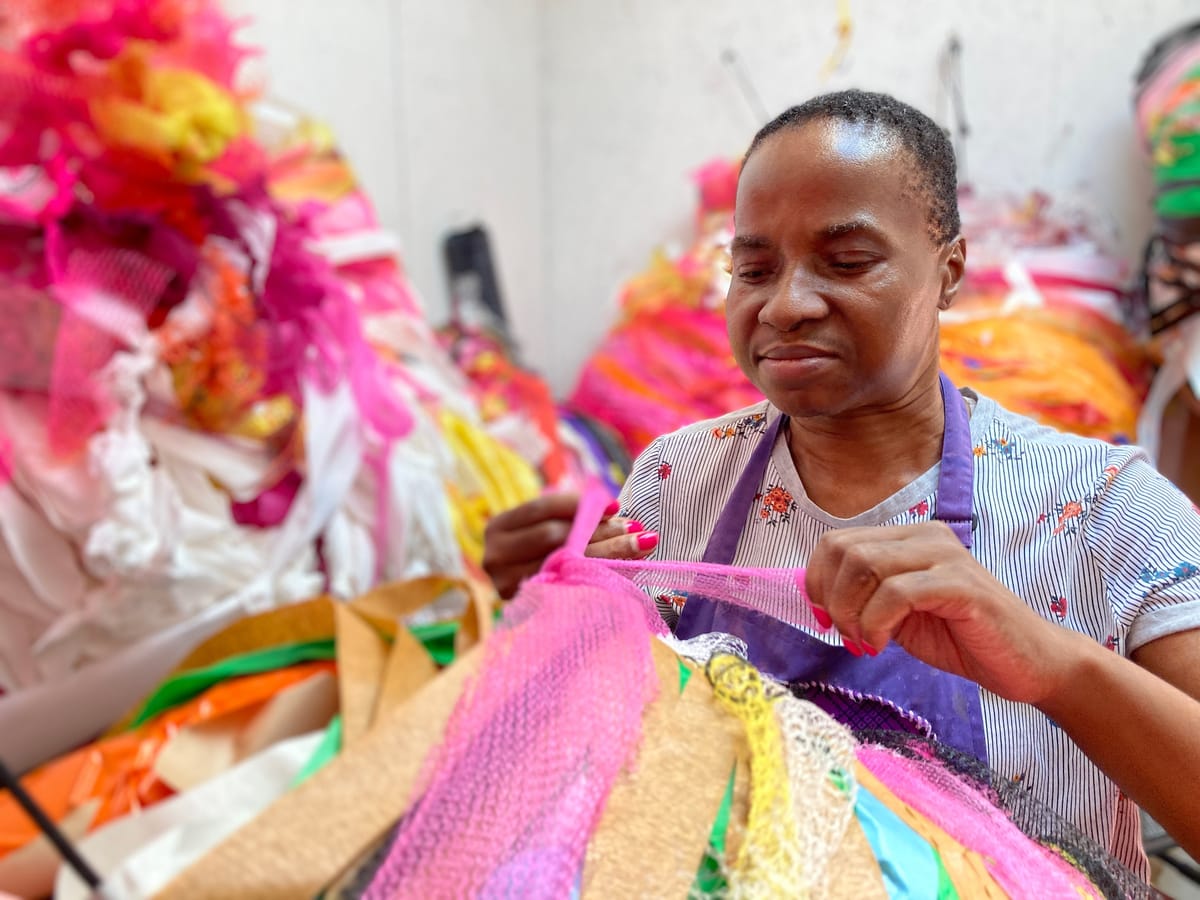
5 months agoNnena Kalu was ready for this nobody else was': how her Turner prize victory shook the art world
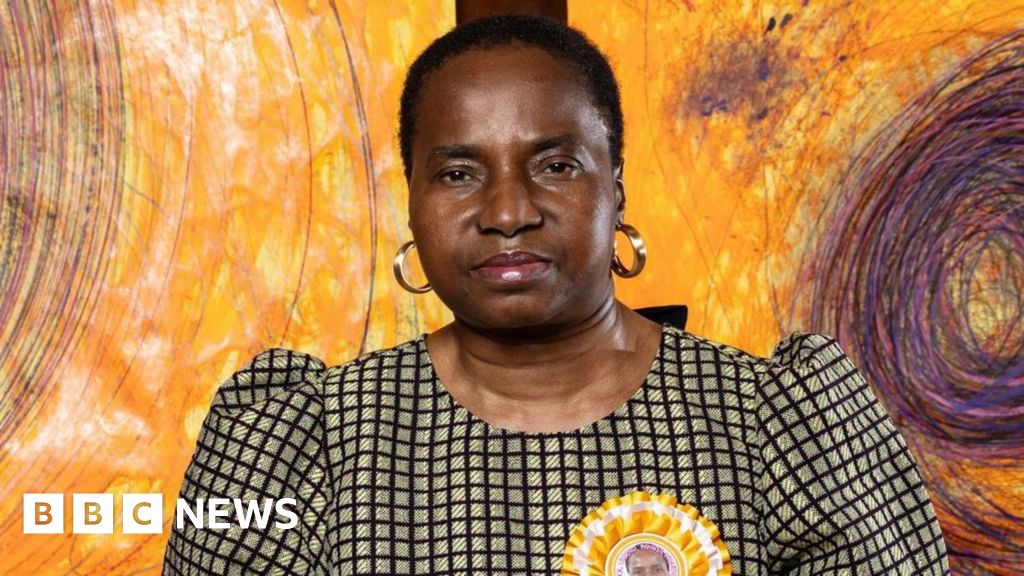
The morning after the Turner prize ceremony, the winner of the UK's most prestigious art award, Nnena Kalu, is eating toast and drinking a strong cup of tea. Everyone around her is beaming only a little the worse for wear after dancing their feet off at the previous night's party in Bradford, and sinking a couple of brandies back at the hotel bar. I say hello to Kalu, offer my congratulations, and admire the 59-year-old's beautifully manicured creamy pink nails.
Arts
fromThe Art Newspaper - International art news and events
5 months agoAdrian Villar Rojas's new sculpture explores 'existential anxieties'
"Language is technology that we use to address and name things, a tool we use to communicate," Villar Rojas said at the sculpture's unveiling. "But what happens when language isn't enough to communicate with someone else? When you cannot address this 'other'? I think that's when conflict appears. When you can't really communicate, you start to speculate on the intelligence of that person. So language is the enemy."
Arts
fromHyperallergic
5 months agoRequired Reading
For Lankton, dolls were more than just kitschy objects - they were powerful, emotional extensions of herself. "(My dolls) are all freaks. Outsiders. Untouchables," she once said. "They're like biographies - the kind of people you'd like to know about. Really interesting and fucked up." Lankton's dolls were born as much from necessity as from imagination. "She wasn't allowed to have a doll as a kid," Monroe tells Dazed. "So, she made them - first with flowers, then with socks.
Arts
fromThe Art Newspaper - International art news and events
5 months agoSculptor Alma Allen officially selected to represent US at 2026 Venice Biennale
Confirming earlier reports that his selection had been delayed by the 43-day United States government shutdown, the US State Department on Monday (24 November) confirmed that the Utah-born, Mexico-based sculptor Alma Allen will represent the US at the 2026 Venice Biennale. Allen's US Pavilion exhibition, Alma Allen: Call Me the Breeze (9 May-22 November 2026), is being organised by Jenni Pardo, the pavilion's commissioner and the founder of the organisation , and the independent curator Jeffrey Uslip.
Arts
fromARTnews.com
5 months agoChristie's 21st-Century Evening Sale Sets Auction Records for Three Women Artists
Báez's monumental 2021 painting Untitled (Colonization in America, Visual History Wall Map, Prepared by Civic Education Service) sold for $1,111,250, setting a new record for the Dominican-born artist whose work interrogates colonial histories through layers of archival maps, Caribbean symbolism, and swirly swaths of paint-in this case, densely rendered feathers. Brown's After the Alcatraz Swim #2 achieved $596,900, a benchmark for the Bay Area Figurative artist whose psychologically charged self-portrait draws from a near-fatal 1975 swim in San Francisco Bay.
Arts
fromYanko Design - Modern Industrial Design News
5 months agoA Ring of Light: Ancient Symbols Meet Modern Art at Giza - Yanko Design
What makes this work so compelling is how it plays with reflection and perception. The polished aluminum surface doesn't just sit there looking pretty. It actively engages with its surroundings, capturing the shifting desert light, the blue Egyptian sky, and the ancient stones in a constantly changing display. Depending on where you stand and what time of day you visit, you're basically looking at a different artwork. It's responsive design taken to a literal, sculptural extreme.
Arts
Wine
fromLos Angeles Times
6 months agoThis California winery pairs its Pinot Noirs and Chardonnays with world-class art
The Donum Estate in Carneros houses the largest private winery sculpture collection, integrating monumental contemporary artworks into vineyard landscapes open to visitors by reservation.
Arts
fromThe Art Newspaper - International art news and events
6 months agoComment | I went to see Sarah Lucas and Damien Hirst sculptures in an ancient UK cave system-and it was eerily brilliant
Clearwell Caves hosted Back to the Cave: The Full Spectrum, showcasing roughly 70 contemporary sculptures by major artists within historic underground limestone caverns.
fromThe New Yorker
6 months agoMartin Puryear Changes the World Through Wood
'Sanctuary' is a reminder of just how singular an artist Puryear is. It's a serious work of contemporary art that seems to have fallen out of a fairy tale-not the monophonic Disney kind but the capricious, found-object kind collected by the Brothers Grimm, in which the moral is oblique, anything can come to life, and nobody leaves unscathed. Born in 1941, Puryear came of age at a time when sculpture was flexing its muscle through intimidating scale, conceptual rigor, and protractor-perfect geometries.
Arts
fromMetro Silicon Valley | Silicon Valley's Leading Weekly
6 months agoSan Jose Museum of Art Celebrates Work of ektor garcia
For artist ektor garcia, no piece is ever truly finished-only paused. His sculptures, built from hours of crocheting, weaving and casting, resist the idea of permanence. In Loose Ends, garcia's first solo museum exhibition in his home state of California, San José Museum of Art presents his sprawling installation, and more works, that embody his ethos of continual transformation.
Arts
Arts
fromdesignboom | architecture & design magazine
6 months agoliu wei to transform the MET's fifth avenue facade with site-specific sculptures in 2026
Beijing-based artist Liu Wei will install four large-scale sculptures on The Metropolitan Museum of Art's Fifth Avenue facade, unveiled in fall 2026.
fromdesignboom | architecture & design magazine
7 months agoraul de lara carves surreal wooden sculptures to question who gets to belong
De Lara transforms everyday tools, plants, and furniture into anthropomorphic and surreal forms. These works act as vessels of memory, resilience, and humor, but also as pointed reflections on the immigrant experience, queer identity, and the liminal space of DACA status, the temporary US policy that offers young undocumented immigrants protection from deportation and the ability to work legally, though without a path to permanent residency or citizenship.
Arts
Arts
fromstupidDOPE | Est. 2008
8 months agoYoshitoshi Kanemaki Explores Human Consciousness in Insight Prism | stupidDOPE | Est. 2008
Kanemaki carves wooden figures with fractured, overlapping expressions that materialize the multifaceted, shifting nature of human identity through prism-like, geometric distortions.
Artificial intelligence
fromYanko Design - Modern Industrial Design News
9 months agoLatest Structural Botany installation is an homage to clustered plant life - Yanko Design
Structural Botany: 25AP-263-43 explores art's intersection with nature through modular forms inspired by native plant growth patterns.
fromColossal
9 months agoTender, Cute, and Absurd, Rong Bao's Inflatable Sculptures Plug Into the 'Emotional Wobble'
"My fascination with inflatable structures began when I realized how absurd, tender, and unstable they could be-all at once. Unlike rigid materials, inflatables breathe, wobble, collapse, and revive."
Artificial intelligence
fromJuxtapoz
10 months agoJuxtapoz Magazine - Saman & Sasan Oskouei "Terra Forma" @ IRL Gallery, NYC
Artists Saman and Sasan Oskouei create abstract landscapes that visually intertwine elements of nature with contemporary industrial materials, offering a thought-provoking commentary on human-nature relationships.
Artificial intelligence
[ Load more ]