Writing
fromwww.nytimes.com
3 days agoJeffrey Wright on His Favorite Performances, Films, Foods and More
Technology serves as a tool of autocratic control, reflecting themes in Zamyatin's We' and Orwell's Nineteen Eighty-Four.
The design of this pantheon challenges the classic structures aiming to host the eternity. Unlike the traditional pantheons in the area, this project full of meaning and coherence balances unusual materials within the traditional enclave in the Requena cemetery.
Monia Ben Hamouda's work weaves calligraphy, material transformation and ancestral memory into sculptures and installations that oscillate between language and form. In conversation, we traced the conceptual and sensory threads of her practice, unfolding through key works that reflect on heritage, embodiment and translation. Using materials such as iron, stone and pigment, her installations become sites where history is not only referenced but physically felt.
Dörte Eißfeldt's photography is grounded in the experience of seeing: a relational seeing that holds in view not only the self and the world, but also the photographic object itself, which can act as a vital intermediary between the two. Making us encounter gentler close-ups of a neck pressed into sheets of silver, nebulated, spectral hands and snowballs that seem to glow far beyond the print's surface, her largely self-taught photographic practice probes phenomenological questions of appearance, perception and form.
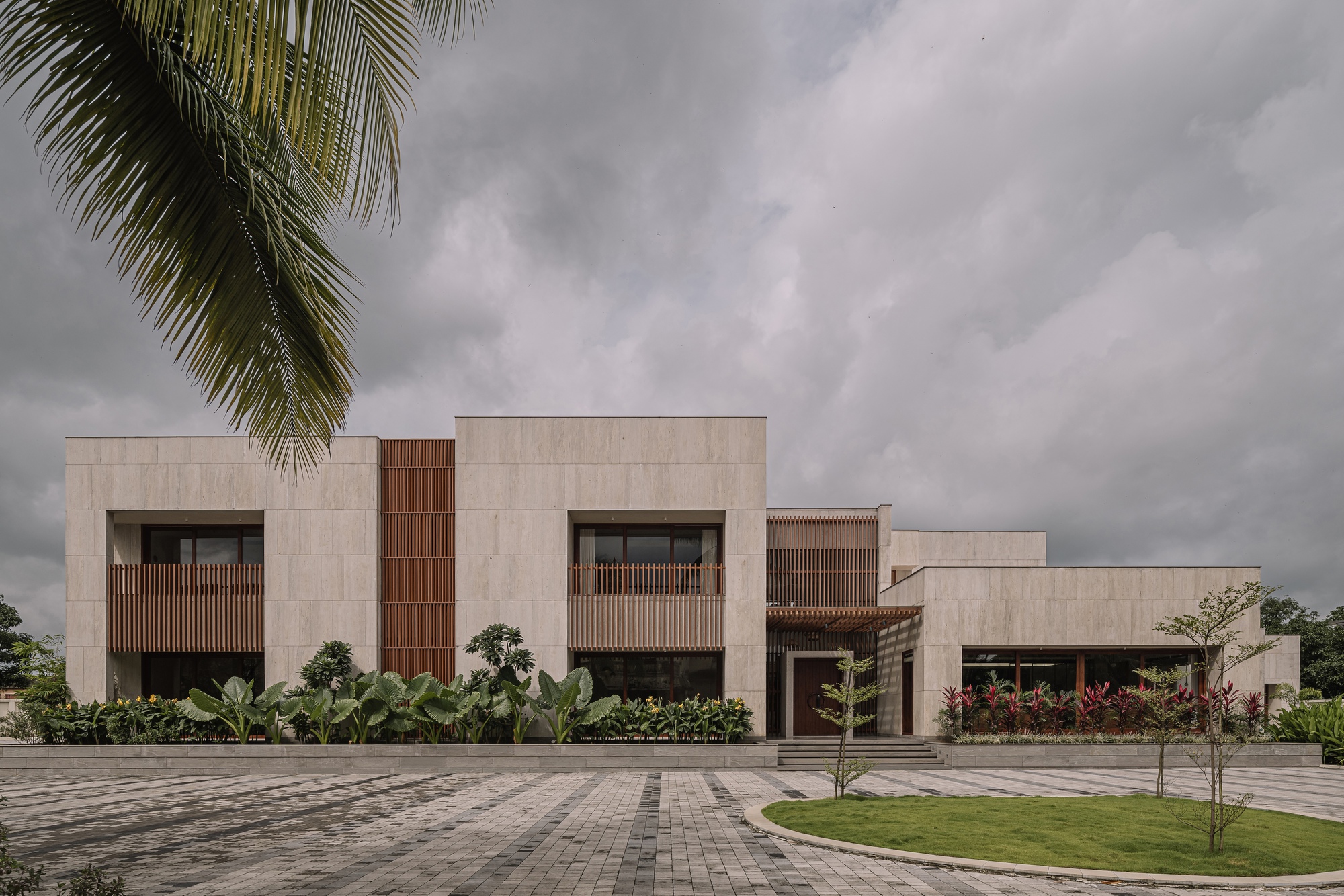
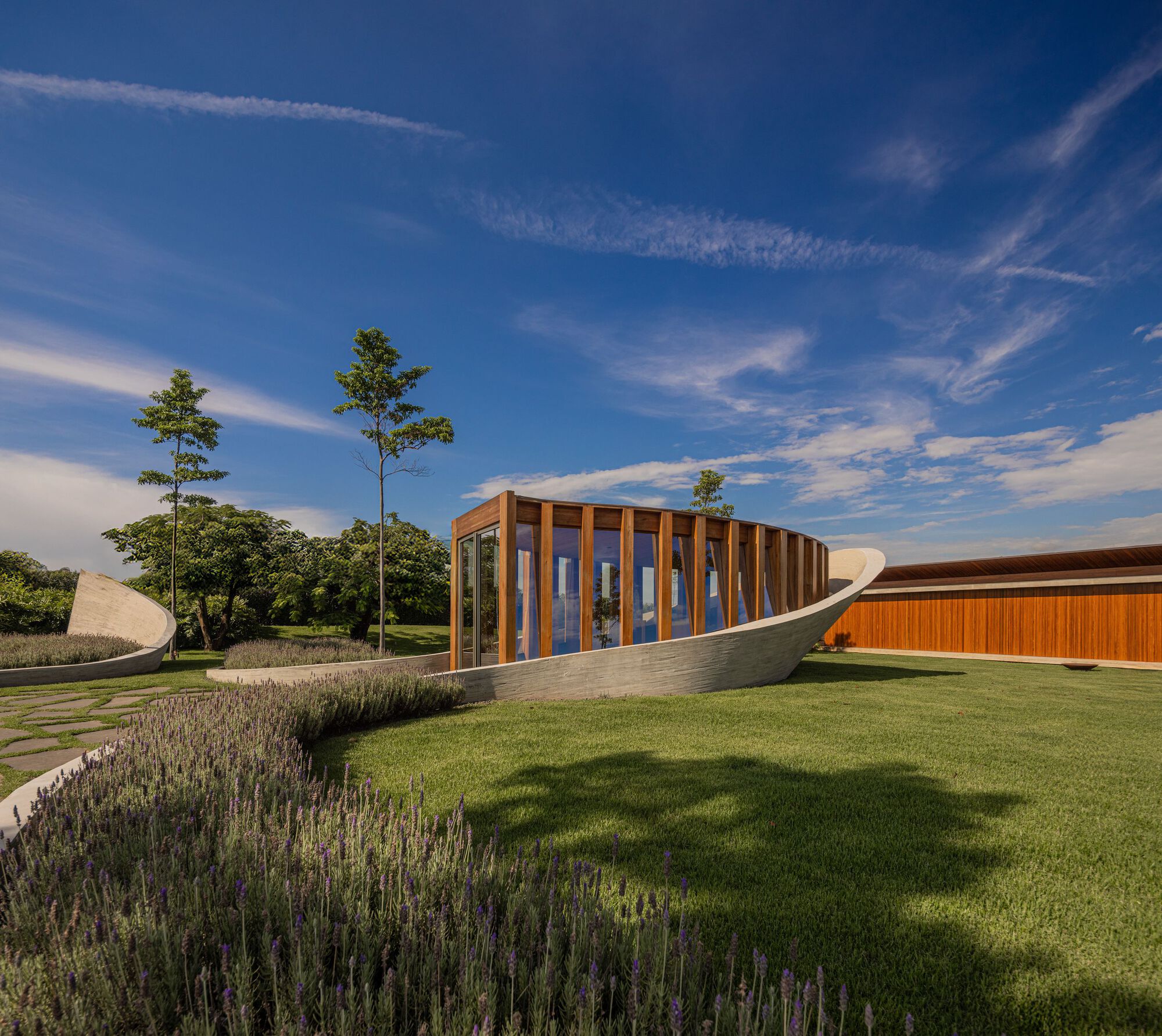
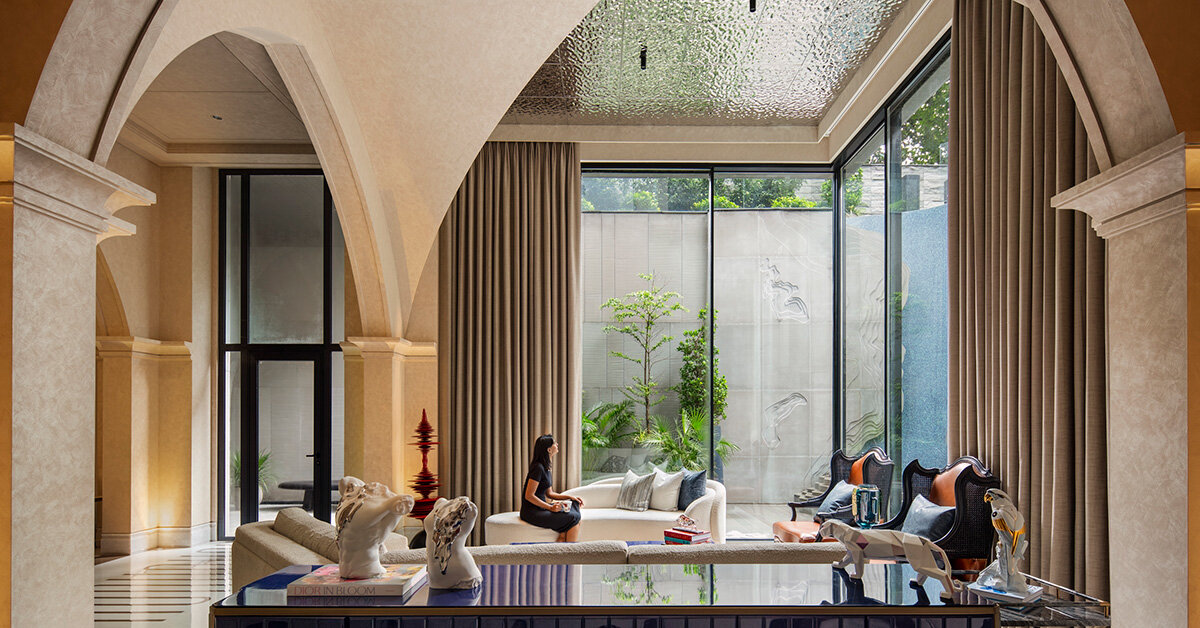
Turtle Arts Photography + 41 More SpecsLess Specs Turtle Arts Photography Text description provided by the architects. Vault House is conceived as a contemporary tropical residence that balances raw materiality with warmth, openness, and family-centric living. Designed for a multi-generational family comprising a couple, their daughter, and parents, the house responds to a clear client vision: a home that is unique, user-friendly, and deeply connected to natural light, ventilation, and greenery.
There's a particular kind of design intelligence that knows when to slow down. The Crydal Phantom Clock, designed by Daniel van der Liet, is one of those rare objects that rejects the frantic pace of modern consumer tech in favor of something more deliberate. It's a desk clock, yes, but calling it just a clock misses the point entirely.
PORT's building in Dobrzeń Mały reflects the re-emergence of viticulture in through a compact architectural structure designed to support wine production and storage. Positioned within rows of cultivated vines, the building is conceived as a restrained and functional volume informed by local agricultural typologies of the Opole region while addressing contemporary production requirements. The architecture consolidates multiple functions, including storage, warehousing, and small-scale wine production, within a single structure.
OSCAR MURILLO (b. 1986, La Paila, Colombia) has developed a multifaceted and challenging practice that spans painting, collaborative projects, video, sound and installation. Through each body of work, the artist probes ideas of collectivity and shared culture, demonstrating a commitment to the power of material presence alongside complex meditations on contemporary society. A focus on the social dimension that sits on the border between performance and events is also central to Murillo's practice.
In the valley of Pantalica, Italy, where more than 4,000 rock-cut tombs line the cliffs above the Anapo River, architect Leopold Banchini introduces Asympta, a temporary micro-architecture that shifts attention away from the necropolis and toward the unknown architecture of the living. Installed in Ortigia in 2025 and traveling to Pantalica in 2026 for the COSMO festival, the structure reflects on the prehistoric civilization embedded within the Syracusa-Pantalica UNESCO World Heritage landscape, proposing a speculative shelter rooted in place rather than in archaeological reconstruction.
A graphic designer that isn't limited to working in 2D, Ward Goes has been working in aluminium of late. His recent solo show in Rotterdam, Literally Anything, was full of things that moved beyond the screen or printed page, including some wonderful metal signage and archival storage. The exhibition at Alley Space was the result of the designer's decision to pursue more tactical investigations alongside his commissioned work at the start of 2025.
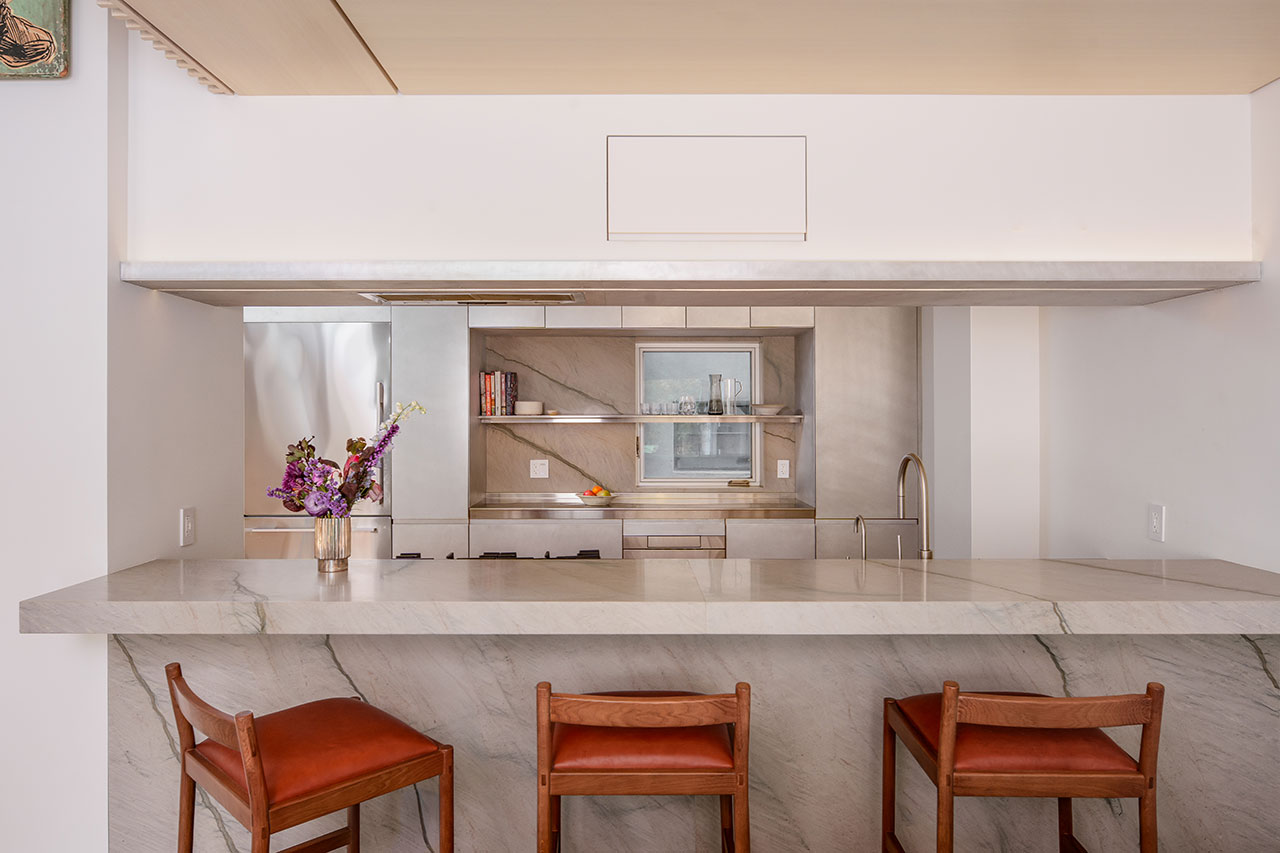
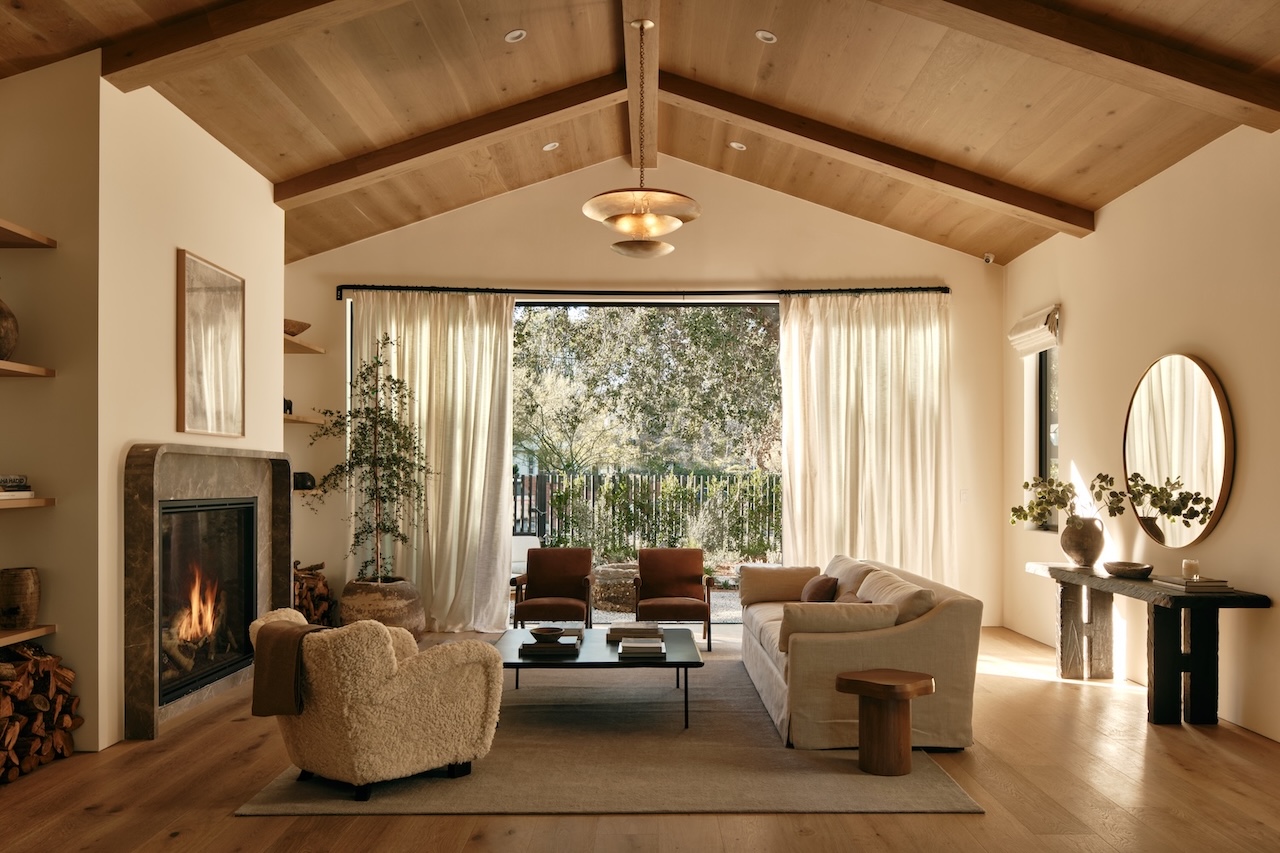
Bathed in natural light and nestled within the leafy calm of Pinecrest, this 6,000-square-foot Miami residence designed by Marcela Cure offers a counterpoint to the city's louder design cliches. Rather than leaning into high-gloss exuberance or overt tropical motifs, Cure composed an interior rooted in softness where material nuance, tactile restraint, and quiet warmth redefine what a Miami home can feel like.
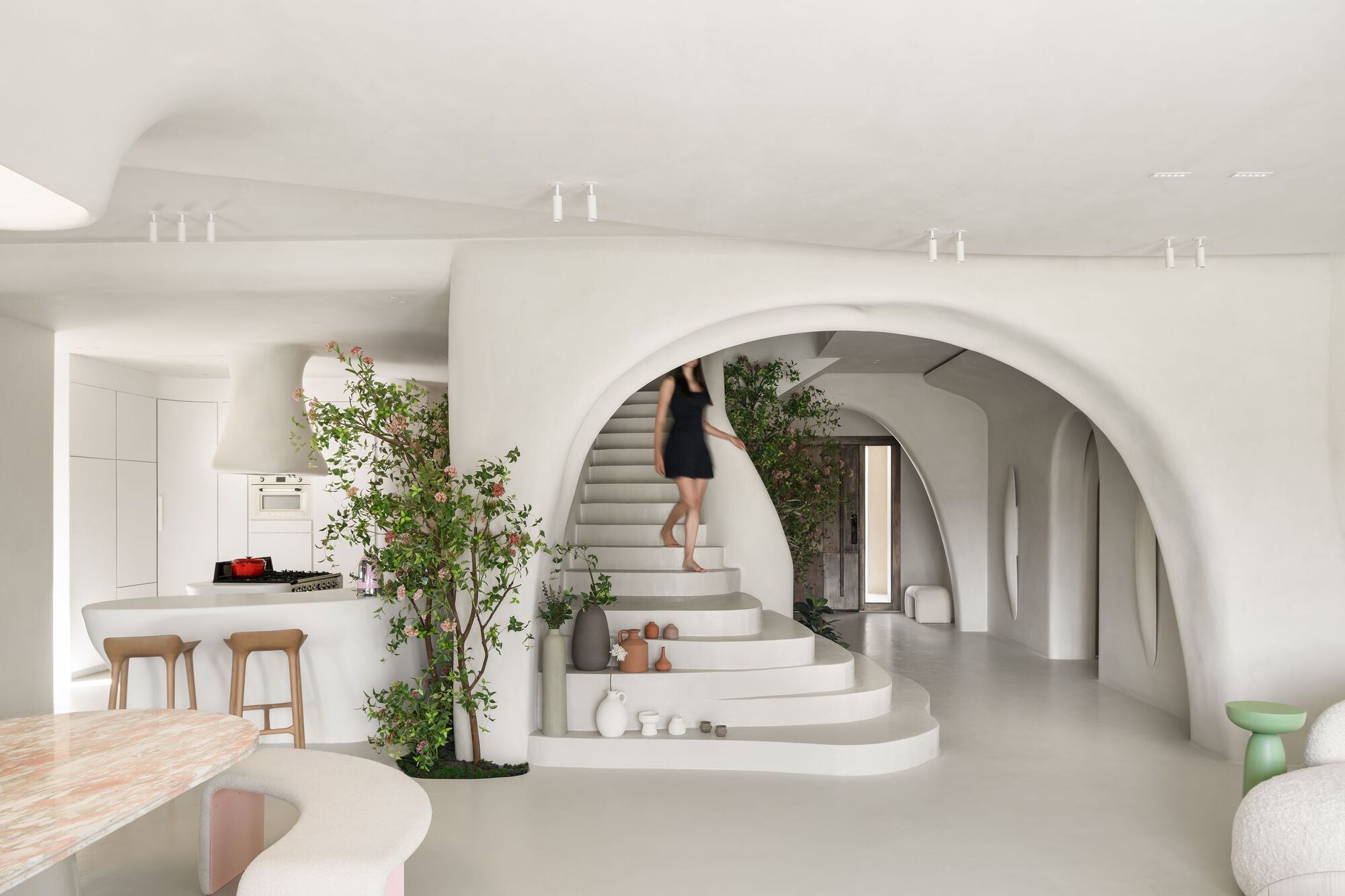
PENG & PARTNERS treats Marble as architectural medium Dreamer Stone House is a spatial project by PENG & PARTNERS that examines as an architectural medium rather than a surface finish or display material. Conceived as an immersive environment in , the project repositions stone as an active element shaping spatial rhythm, atmosphere, and sequence. Instead of presenting marble as a static object, the design integrates it into a continuous architectural narrative that unfolds through movement and perception.
Perched 39 floors above LA, with spectacular views of the local country club and Pacific Ocean beyond it, this Beverly Hills Penthouse by The Scale Collective prioritizes sanctuary over spectacle through deliberate material choices. Beauty entrepreneur Darya Pishevar cited Pierre Paulin's Pumpkin Chair as an early reference - a telling detail that moved the project away from typical high-rise polish toward something more grounded.
Much has been mythologised about Laurel Canyon in the 1970s, the loose hillside network of rented houses, recording studios, informal salons and open doors in the hidden in the Hollywood Hills. Musicians, artists and writers moving between kitchens, gardens and living rooms - stars like Joni Mitchell, The Byrds, The Doors, Frank Zappa are said to have played songs for one another, partied, took drugs and slept with each other, living freely while writing the music we still listen to today.
The penthouse residence by Metaphors is defined by a balance of extremes, where bold neo-classical elements are combined with the raw mass of brutalism. The architectural program rejects a singular aesthetic, instead opting for a material collision that pairs deep-veined, sculpted marbles with intricately detailed ceilings and embossed wall panels. This allows the residence to function as a versatile home, shifting between an expansive stage for high-society hosting and a series of intimate, quiet sanctuaries for family life.
Cubism and Reality is his return to the works by Georges Braque, Pablo Picasso and Juan Gris that define early Cubism. The book has many strands but turns around a highly informed reconstruction of the processes by which their interactions with reality resulted in physical works of art, what Green terms "material things to be looked at". The revolutionary works discussed remain visually difficult; as he acknowledges, they are "most often only slowly penetrated by looking, imagining, reflecting and looking again".
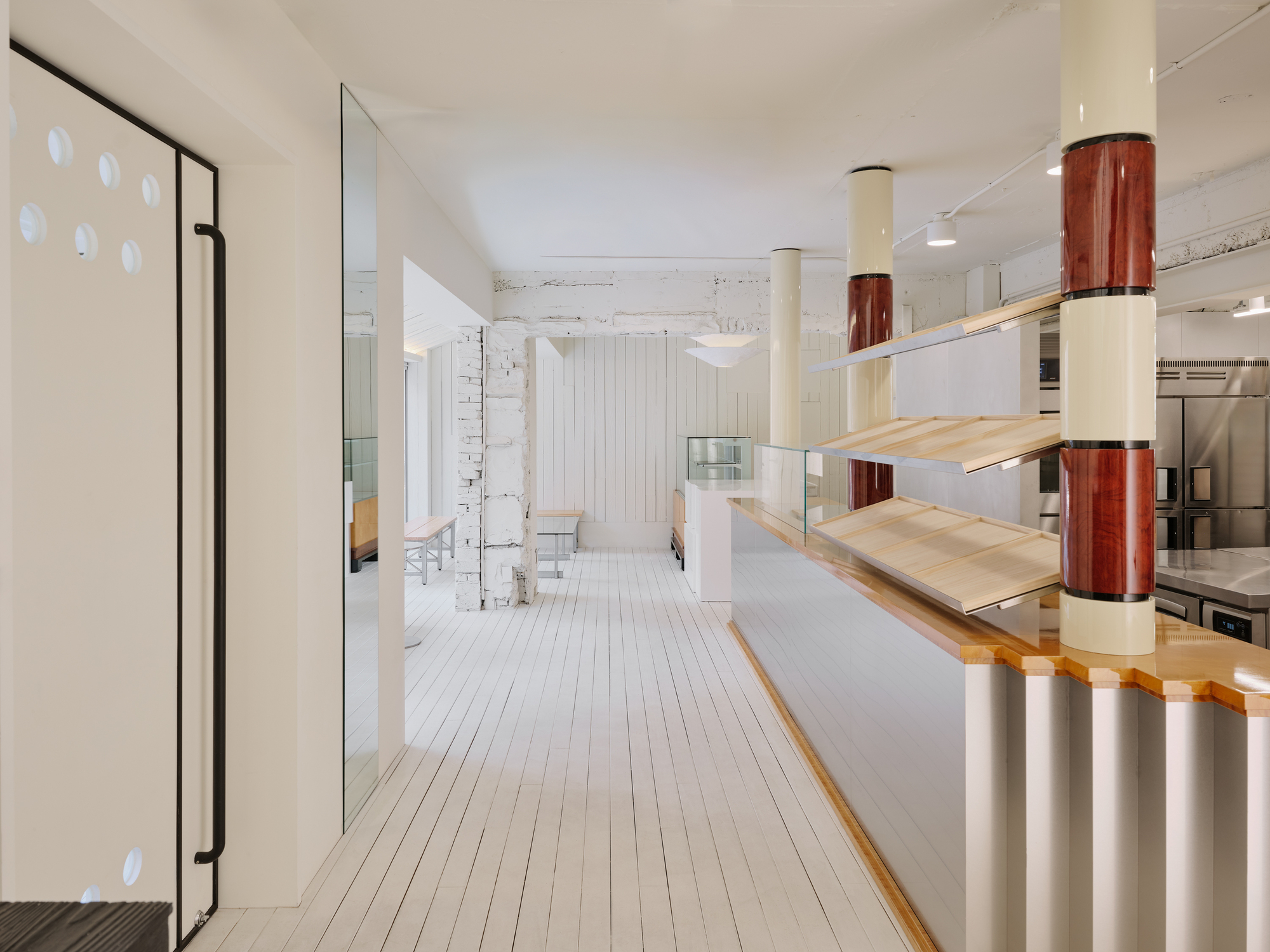
Text description provided by the architects. An Mien is a coffee brand built on pride in the authentic values of quality coffee, closely associated with the image of the roasting workshopwhere aroma, heat, and the rhythm of industrial operations coexist. The space is conceived as an extension of this spirit, where the act of enjoying coffee is framed through materiality, light, and emotion.
Quiet and understated, the show presents the work of 17 artists, who are either represented by the gallery or part of its wider network. In the exhibition text, the smallness in question is discussed not on the level of "scale or spectacle," but rather speaks to the idea of "concentration over expansion." The intention of the exhibition, positioned as a "living index," very much depends on where we place our attention.
Brutalism once suggested stark, monumental forms, with raw concrete presented in uncompromising honesty. Today, that legacy is evolving into a softer interior design language: Soft Brutalism. Rather than a contradiction, it becomes a thoughtful fusion where concrete is shaped into gentler, more human-centered forms. This shift responds to a culture saturated with disposable design and offers a return to authenticity, weight, and permanence.
Perched at 10,600 feet in Colorado's Rocky Mountains, this home is a quietly powerful study in restraint, trust, and dialogue with the landscape. Designed by Gabriel Yuri of New Operations Workshop as an addition to his parents' retreat, the project balances a charred Shou Sugi Ban exterior with a luminous, oak-lined interior. Rooted in Japanese and Scandinavian traditions yet unmistakably American, the house preserves the original structure while reframing it around light, views, and family life.
Light, for instance, is not only a technical requirement but also an architectural material in its own right. It can structure space, animate surfaces, define textures, and shape atmosphere while influencing well-being. At the same time, the characteristics between minimalism and maximalism shape how atmospheres are perceived, prompting reflection on how approaches to simplicity or exuberance might influence mood. Rather than existing as opposing aesthetics, these tendencies explore how interiors interact with mental states, reflect personal identity.
THE MAGARIGAWA CLUB Clubhouse is nestled into the forested hills of Chiba, Japan as a study in managed contradiction - a private driving club's hospitality venue where Joyce Wang Studio choreographed the psychological arc of high-performance driving into architectural form. Automotive culture demands contradictions that few spaces manage to resolve - the heightened alertness required for performance driving exists in direct opposition to the restoration needed afterward.
Over time, shelters began to be made from materials found in nature, such as branches, leaves, and animal skins, evolving into more permanent and complex homes, with walls made of stone, bricks or wood, roofs to protect against rain and sun, and doors to control access. As we developed more advanced building skills, we used materials such as wood, stone, and clay and architecture evolved significantly, with the construction of temples, palaces, and fortifications.
The project translates the Spanish brand's concept into architecture through a physical vocabulary of texture and reflective materials. The design is anchored by a system of soft modules - foam-filled cushions wrapped in sustainable metallic Italian fabric - referred to as 'rellenos,' the Spanish word for 'fillings.' These elements line the space in a geometric grid, shaping an interior that is both tactile and immersive. Each piece reflects the product's essence: the act of filling, of enclosing something within.



.jpg)