#rijksakademie
#rijksakademie
[ follow ]
#contemporary-art #art #architecture #art-exhibitions #art-fairs #lacma #photography #sustainability

fromArchDaily
4 days agoV&A East Museum by O'Donnell + Tuomey to Open in East London's Cultural Quarter
The two-building complex aims to spotlight the many ways global artists, designers, and makers use creativity to shape the world, dedicated to creative opportunity and its power to bring change.
London

fromArtnet News
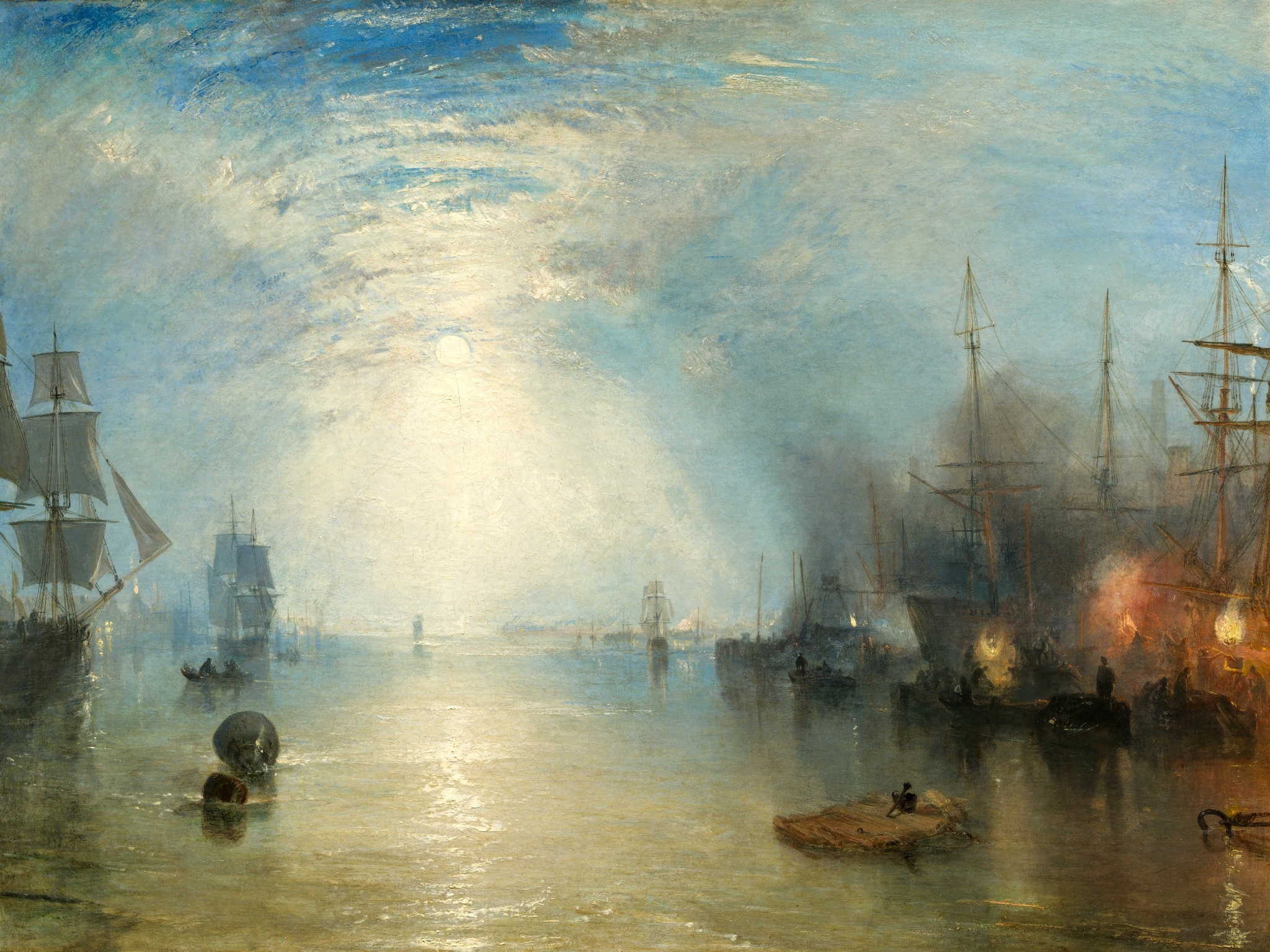
4 days agoPainting Has Entered Its Performance Era | Artnet News
Much of Instagram's video content is organized around transformation-the virtual magic of the before-and-after and clips that show cause and effect. A person makes pasta from scratch in 20 seconds via edits that compress time-intensive labor.
Arts
Design
fromwww.archdaily.com
1 month agoArt Center / FELT architecture & design + Oskar architecten
The Arts Campus 'Kunst-As' in Asse anchors cultural institutions with an L-shaped design that frames a protected chapel, completes the city block, and connects public spaces with a revived cloister garden.

fromArtnet News
6 days agoThe "Next Asian Art Hub" May Be the Wrong Question
In both places, there was a sense of energy building that was not yet fully visible. The experiences made me realize that, while sales totals and fair brands can serve as benchmarks of centrality, slower, structural transformations are taking place throughout Asia that merit closer attention.
Arts
fromItsnicethat
1 month agoHow does a creative residency impact your practice? Quite a lot, according to these artists
Her practice uses clay to bring people together with the "therapeutic aspects of tactile making". She first came to ceramics during university, where access to the department allowed her to fall in love with the practice. And so, Ciara is deeply cognisant of the importance of supporting those who struggle to access a ceramics studio due to various social factors.
Online Community Development
fromNew York Amsterdam News
1 month agoCity grant enlists Black and Brown artists to build community and prevent hate crimes
Community-led work is critical to preventing hate and addressing the conditions that allow bias to take hold. These grants support New Yorkers who are doing the hard, meaningful work of bringing people together, strengthening relationships, and helping build a city where everyone belongs.
NYC politics
Miscellaneous
fromJuxtapoz
1 month agoJuxtapoz Magazine - No Longer, Not Yet-Paintings on Paper: Jonathan Wateridge @ GRIMM, Amsterdam
Jonathan Wateridge's paintings on paper capture erased moments and lost states from his larger canvas work, staging uncanny midcentury Los Angeles scenes with psychological tension and ambiguous narrative.
fromdesignboom | architecture & design magazine
2 months agoa former coffee warehouse in rotterdam begins its second life as the nederland fotomuseum
The heavy brick mass of the early twentieth century warehouse stands steady at the corner, its facades still marked by decorative lintels and deep-set openings. Above, two added floors sit within a perforated aluminum veil that glows softly at dusk. The metal skin reads as a light canopy hovering over the old masonry, a precise intervention that contrasts the museum's new public life with its working past. See designboom's previous coverage here.
Photography
Arts
fromIrish Independent
2 weeks ago'You have to step in and experience it' - artists on the rise of AI-generated art and the 'essential' gallery visit
Miriam Fitzgerald Juskova's exhibit combines paper quilling with mathematics, showcasing intricate art that engages viewers and emphasizes the value of handmade creations.
Design
fromSmashing Magazine
1 month agoSay Cheese! Meet SmashingConf Amsterdam - Smashing Magazine
SmashingConf Amsterdam (April 13-16, 2026) brings together designers and UI engineers for a single-track conference featuring live design work, practical workflows, and community-focused learning in an intimate venue.
Design
fromThe Art Newspaper - International art news and events
2 months agoHow an artist's sketch was turned into a museum
A museum design translates a blue-house and white-tower sketch into a tiled architectural language reflecting regional materials, cultural markers, and historic South–West Asian trade links.
fromHyperallergic
1 month agoWhat Do We Really Think of the New New Museum?
The new New Museum is many things: contemporary, perhaps, but also a science, history, anthropology, and many other museums in one. It echoes the desire of its patron class to own the world and its affiliated courtier class to deliver it to them on a silver platter, or encased in perforated metal, in this case.
Arts
Arts
fromHyperallergic
1 month agoPratt's 2026 Fine Arts MFA Thesis Exhibitions, on View This Spring
Pratt Fine Arts presents a two-part MFA thesis exhibition at Dock 72 featuring seventeen graduating artists exploring material conditions of visibility through painting, sculpture, printmaking, and integrated practices.
fromThe Art Newspaper - International art news and events
1 month agoHelen Legg appointed artistic director of London's Royal Academy of Arts
The RA is led by leading artists and architects, with the UK's oldest-and, crucially, free-art school at its heart. The opportunity to shape the RA's artistic programme and respond to its extraordinary gallery spaces, as well as launching the expanded Collection Gallery, is tremendously exciting.
Arts
fromThe Art Newspaper - International art news and events
1 month agoCan Tefaf Maastricht keep up with the experience economy?
Looking at old art gives me a sense of craftsmanship, of what can be achieved with paint. There is nothing comparable with Tefaf. The atmosphere of quality is unmatched. Contemporary art collectors are discovering value in historical works and the fair's curatorial standards, representing a potential shift in how different collector demographics engage with art across temporal boundaries.
Arts
fromHyperallergic
1 month agoEmbracing Friction in the Art World
On Franklin Street in Brooklyn's Greenpoint neighborhood, one non-commercial gallery fosters 'a small, stubbornly human space for friction.' Friction—the ubiquitous buzzword that captures the simultaneous delight and discomfort of doing things the slow way—is at the heart of artists Pap Souleye Fall and Char Jeré's current show at Subtitled NYC. It also reflects the overall spirit of this little exhibition space and of a burgeoning movement to reject our culture of optimization in favor of a bumpier, more intimate, less alienating experience.
Arts
fromThe Art Newspaper - International art news and events
1 month ago'What does the second F in Tefaf truly stand for?'
In establishing the fair, a foundation (stichting in Dutch) seemed the most fitting legal entity for the purpose of creating an event 'run by dealers, for dealers... so that nobody had an advantage over anybody else.' That Tefaf operates as a not-for-profit differentiates it from other major art fair brands. There are no shareholders demanding a return, no owners to primp the thing for sale.
Arts
Arts
fromThe Art Newspaper - International art news and events
1 month agoThoroughly Modern Tefaf: why the Maastricht fair is embracing the 20th century
Tefaf Maastricht thrives as a premier art fair despite management instability, attracting galleries seeking Old Masters and 20th-century secondary material in a slower, more deliberate market.
fromThe Art Newspaper - International art news and events
1 month agoTefaf Maastricht: the wish list
This first edition book of Shakespearean poems was published by Kelmscott Press, the private press founded by the English designer and author William Morris in 1891. This example is covered in an opulent, bejewelled binding from the renowned London bookbinders Sangorski and Sutcliffe. The decoration, set with mother-of-pearl and more than 100 precious stones, takes inspiration from the sonnets inside.
Arts
Arts
fromThe Art Newspaper - International art news and events
1 month agoTefaf Maastricht: exhibitions to see beyond the fair
Three major European museums present ambitious exhibitions featuring birds in art, Ovid's Metamorphoses across centuries, and Yayoi Kusama's polka dot installations celebrating artistic themes of freedom, mythology, and contemporary creativity.
fromArtnet News
1 month agoIndigenous Australian Art Finds a New Audience at TEFAF Maastricht
The gallery's inaugural presentation marked the first time Australian First Nations art had been presented at TEFAF Maastricht, and with sales totaling nearly $1.4 million, further underscored the growing relevance and interest in the category. Building on the momentum of the 2025 presentation, D Lan Galleries will now focus on works dating from the 1970s through today by artists whose practices have shaped the evolution of Australian Indigenous art.
Arts
Arts
fromThe Art Newspaper - International art news and events
1 month agoLondon's Delfina Foundation launch residencies for Latin American and Caribbean artists
Jorge and Darlene Pérez are funding four fully funded Delfina Foundation residencies in London prioritizing Latin American, Caribbean and related US diaspora artists.
fromHyperallergic
2 months agoOnassis AiR Opens Applications for 2026-27 Residencies in Athens
After six successful years supporting nearly 250 fellows from around the world, the artistic research and residency program Οnassis AiR has become a container of cross-disciplinary exchange among local and international art practitioners and researchers. Process, research, and experimentation are at the core of the residency: participants are invited to delve deeper into their practice without the pressure of presenting a final work.
Arts
fromArtnet News
2 months agoThe Dutch Gallery Bringing Eyes to Armenia's Contemporary Art Scene
While Armenia has long been recognized for its rich and storied historical art and culture, the country's contemporary art scene is emerging as one to watch on a global scale. Armenian artists stand out for their ability to synthesize their own cultural heritage with avant-garde approaches to contemporary artmaking, bridging tradition with self-expression. Paralleling broader rising critical and market interest and investment in regions outside of the West, ARAR Gallery of Utrecht, the Netherlands, is at the forefront of Armenian art's mounting international presence.
Arts
Arts
fromThe Art Newspaper - International art news and events
2 months agoDutch national photo collection opens in new Rotterdam home
Nederlands Fotomuseum reopens in Rotterdam on 7 February across nine floors, showcasing 6.5 million photographic items, fragile rotating displays, and visible conservation archives.
Arts
fromwww.theguardian.com
2 months agoFrom nightmarish noir to Bolero on trampolines: the audacious Holland Dance festival hits dizzy heights
Horses transforms urban detritus into giant lighting props, blending film-noir chiaroscuro, unsettling sound and animalistic choreography into a disorienting theatrical nightmare.
fromHyperallergic
1 month agoIDSVA Extends PhD Program to BA and BFA Applicants
IDSVA's pioneering curriculum - fusing interactive online education with intensive residencies- allows working art professionals to pursue rigorous advanced scholarship without having to interrupt or abandon their teaching careers, art practice, or other professional responsibilities. You don't have to choose between your current work and your intellectual growth - our program is designed for both.
Arts
fromHyperallergic
2 months agoThe Biennale Certificate in Philosophy and Art
designed by the Institute for Doctoral Studies in the Visual Arts (IDSVA) and philosopher Giovanbattista Tusa (Visiting Faculty, Independent Study and Dissertation director) for curators, artists, researchers, and cultural practitioners seeking to engage with the living context of the Venice Biennale. Over four days, participants will move through a sequence of philosophical orientations - Rooting, Growing, Branching, and Cultivating Futures- that frame art as a mode of world-disclosure and situated intervention.
Arts
[ Load more ]