#live-reunion
#live-reunion
[ follow ]
#social-media #friendship #meta #technology #nostalgia #whatsapp #mental-health #remote-work #communication
#friendship

fromSilicon Canals
4 days agoPsychology
Psychology says good people with no close friends aren't the difficult ones - they're the ones who asked too little, gave too readily, made themselves so easy to be around that nobody ever felt the particular friction that closeness actually requires - Silicon Canals


Psychology
fromSilicon Canals
2 weeks agoThe friends you made between 19 and 24 know a version of you that your current partner, your therapist, and your coworkers will never meet. And the grief isn't about losing those friends. It's about losing access to the person you were with them. - Silicon Canals
Friendships formed between ages 19 and 24 serve as an identity archive, reflecting a version of oneself that no longer exists.
Psychology
fromSilicon Canals
4 days agoPsychology says good people with no close friends aren't the difficult ones - they're the ones who asked too little, gave too readily, made themselves so easy to be around that nobody ever felt the particular friction that closeness actually requires - Silicon Canals
Being overly agreeable can lead to loneliness, as it prevents deeper connections and true closeness in friendships.
Relationships
fromSilicon Canals
5 days agoPsychology says the loneliest part of getting older isn't being alone - it's realizing that some friendships were only meant for a season, and not everyone grows with you - Silicon Canals
Friendships often fade as adults prioritize responsibilities and seek deeper connections, leading to feelings of loneliness even among familiar faces.
Psychology
fromSilicon Canals
2 weeks agoThe friends you made between 19 and 24 know a version of you that your current partner, your therapist, and your coworkers will never meet. And the grief isn't about losing those friends. It's about losing access to the person you were with them. - Silicon Canals
Friendships formed between ages 19 and 24 serve as an identity archive, reflecting a version of oneself that no longer exists.

Relationships
fromSilicon Canals
1 day agoThe boomer generation that hosted every holiday for 40 years is now waiting to be invited and most of their kids don't realize how much that silence hurts - Silicon Canals
Generational shifts in family gatherings lead to a decline in traditional hosting roles, leaving older generations feeling forgotten and disconnected.


#social-media
Media industry
fromTechCrunch
8 hours agoSaySo is a new short-form video app that aims to restore users' trust in news | TechCrunch
SaySo is a new app that curates news from vetted creators to combat misinformation and enhance user trust.
Mental health
fromPsychology Today
1 day agoThe Verdict on Social Media Addiction
Recent verdicts against Meta and YouTube indicate social media harm is linked to platform design, particularly affecting adolescents' mental health.
Social media marketing
fromPsychology Today
23 hours agoWhy Are We So Dependent on Social Media?
Social media's addictive design and users' need for identity and community contribute to deep dependence on these platforms.
Mental health
fromEngadget
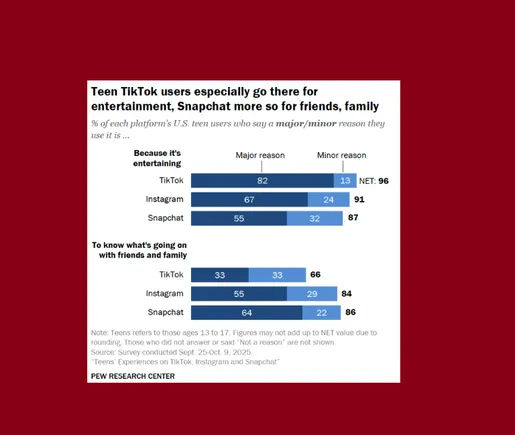
2 days agoMost US teens say TikTok, Instagram and Snapchat aren't hurting (or helping) their mental health
Most teens report social media apps like Instagram, TikTok, and Snapchat do not harm their mental health, but some experience negative effects on sleep and productivity.
Mental health
fromEngadget
2 days agoMost US teens say TikTok, Instagram and Snapchat aren't hurting (or helping) their mental health
Most teens report social media apps like Instagram, TikTok, and Snapchat do not harm their mental health, but some experience negative effects on sleep and productivity.
fromTechCrunch
2 days agoFathom adds a bot-less meeting mode in a bid to take on Granola | TechCrunch
A lot of these bot-less tools don't indicate who said what in their captured transcript. Many people face problems with misattribution when they ask their meeting note-taker a question about what they might have said in a particular meeting a few months ago.
Roam Research
#generational-differences

Digital life
fromBuzzFeed
1 month agoOlder People Are Sharing The Everyday Experiences From The Past That Are Suuuuuper Rare Now
Older adults describe everyday experiences from the 1950s-1980s that no longer exist today, including shared phone lines, elevator attendants, accessible firearms in public spaces, and inexpensive concert tickets.
Digital life
fromBuzzFeed
1 month agoOlder People Are Sharing The Everyday Experiences From The Past That Are Suuuuuper Rare Now
Older adults describe everyday experiences from the 1950s-1980s that no longer exist today, including shared phone lines, elevator attendants, accessible firearms in public spaces, and inexpensive concert tickets.
Relationships
fromSilicon Canals
2 days agoI'm 66 and I've watched myself become distant from people I genuinely care about - not because I stopped loving them, but because somewhere in my sixties I realized that most of my relationships were being kept alive by effort that only moved in one direction - Silicon Canals
Relationships often require one-sided effort, leading to realizations about who truly values the connection.
#friendship-apps
Online Community Development
fromTechCrunch
1 month agoAs people look for ways to make new friends, here are the apps promising to help | TechCrunch
Friendship-focused apps have emerged as a solution to rising loneliness, generating $16 million in U.S. consumer spending with 4.3 million downloads in 2025.
Mental health
fromSilicon Canals
6 days agoThere's a kind of exhaustion specific to people who grew up in the 1960s and 70s - not physical tiredness but the cumulative weight of having been reliable for so long, for so many people, with so little reciprocity, that they genuinely cannot remember what it felt like to be the one who was taken care of - Silicon Canals
Reliability can overshadow personal identity, leading to emotional exhaustion and a lack of self-care.
Social media marketing
fromwww.theguardian.com
4 days agoSocial media was once a great global conversation. Now it's just individuals locked into their own private worlds | Tom Whyman
Twitter once felt like a global conversation platform that shaped personal relationships and values, but usage has significantly declined over time.
Travel
fromBusiness Insider
1 month agoMy best friend and I went our separate ways after college. We reconnect every year on a trip we call 'bestiecation.'
Two friends with divergent post-college paths maintain their bond through annual vacations, prioritizing their friendship despite living different lives.
fromBusiness Insider
2 months agoWhen my kids went to college, I missed our family dinner nights. Virtual get-togethers give me the connection I crave.
In my family, Sunday was always family dinner night. Whether the Packers earned another triumphant win, a swim meet went late, or a last-minute homework assignment loomed on Monday morning, that time to eat and enjoy each other's company was an appointment that could not be canceled. When my two boys headed off to college, Sundays became more subdued. Yes, my husband and I opened a bottle of wine and enjoyed our dinner leisurely, but I craved more.
Food & drink
fromFortune
2 months agoTwenty-somethings discover nostalgia, throwing back to a carefree time before the 'dark days': 2016 | Fortune
Over the past few weeks, millions have been sharing throwback photos to that time on social media, kicking off one of the first viral trends of the year - the year 2026, that is. With it have come the memes about how various factors - the sepia hues over Instagram photos, the dog filters on Snapchat and the music - made even 2016's worst day feel like the best of times.
World news
Social media marketing
fromMuse by Clios | Discover the latest creative marketing and advertising news. Muse by Clio is the premier news site covering creativity in advertising and beyond.
1 month agoPSA: Your Gran Misses Your Instagram Posts | Muse by Clios
One-third of social media users post less than a year ago, while still spending over two hours daily scrolling, as algorithmic feeds prioritize ads and influencer content over authentic peer connections.
fromABC7 San Francisco
2 months agoTimeline: Looking back at 22 years of Facebook and CEO Mark Zuckerberg
SAN FRANCISCO (KGO) -- Wednesday marks exactly 22 years since Meta CEO Mark Zuckerberg created Facebook. The platform has evolved from its original goal of connecting college students in 2004 when it launched, to a dominant platform for AI-driven discovery and commerce in 2026. Feeds that used to prioritize chronological updates from friends now use AI to pick up on interests and behavioral signals in deciding what to serve up its users.
Tech industry
fromThe Drum
2 months agoThe next generation of social networking
Whilst many of the tools of social media - blogs, ugc, forums - are now increasingly brought into new web design and development, there are companies, from British Airways to Lego who view social media as the starting point - not the added feature. Others, such as ruumz.com, are already operating the 'next generation' of social networks with a new blend of online and offline activity.
Relationships
fromBusiness Insider
1 month agoMy 5 kids are all adults. It takes a monumental effort to get everyone in the same room at the same time.
Geographically dispersed families struggle to maintain connection despite modern communication tools, with in-person gatherings remaining irreplaceable for building and strengthening family bonds.
fromPsychology Today
2 months agoSurprising Ways You're Being Judged During Video Calls
Intuition might have you thinking that face-to-face contact is better at getting the creative juices flowing than a voice-only phone call. A 2022 study led by business professor Melanie Brucks, however, found that videoconferencing was detrimental to creative idea generation because communicators feel obligated to stare at the screen. The experiment pitted videoconference groups against in-person groups to see which could find more creative uses for different objects.
Remote teams
fromTechCrunch
2 months agoInstagram might soon let you remove yourself from someone's Close Friends list | TechCrunch
Instagram is developing a feature that will allow users to remove themselves from someone's "Close Friends" list, Meta told TechCrunch on Friday. The company says the feature is still in the early stages and is not being tested publicly yet. The social network's Close Friends feature lets users share Stories, Reels, and posts with a select group of people, rather than their entire follower base.
Tech industry
fromThe Atlantic
2 months agoThe Etiquette of AI in the Group Chat
My friend recently attended a funeral, and midway through the eulogy, he became convinced that it had been written by AI. There was the telltale proliferation of abstract nouns, a surfeit of assertions that the deceased was "not just X-he was Y" coupled with a lack of concrete anecdotes, and more appearances of the word collaborate than you would expect from a rec-league hockey teammate.
Artificial intelligence
fromPsychology Today
2 months agoAre We Trading Convenience for Connection?
If you're someone who rejoices at self-serve checkouts, automated banking, or online shopping-and I'll admit, I tick two out of three of these boxes-have you ever stopped to think about how taxing these shifts might be on the incidental social interactions we have with others? Recently, while reading Why Brains Need Friends: The Neuroscience of Social Connection-And Why We All Need More, I realised just how much these incidental social opportunities are diminishing.
Psychology
Digital life
fromwww.cnbc.com
2 months agoA 'quiet revolution': How young people are swapping social media with lunch dates, vinyl records and brick phones
Many Gen Z and millennials are deleting social media, embracing offline and analog hobbies, and prioritizing in-person connections to reduce digital burnout and improve well-being.
fromAol
2 months ago20 Forgotten Social Media Platforms That Once Ruled the Internet
Before Facebook, Instagram, and TikTok became the giants of our digital lives, there was a vast ecosystem of social media platforms that once defined how people connected online. From odd niche communities to networks that shaped the idea of sharing and socializing on the web, these platforms were innovators in their time, only to fade into obscurity as trends shifted and technology evolved.
Digital life


Digital life
fromFortune
1 month agoHere are the 7 rules of group chats, including how to leave when you've had enough | Fortune
Group chat etiquette requires thoughtfulness and consideration, avoiding time-wasting questions, respecting members' attention, and ensuring shared content serves group interests.
[ Load more ]